Why regular inspections matter for AC systems in Needham MA
Few household systems get as little attention until they fail as the air conditioner. In Needham, where humid summers and variable heat can stress equipment, that neglect turns into hot evenings, surprise repair bills, and systems that run inefficiently for years. Regular inspections change that equation. They uncover small problems before they become expensive breakdowns, preserve indoor comfort, and keep energy costs from creeping upward. This is not abstract advice; it comes from years working on residential and light commercial systems here, seeing the same patterns repeatedly: clogged filters that starve compressors, refrigerant leaks that hide until performance collapses, and controls that develop intermittent faults right before a heat wave.
Why inspections are different from tune-ups or random servicing A tune-up is often a one-off series of tasks: clean, tighten, add refrigerant if needed, replace a filter. An inspection is a diagnostic mindset with a checklist of observations and measurements. A technician doing a proper inspection will measure refrigerant pressures, verify airflow at the registers, test electrical loads, and evaluate control logic and communication on newer systems. They will compare current values to manufacturer specifications and past records for the same unit. That difference matters because many failures are creeping degradations that only show up in measured data long before homeowners notice reduced comfort.
Real costs that regular inspections prevent Think about a compressor replacement. On a midrange split system, compressor repair or replacement can easily run into the multiple thousands of dollars when labor, refrigerant recovery, and retracing are included. The common pathway to that expense begins with restricted airflow or a dirty condenser coil that makes the compressor work harder, shorten its life, and eventually cause windings to fail. Inspections identify the upstream issue. Fix a coil or restore proper airflow and the compressor can often be preserved for years.
There are other financial benefits. A system running 10 to 20 percent above its ideal energy use because of dirty coils, poor refrigerant charge, or sluggish controls can add hundreds of dollars to a household electric bill across a season. That extra cost is invisible in a single month but becomes obvious over several summers. Regular inspections also improve resale value; a documented service history reassures buyers and can be leveraged during negotiations.
Health, comfort, and humidity control In Needham summers, humidity is as big a comfort factor as temperature. An underperforming AC may cool air without properly removing moisture, leaving rooms clammy and increasing the chance of mold growth in attics, crawl spaces, or behind baseboards. During inspections, technicians check not only temperature differentials across the evaporator coil but also look for blocked condensate drains and measure static pressure. These are the common invisible offenders when humidity control fails. Fixing them restores comfortable indoor humidity and reduces the risk of biological growth that can affect indoor air quality.
When inspections save a job from becoming an emergency Emergency calls are the most visible cost of reactive maintenance. On a July weekend, a failed system sends families scrambling for the first available emergency AC repair near me. Emergency service rates are higher, parts are often obtained at a premium, and scheduling can be difficult. Many emergency failures follow a chain of neglect: a capacitor that weakens over months, a fan motor that runs hot from increased load, or an electrical contact that forms carbon and finally fails under peak demand. Regular inspections catch these warning signs. Replacing a capacitor during a planned visit costs a fraction of what it costs the day the whole system quits.
Practical examples from the field A customer in Needham had a 10-year-old heat pump that kept tripping the outdoor breaker every few weeks. He called for emergency AC repair. The immediate fix was a breaker replacement, but after an inspection, a technician noted high locked-rotor current on the compressor and a buildup of debris around the condenser coil. The root cause was poor airflow and partial shorting inside the compressor due to longtime overheating. Replacing the capacitor and cleaning the coil bought the unit another three healthy years before the compressor finally needed replacement, and the homeowner avoided multiple emergency calls and higher costs.
In another case, a small office building lost dehumidification before temperatures rose. Occupants complained of sticky mornings. An inspection found the evaporator coil was frost-free but the condensate drain pan was partially clogged so water backed up into the insulation, reducing AC repair in Needham MA thermal transfer. Removing the blockage and flushing the drain restored dehumidification and prevented mold growth in the ceiling tiles.
What a good inspection looks like A thorough inspection is both visual and quantitative. Visual checks catch obvious things: damaged insulation, rodent nests around outdoor units, disconnected ducts, or rusted condensate pans. Quantitative measures are what separate a perfunctory visit from a useful one: line set temperatures, suction and discharge pressures, amperage draw on the compressor and fan motors, superheat and subcooling where applicable, and a static pressure profile of the ductwork. These measurements show the technician whether the system is charged correctly, whether components are under mechanical stress, and whether airflow meets design intent.
Documentation matters. The best technicians record readings and attach comments and photos. That creates a baseline for future inspections and a paper trail to prove maintenance was performed, which matters for warranties and insurance claims.
When inspections should happen For most homes in our climate, a professional inspection once a year for split systems and heat pumps is the baseline. Systems older than 10 years or those with known issues benefit from semiannual inspections, ideally once in spring and once in fall. Spring inspections ahead of the cooling season reduce the chance of an outage during the first heat wave. Fall inspections ahead of heating season are equally valuable for heat pumps and for checking that the system handled summer stresses without damage.
If a house has high occupancy, pets, renovation dust, or heavy use patterns, quarterly inspections make sense. Likewise, rental properties should be inspected between tenants and on a regular schedule to avoid surprise liabilities.
Short checklist for homeowners to watch between professional inspections
- Check and replace filters monthly or per manufacturer recommendations.
- Keep the outdoor unit clear of debris and plants, with at least 2 feet of clearance.
- Verify that vents are open and unobstructed, and that furniture or curtains are not blocking return grilles.
- Listen for unusual noises and note any cycling patterns that differ from normal operation.
Scheduling and what to expect from your service provider When you call for AC repair in Needham MA, push for an inspection that includes both diagnostic testing and a written report. Reputable companies, including local providers such as Green Energy AC Heating & Plumbing Repair, typically offer maintenance plans that bundle inspections, priority service, and discounts on parts. A maintenance plan is an investment: it spreads the cost of preventive care and guarantees priority scheduling during peak seasons, which reduces downtime risk.
Ask for clarity on what the inspection covers before the technician arrives. Some companies advertise “inspection” but perform only a limited checklist. A comprehensive inspection explicitly covers: electrical checks on contactors and breakers, measurement of amperage draw, refrigerant pressure checks with temperature readings, airflow verification, condensate drain inspection, lubrication of moving parts where applicable, and a visual inspection of ductwork and insulation.
Trade-offs and judgment calls technicians make in the field Not every failing part must be replaced immediately. A seasoned technician will explain trade-offs. For example, a compressor with slightly elevated current draw but normal starting performance might be monitored for a short period rather than replaced at once, if the unit is nearing the end of its life and a full replacement makes more sense economically. Conversely, replacing a failing control board on an older unit can be throwing money into a machine with limited remaining service life. Inspections provide the data necessary to make these calls: measured currents, temperatures, and trends determine whether to repair or replace.
Emergencies versus planned replacements A common homeowner dilemma is whether to repair an aging unit one more time or replace it proactively. Inspections help here by quantifying remaining useful life and projecting likely future failures. If an inspection finds multiple components near end of life, such as a noisy blower motor, cracked heat exchanger on the auxiliary heater, and an inefficient compressor, the incremental cost of one more repair could exceed the cost of upgrading to a new, more efficient system with a modern refrigerant. A technician should present a side-by-side comparison of repair costs, efficiency gains, and expected lifespan. In Needham, where energy costs matter and many houses are older, that comparison can quickly justify replacement.
Energy efficiency and rebates New systems offer measurable efficiency improvements. When an inspection highlights inefficiencies, switching to a high-efficiency unit becomes more attractive. Keep an eye on local utility rebates and manufacturer promotions. Sometimes inspections uncover a problem that makes the system ineligible for simple upgrades, for example an undersized duct system that must be corrected to realize efficiency gains. That is another reason to rely on a qualified inspector who can identify complementary improvements like duct sealing, insulation upgrades, or programmable thermostats that increase the return on investment.

Why you should document inspections Documentation protects you. If a manufacturer’s warranty is in play or you later need to prove regular maintenance for an insurance claim, having dated inspection reports with measurements and technician notes is crucial. It also makes it easier to spot trends. Seeing a compressor’s amperage spike gradually over three years is more HVAC contractor informative than a single data point. Ask your provider for electronic records that you can store with other home documentation.
Selecting the right contractor in Needham Licensing, insurance, and references matter. Look for technicians certified by HVAC trade organizations and who carry both liability and workers compensation insurance. Ask for references, and specifically ask for examples where inspections prevented major failures. Ask whether the company offers maintenance plans and emergency service, especially if you search for emergency AC repair near me during a heatwave.
Green Energy AC Heating & Plumbing Repair is one local name that comes up regularly when homeowners in Needham search for dependable service. What matters more than brand is the technician on the truck: do they take measurements, write a report, and explain trade-offs? That behavior separates a vendor that just reacts to calls from one that helps prevent them.
Final practical advice Schedule a spring inspection before the cooling season and keep a running tab of measurements and repairs. Replace filters on a regular schedule you can realistically maintain. If you own an older system, budget for semiannual inspections and accept that at some point replacement is the wiser investment. When you call for AC installation in Needham, insist on a load calculation rather than a rule-of-thumb sizing; oversized systems short-cycle and fail to dehumidify properly.
Regular inspections are not a luxury, they are targeted risk management. They reduce the frequency and severity of emergencies, improve comfort, lower energy costs, and give you the information to make sensible repair versus replacement decisions. Invest in inspections, keep records, and work with a trustworthy local provider. That small investment in time and money pays back in fewer sweltering nights, smaller repair bills, and a system that performs when you need it most.
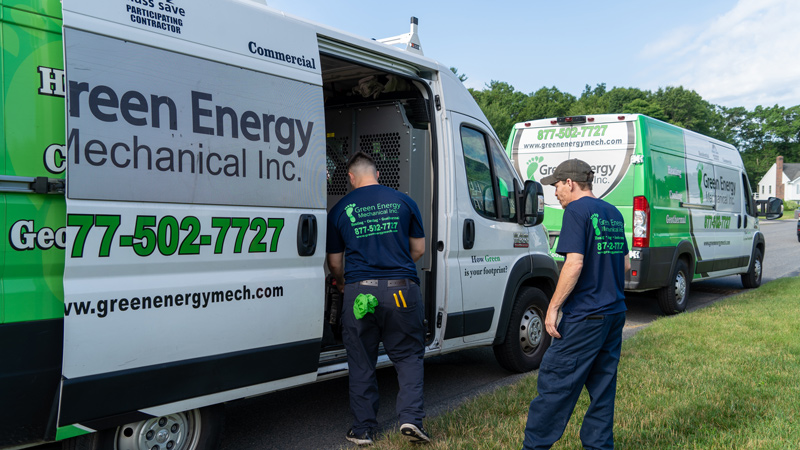
Green Energy AC Heating & Plumbing Repair
10 Oak St Unit 5, Needham, MA 02492
+1 (781) 819-3012
[email protected]
Website: https://greenenergymech.com
