Why Active Sub-Slab Depressurization Is the Gold Standard for Radon Mitigation
When I first started testing homes for radon in the St. Louis area, I quickly learned that no two basements behave the same. Some houses sit on deep gravel beds that let soil gas flow freely. Others rest on dense clay that barely lets air move. But across all these variations, one method consistently delivers reliable results: active sub-slab depressurization. It is not the flashiest technique, and it requires careful installation, but it works. Over the years, I have seen it outperform almost every other approach in homes with a concrete slab foundation.
How Soil Gas Moves and Why It Matters
Radon comes from the natural decay of uranium in soil and rock. As it breaks down, the gas seeps upward through pores in the ground. Once it reaches the space beneath your house, the slight negative pressure inside the home - created by furnaces, dryers, and even the stack effect of warm air rising - pulls that gas through cracks in the slab or gaps around pipes. The result is indoor radon levels that can exceed the EPA action level of 4 picocuries per liter. The goal of radon mitigation is to break that pathway before the gas enters the living space.
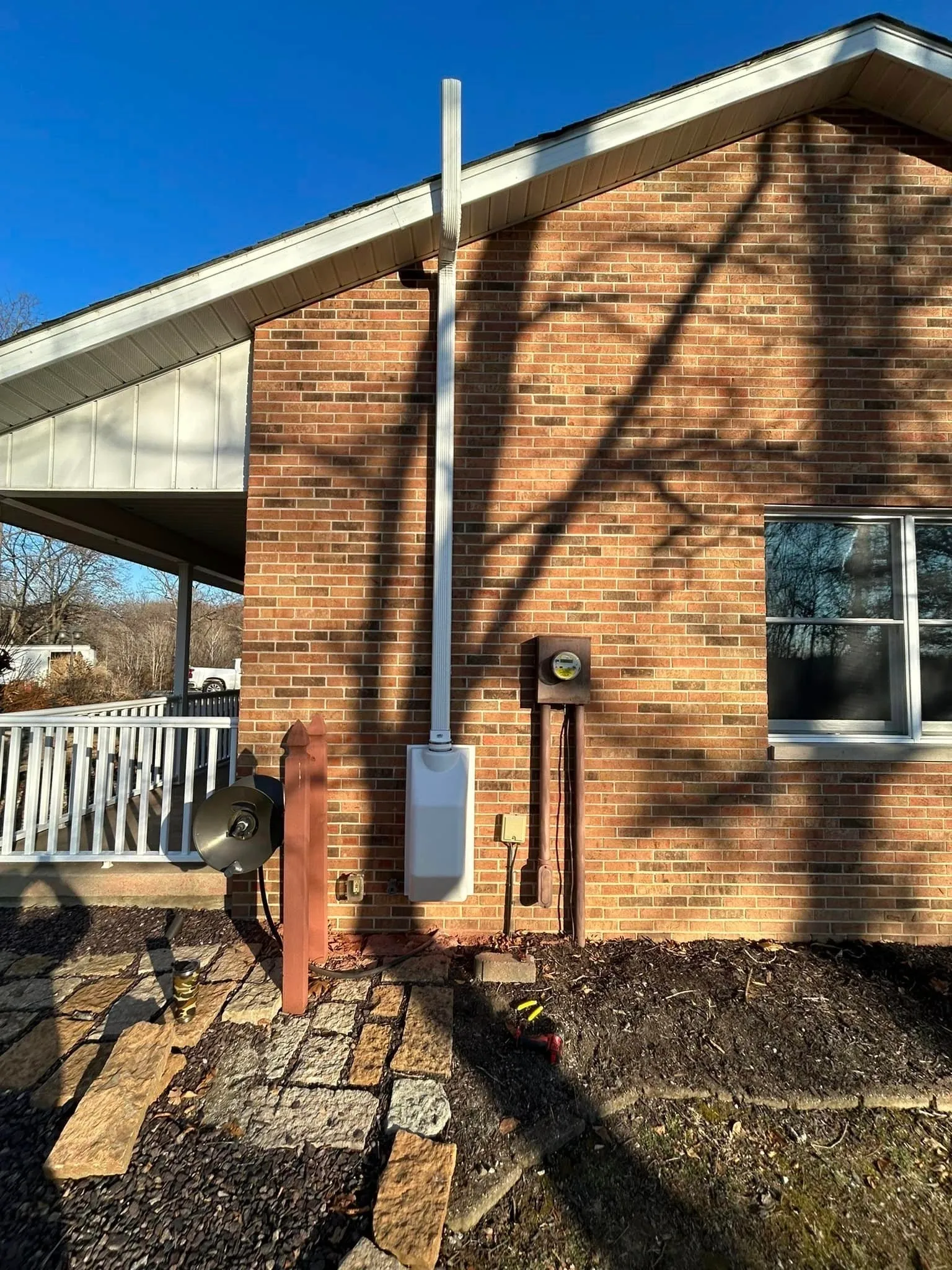
Active sub-slab depressurization does exactly that. It creates a low-pressure zone under the concrete slab, so soil gas is drawn toward a suction point instead of drifting up through the floor. A radon fan mounted on the outside of the house or in an attic maintains that negative pressure continuously. The gas is vented safely above the roofline, where it dissipates into outdoor air. It is a simple concept, but the execution demands attention to detail.
The Anatomy of a Proper Installation
I have pulled up a lot of sub-slab systems that looked fine from the outside but failed because of poor layout. The heart of any system is the suction point. For a typical slab, a four-inch hole is core-drilled through the concrete. Below that, a small pit is dug and filled with gravel to create an air pocket. A length of perforated pipe extends horizontally from that pit, spread out to cover the area under the slab. The more evenly the perforated pipe distributes the suction, the more effective the system will be.
From the suction point, solid pipe runs upward, through the house envelope, to the radon fan. The fan must be sized for the cubic footage under the slab and the resistance of the piping. An undersized fan will not generate enough negative pressure; an oversized one can be noisy and waste energy. I usually spec a fan that moves around 100 to 150 cubic feet per minute at 1 inch of water column, but that varies. A U-tube manometer installed on the pipe near the fan tells me exactly how much negative pressure the system is pulling. That reading is critical. Without it, you are guessing.
Sealing and the Role of the Manometer
One detail that often gets overlooked is the seal around the suction pipe where it passes through the slab. A good bead of sealant - polyurethane or hydraulic cement, depending on the moisture condition - prevents air from short-circuiting around the pipe. If that seal leaks, the manometer reading drops, and you lose performance. I always check the manometer after the sealant cures and again after the post-mitigation test. A steady reading of 0.5 to 1.0 inches of water column usually indicates a tight system.
The manometer itself is a simple device, but it is the best diagnostic tool we have. A U-tube manometer uses colored water in a clear tube to show pressure difference. When the system is off, the water sits level. When the fan runs, one side rises. That height difference tells me the system is working. If the water stays almost level, there is a leak somewhere - maybe in the pipe joint, maybe around the suction point, or maybe the slab is too permeable and the fan cannot hold pressure.
Why Active Beats Passive Every Time
Some older homes have passive sub-slab systems, which rely on natural convection and the stack effect to draw soil gas upward. In theory, that works when the house is warm and the chimney effect is strong. But in mild weather or when the house is unoccupied, passive systems often stall. Active soil depressurization, powered by a fan, runs continuously and independently of weather. That consistency is why most mitigation professionals - and the EPA, for that matter - recommend active systems for homes in high radon zones.
St. Louis sits in EPA radon zone 1, which means the average indoor radon level is predicted to be above 4 pCi/L. I have tested homes here that hit 20 or 30 pCi/L in winter. A passive system might bring that down to 8 or 10, which is still unsafe. Active sub-slab depressurization, properly installed, can drop levels to below 2 pCi/L in almost any house. I have seen it happen dozens of times.
Crawlspace and Sub-Membrane Alternatives
Not every home has a slab. Some have crawlspaces, and those require a different approach. For crawlspace mitigation, we use sub-membrane suction. A heavy plastic vapor barrier is laid over the dirt floor, sealed to the foundation walls, and a perforated pipe is placed under the membrane. A fan then pulls soil gas from beneath the membrane, similar to how a sub-slab system works under concrete. The principle is the same - create negative pressure beneath the house envelope - but the materials and sealing methods differ.
I have also seen hybrid systems where a home has both a slab and a crawlspace. That is common in split-level houses. In those cases, we might install active sub-slab depressurization under the slab portion and sub-membrane suction in the crawlspace, tying both into a single exhaust pipe and fan. It takes more planning, but it avoids the need for two separate fans.
The Importance of Testing and Verification
No mitigation job is complete without a post-mitigation test. I always tell homeowners to use a radon test kit that meets EPA standards and to place it in the lowest lived-in level of the home. The test should run for at least 48 hours, with all windows closed and normal occupancy. That gives a realistic picture of what the family breathes every day.
I remember one job where the initial test showed 14 pCi/L. After installing active sub-slab depressurization, the post-mitigation test came back at 1.2 pCi/L. The homeowner was relieved, but I was not surprised. When the system is designed well and installed carefully, the numbers speak for themselves. That is why I trust this method more than any other.
Common Mistakes and How to Avoid Them
Over the years, I have seen a few recurring mistakes. One is placing the suction point too close to the foundation wall. That can pull soil gas from outside the house rather than from under the slab, reducing effectiveness. Another is using too small a perforated pipe. A two-inch pipe restricts airflow too much; four-inch is better for most residential slabs. And I have seen fans mounted indoors without proper venting, which defeats the purpose because the radon fan must discharge outside, above the roofline, away from windows and doors.
Finally, never skip the manometer. I have been on service calls where the homeowner complained of noise or high bills, only to find the fan running but the manometer showing zero pressure. The pipe had separated at a joint under the slab, and the system was just circulating indoor air. A quick check of the manometer would have caught that problem the day it happened.
Active sub-slab depressurization is not the only way to lower radon levels, but it is the most reliable for slab-on-grade homes in high-radon areas like St. Louis. When combined with careful sealing, proper pipe sizing, and a quality radon fan, it gives you a system that runs quietly for years with almost no maintenance. If you are building a new house or retrofitting an existing one, this is the method I recommend without hesitation. Companies like Air Sense Environmental have installed hundreds of these systems and know the local soil conditions well. Their experience shows in every job they finish.
The bottom line is that radon is a serious health risk, but it is also a solvable problem. With the right approach and a little patience, you can bring your indoor levels down to a safe range and keep them there.
