What does 95 per cent organic mean in real life?
“95% organic” sounds simple: nearly everything in the product is organic. But the figure is a regulated threshold, not a promise that a product is completely organic, chemical-free or better for every person. To understand what it means on a real shopping trip, check the product category, the ingredient list and—especially—the certifier line.
For shoppers in East Africa buying imported groceries, skincare or wellness products, the label can be useful, but only when you know what it does and does not say. Here’s how the 95 percent organic rule works under the USDA system, and how to tell certification apart from marketing language.
First, what does “organic” certify?
Organic certification is a process standard. It checks how agricultural ingredients are grown, handled and processed against defined rules. In the United States, the USDA’s National Organic Program (NOP) sets the standards and accredits certifiers that inspect and certify businesses.
Depending on the product and its ingredients, organic rules can cover matters such as prohibited substances, production methods, handling and record-keeping. Certification involves more than printing a leaf design on a packet: businesses must document their practices and undergo review and inspection.
But certification is not a product-performance test. It does not prove that a food tastes better, that a lotion will suit sensitive skin or that a supplement will deliver a particular result. Nor does organic mean “hypoallergenic”, “pesticide-free in every circumstance” or “chemical-free”. Those are different claims and need separate evidence.
The FDA (Food and Drug Administration) regulates many aspects of food and cosmetics in the US, including safety and labelling. It does not set the USDA’s organic production standard. For eligible agricultural products carrying US organic claims, the USDA organic rules are the relevant certification framework. Cosmetics can be more complicated: a product may use agricultural ingredients, but the word “organic” on a cosmetic does not automatically mean the whole item is USDA-certified. Check the actual certification and label details.
What the 95 per cent threshold means
Under USDA rules, a product labelled “organic” generally needs at least 95% organic ingredients, calculated by weight or fluid volume under the applicable rules. Water and salt are excluded from that calculation. The remaining portion must meet the rules for allowed ingredients and processing aids; it is not a free pass to add any ingredient a manufacturer likes.
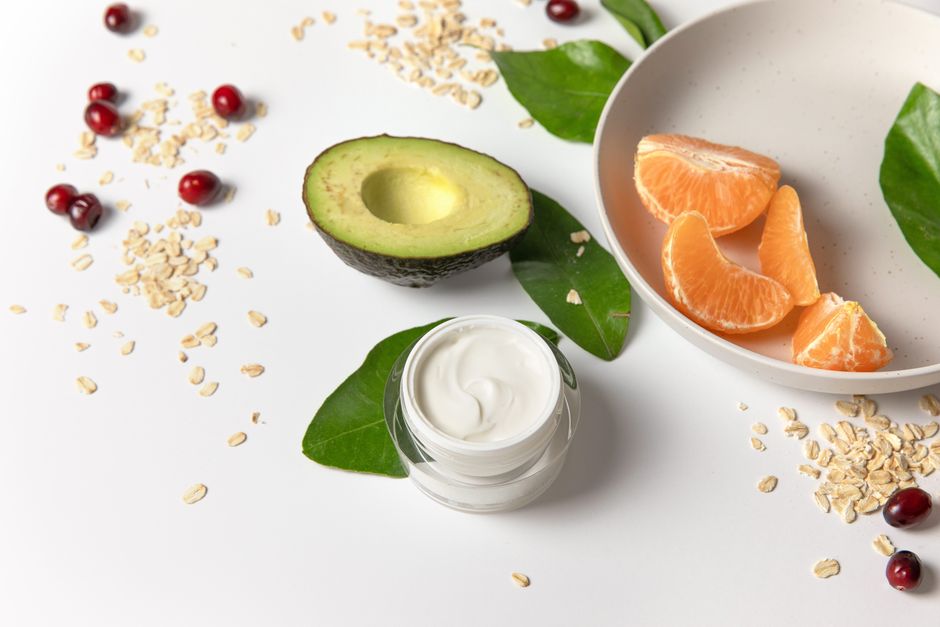
This is the organic ingredient threshold behind the familiar 95% claim. It is a minimum for that label category, not a claim that every ingredient is organic. A product at the threshold could have up to 5% of its qualifying ingredients that are not organic, provided those ingredients satisfy the relevant restrictions.
For example, a jar of sauce could qualify for the “organic” category while containing a small amount of a permitted non-organic ingredient. The percentage does not tell you which ingredient makes up that remainder, why it was used or whether you personally want to consume it. Read the ingredient list as well as the front label.
It also does not mean 95% of the product’s benefits are organic, or that it is 95% safer or more nutritious. It is a composition threshold applied under a particular standard.

USDA label tiers at a glance
USDA label category Organic content What the label can generally say USDA Organic seal? 100% organic 100% organic ingredients, excluding water and salt “100% organic” May be used Organic At least 95% organic ingredients, excluding water and salt “Organic” May be used Made with organic ingredients At least 70% organic ingredients “Made with organic…” and a limited number of specified organic ingredients or groups May not be used Less than 70% organic ingredients Below 70% Organic ingredients may be identified in the ingredient statement, subject to the rules May not be used
These categories matter because a product labelled “made with organic ingredients” is not in the same category as one labelled “organic”. The former has a lower threshold and cannot carry the USDA Organic seal. A product below 70% may still contain organic ingredients, but it cannot use “organic” as a general front-of-pack product claim in the same way.
Rules can differ by product type and market, so treat this table as a practical guide to the main USDA food-label tiers—not as a substitute for checking a specific product’s certification or local import requirements.
The seal is not the same as a marketing word
The USDA Organic seal is a regulated mark connected to the USDA programme. For a product using the seal, look for the supporting certification details on the packaging. The seal is meaningful because it points to a standard and a certification process, not simply because it looks official.
Words such as “natural”, “clean” and “pure” do not, by themselves, tell you that a product meets USDA organic standards. They may be used as marketing language, and their meaning depends on the product, the applicable rules and the evidence behind the claim. “Natural” is not a substitute for an organic certificate. “Clean” does not identify a recognised organic percentage. “Pure” does not explain how ingredients were farmed.
In the aisle, don’t let a large front-label word do all the work. Turn the pack around. Find the ingredient list, look for the USDA Organic seal where relevant, and check who certified the product. The does FDA regulate organic skincare certifier’s name is a more useful clue than a decorative leaf or an unspecific green-coloured design.
Why the certifier line matters
US-certified organic products generally need to identify the certifying agent on the information panel. Look for wording along the lines of “Certified organic by [certifier name]”. The exact presentation can vary, but the name should be there for products in the applicable certified categories.
This is a practical check, not a guarantee that every detail on the pack is perfect. If a product makes a prominent USDA organic claim but you cannot find a certifier name, pause and investigate before trusting the claim. You can check the company’s certification information or contact the certifier using details found independently, rather than relying only on a QR code or link supplied by the brand.
Also keep the categories straight. Not every product that mentions an organic ingredient must carry the seal or the same certification statement. For instance, a product below the 70% tier may identify particular organic ingredients in its ingredient list without making a broad organic claim. Context matters.
What this means for cosmetics and wellness products
Food labels are often easier to interpret than cosmetics labels. A moisturiser might contain organic botanical oils alongside water, emulsifiers, preservatives and other ingredients. Its front label may highlight one organic ingredient, but that does not establish that the whole formula reaches the USDA’s 95% threshold or qualifies for the USDA Organic seal.
That is why it is worth checking the exact product, not just the brand’s general website or a claim on a retailer’s listing. A company can sell products with different formulas, certifications and claims. For example, if you are considering a product from Joy Organics, look at that specific product’s packaging and certification information rather than assuming that the company name or a wellness claim tells you its USDA status.
Organic status also does not predict whether a cosmetic will irritate your skin. Organic essential oils and plant extracts can still cause reactions, while a non-organic ingredient is not automatically unsuitable. If you have allergies or reactive skin, read the full ingredient list and consider advice from a qualified health professional. “Organic” and “hypoallergenic” are not interchangeable claims.
Batch testing is useful—but it answers a different question
Batch testing checks a particular production batch for specified qualities or contaminants, depending on the test. In supplements and other wellness products, a credible certificate of analysis may report results such as identity, potency or screening for selected contaminants. What was tested, by whom and against which limits all matter.
Batch testing does not replace organic certification. It cannot, by itself, prove that ingredients were farmed or handled according to USDA organic rules. In the same way, an organic certificate does not automatically tell you the exact test results for each batch. These tools answer different questions: certification concerns compliance with an organic production standard; batch testing concerns measured results for a sample or batch.
When a brand promotes testing, look for a current report that matches the product and batch you have, and check whether the laboratory and test scope are clearly identified. A vague “tested for purity” statement without a report or details is much less informative.
A quick shopping-aisle checklist
- Read the exact claim. Is it “100% organic”, “organic”, “made with organic ingredients”, or simply a highlighted ingredient?
- Check the threshold. The USDA “organic” category generally means at least 95% organic ingredients, excluding water and salt.
- Look for the USDA Organic seal. It can be used for the 100% organic and organic categories, but not the lower “made with organic” tier.
- Find the certifier name. US-certified products generally identify their certifying agent on the information panel.
- Read the ingredient list. The percentage claim does not tell you which ingredients are non-organic or whether the formula suits you.
- Treat “natural”, “clean” and “pure” as separate claims. None of these words is a substitute for organic certification.
- For wellness products, check testing separately. Batch testing may add useful evidence, but it is not proof of organic status.
The real-life takeaway
In everyday terms, “95% organic” means a product meets the USDA’s organic threshold for the relevant label category, with the remaining ingredients subject to rules. It does not mean the product is 100% organic, guaranteed to perform better, free from all residues or suitable for everyone.
For a quick, reliable check, focus on three things: the actual USDA label tier, the certifier line and the full ingredient list. Treat front-label adjectives as advertising until you can connect them to a clear standard. And when you see a separate claim about batch testing, ask what was tested—because certification and product testing are useful, but they are not the same thing.
