What RE4 Remake Gameplay Teaches Us About Modern Survival Horror
I have been playing Resident Evil 4 in some form since the GameCube original. When the remake landed, I went in with cautious optimism. We have seen so many beloved games get modern makeovers that sand off the rough edges but lose the soul. What I found in the RE4 remake was something different. The gameplay does not just update the visuals. It rethinks the pacing, the tension, and the player feedback loop in ways that feel both fresh and faithful. Let me walk through what the actual experience taught me about how this kind of survival horror works today.
Controls That Change the Rhythm
The original RE4 had tank controls by modern standards. You stood still to aim. The remake lets you move while shooting, though your accuracy suffers. That small change alters the entire combat cadence. In the original, every encounter forced you to commit. You planted your feet and fired. Now you can strafe, reposition, and fire from the hip. But the game does not let you become a run-and-gun hero. Enemies still close fast. Ammo stays scarce. The result is a dance where you constantly weigh movement against accuracy. I found myself using the knife more often, because a quick stab while circling a ganado felt safer than stopping to line up a headshot. The remake rewards aggression but punishes recklessness, which is a hard balance to nail.
Another layer is the parry and knife counter system. In the original, the knife was almost a joke weapon. Now it can interrupt grabs and stagger enemies. This adds a skill ceiling that was not there before. You can play through the whole game without ever parrying, but if you learn the timing, you conserve ammunition and stay mobile. That kind of optional depth is exactly what a remake should offer. It respects the original design while giving experienced players new tools to master.
Resource Management and the Illusion of Scarcity
The RE4 remake gameplay is built around a careful illusion. You always feel like you are about to run out of bullets. But if you play efficiently, you rarely do. The game feeds you just enough handgun ammo to survive the next room, then tempts you to use shotgun shells on a tough enemy. That tension between saving and spending is the core loop. I noticed that the remake is stricter with rifle ammunition than the original was. The TMP and the riot gun feel more like special-occasion weapons now. That forced me to rely on the pistol and the environment. Barrels, lanterns, and explosive crates become your best friends. A well-placed shot into a group of enemies can clear a path without wasting a rifle round.
The remake also tweaks the merchant system. The Merchant, now voiced and with more personality, still sells you guns and upgrades. But the prices have gone up. You cannot buy a rocket launcher early and trivialize the lake section anymore. The economy of pesetas is tighter. I had to prioritize: do I upgrade the punisher or buy a treasure map? That choice matters because resources stay limited through most of the campaign. It reminds me of the early Resident Evil games where every inventory slot was a strategic decision.
Encounter Design and Enemy Behavior
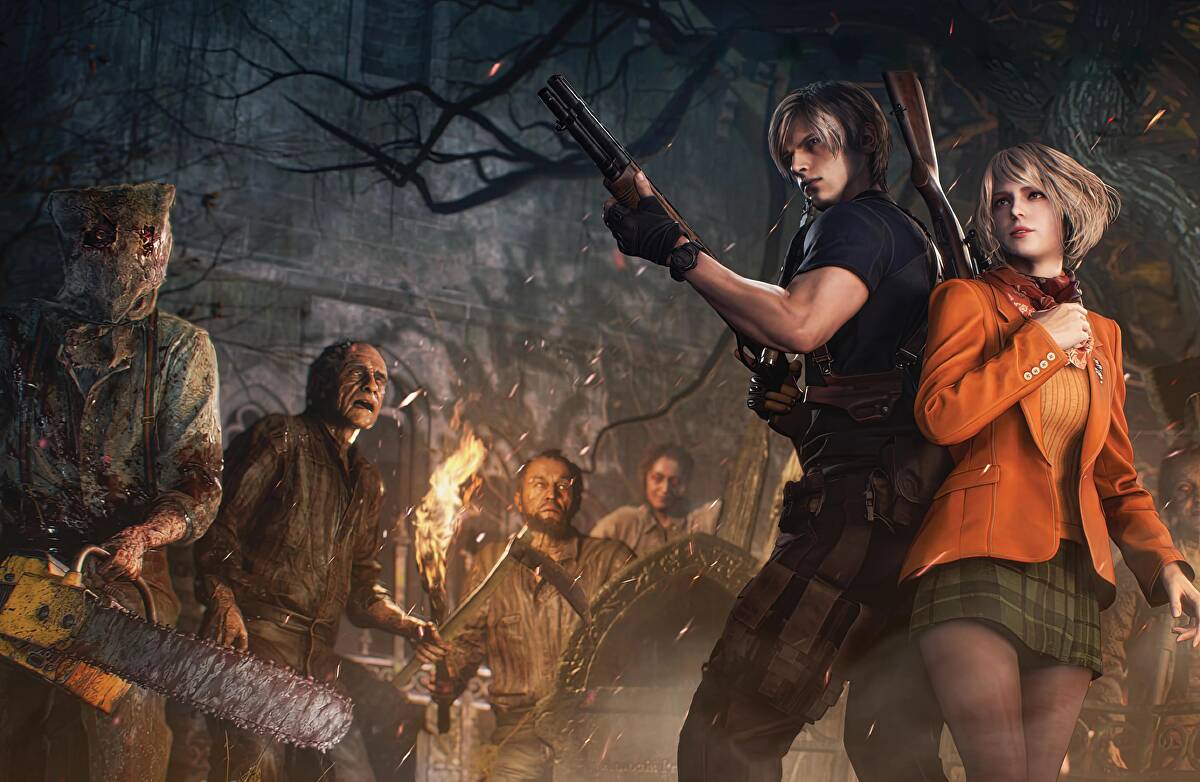
The original RE4 had a reputation for its "scripted" encounters. Enemies would drop from the ceiling at the exact same moment every playthrough. The remake keeps many of those beats but adds dynamic elements. Now ganados can break through doors you left unlocked. They can climb through windows you forgot to board. The castle section feels less like a series of dioramas and more like a living space the enemies are trying to reclaim. I played on Hard difficulty, and the enemies were relentless. They flank, they rush, they grab you from behind. The inventory menu no longer pauses the action. That means you have to manage healing and weapon switching under pressure. It is a small change, but it makes every encounter feel more desperate.
The boss fights also got a rework. Del Lago, the lake monster, now has more phases and requires you to actually aim at its weak points while dodging waves. The original was mostly a QTE sequence. The remake makes it a real fight where your aim and patience matter. That said, not every change is an improvement. The new Garrador fight, where you have to expose his weak point with light, is more tedious than the original. The puzzle element feels forced. But overall, the boss battles benefit from the new movement options and the improved AI.
Let me be direct about the RE4 remake gameplay. It retains the core loop of the original: enter a room, assess threats, conserve resources, escape. But it adds a layer of player agency that was missing. In the original, you mostly reacted. In the remake, you can create opportunities. You can bait enemies into explosive barrels. You can use the environment to funnel them into kill zones. The knife parry lets you control the flow of a fight instead of just surviving it. That shift from reactive to proactive is what makes the remake feel modern without betraying its roots.
Visual Design and Atmosphere
The visual upgrade is obvious, but what impressed me was how the lighting and sound design work together to guide the player. Dark areas are genuinely dark. Your flashlight has limited range. The sound of a distant chainsaw or a door creaking open tells you where to go without a glowing marker. The remake uses visual clutter sparingly. When a room is full of hanging meat or scattered furniture, it is because the enemies will use that cover. The art direction supports the gameplay instead of distracting from it. This is something the original did well, and the remake respects that philosophy while pushing the fidelity much higher.

One specific example: the village section at night. In the original, it was a series of corridors and open plazas. The remake makes the village feel larger and more interconnected. You can see the church bell tower from the village square. You can hear the villagers chanting before you see them. The spatial awareness that the new controls allow means you can actually navigate these spaces with more freedom. You can climb up to a rooftop, drop down behind an enemy, or retreat into a building to funnel them. The level design accommodates that verticality. It is a smart evolution.
What the Remake Leaves Behind
Not everything from the original survived. The quick-time events are mostly gone. The button-mashing sequences during cutscenes are replaced with contextual actions. Some fans miss the campy tone of the original, where Leon would quip after a dramatic escape. The remake is more serious. Leon is quieter, more traumatized. The dialogue is sparse. That change in tone affects the gameplay indirectly. The original felt like a horror action movie. The remake feels like survival horror with action elements. The pacing is slower. There are more moments where you just walk and listen. Those moments build tension, but they can feel empty compared to the original's constant set pieces.
I also miss the separate ways content. The original had a bonus campaign with Ada Wong. The remake has Separate Ways as a separate DLC. That is a monetization choice that hurts the completeness of the package. But the core campaign is longer than the original. I spent about 20 hours on my first playthrough, compared to about 15 for the original. That extra time mostly comes from larger environments and more enemy encounters. The gameplay loop is strong enough to support that length without feeling padded.
Final Thoughts on the Experience
The RE4 remake gameplay is a masterclass in how to update a classic without breaking it. It respects the original design while adding modern mechanics that make sense. The controls feel responsive. The resource management is tight. The enemy AI keeps you on edge. It is not a perfect game. The inventory management without pausing can be frustrating on controller, and the tone shift loses some of the original's charm. But as a survival horror experience, it delivers. If you have not played it, start on Hard. The game is balanced for that difficulty. Standard is too generous with ammo and checkpoints. Hard forces you to engage with every system the game offers.
For anyone interested in how a remake should be done, this is the benchmark. It does not replace the original. It stands alongside it as a different interpretation. And for that reason alone, it is worth your time.
