What Goes Into a Secure Door Installation? A Locksmith's Perspective
I have been working as a locksmith in Philadelphia for over a decade. In that time I have replaced hundreds of locks, reinforced countless door frames, and listened to a lot of frustration from homeowners and business owners who thought they had a secure door installation but found out the hard way they did not. A door is only as strong as its weakest link, and that link is almost never the lock itself. It is the way the lock is installed, the quality of the door frame, the strike plate, the hinges, and the little details that most people never think about until something goes wrong.
When a customer calls me and says they want a secure door installation, I do not just reach for the most expensive deadbolt on the truck. I start by looking at the door and the frame as a system. A high-security lock on a hollow-core door with short screws in the strike plate is little more than a decoy. The real security comes from matching the hardware to the door, reinforcing the weak points, and installing everything so that it actually resists the kinds of attacks that real burglars use. Pry bars, kick-in attacks, and lock picking are the most common entry methods I see in Philadelphia row homes and older commercial buildings. Each one requires a different defense.
Let me walk through what a secure door installation actually involves, based on the jobs I have done and the mistakes I have seen.
The Door Itself Is the Foundation
Before I even think about a lock, I check the door. Is it solid wood, steel, or fiberglass? Many residential doors in Philadelphia are older wood panel doors that have been painted over a dozen times. They look sturdy but the core can be soft or rotted near the bottom. If the door material is weak, no lock will save it. A solid-core wood door or a steel door gives you a real chance at security. Fiberglass entry doors from brands like Therma-Tru or Milgard are common in newer construction and can be very strong if the frame is installed correctly. But I have seen fiberglass doors where the internal foam was barely thick enough to hold the screws. In those cases, I recommend a reinforcing plate or a different door entirely before I proceed with the lock.
The door frame matters just as much. In many Philadelphia row homes, the frame is original pine that has settled and shifted over a century. The gap between the door and the frame might be uneven. A standard strike plate with half-inch screws is not going to stop someone who puts a shoulder into it. I always use a heavy-duty strike plate with three-inch screws that reach through the jamb and into the wall stud. That alone can turn a five-second kick-in into a thirty-second struggle. Jamb reinforcement kits are also worth considering for anyone who wants a proper secure door installation. They wrap around the frame and tie the strike plate area into the structure of the wall.
Choosing the Right Lock
Once the door and frame are solid, I turn to the lock. I carry several brands on my truck because no single manufacturer makes the perfect lock for every situation. Schlage is my go-to for residential deadbolts that balance cost and reliability. Their ANSI Grade 1 deadbolt is a solid choice for most Philadelphia homes. It picks up well, resists drilling, and the hardened steel bolt stands up to sawing attempts. Kwikset is another common brand I see, and while their lower-end models are fine for interior doors, I recommend stepping up to their Grade 1 line for an exterior secure door installation. Baldwin makes beautiful hardware that holds up well in historic homes, but you pay for the aesthetic. For customers who want serious physical security, I often suggest Mul-T-Lock or Medeco. Both companies make restricted-key systems that are nearly impossible to pick. Mul-T-Lock uses a pin-in-pin design that I have never seen bypassed in the field. Medeco uses a rotating sidebar system. They are expensive, but if you are securing a business or a home with high-value contents, they are worth every dollar.
Keyless Entry and Smart Locks
More customers are asking about keyless entry and smart locks. I understand the appeal. No more lost keys, no more hiding a spare under the mat. But a secure door installation with a smart lock requires some extra thought. The convenience of a keypad or a phone app does not mean much if the lock itself is flimsy or if the installation leaves the door vulnerable. I have seen smart locks that were installed with adhesive instead of screws, and I have seen August Home locks that were mounted on doors that did not have a proper strike plate. The lock works fine for a few months and then the door starts sagging or the latch stops engaging fully.
For a smart lock to be part of a secure door installation, I use the same standards as any other lock. The door must be solid, the frame must be reinforced, and the lock itself should have a Grade 1 rating if possible. Nest x Yale makes a good smart lock that I have installed on several Philadelphia homes. It uses a standard deadbolt mechanism with the smart module on the inside, so you get the convenience of keyless entry without sacrificing the mechanical security. August Home is another brand I work with often. Their retrofit design lets you keep your existing deadbolt and add a smart module, which is a good option if you already have a high-quality lock and just want the keyless convenience.
One thing I always tell customers: a smart lock is only as secure as the installation. If the installer does not reinforce the strike plate or use long screws, the smart lock is just an expensive way to control a weak door. The same rules apply. A secure door installation is about the system, not the gadget.
Strike Plate and Jamb Reinforcement
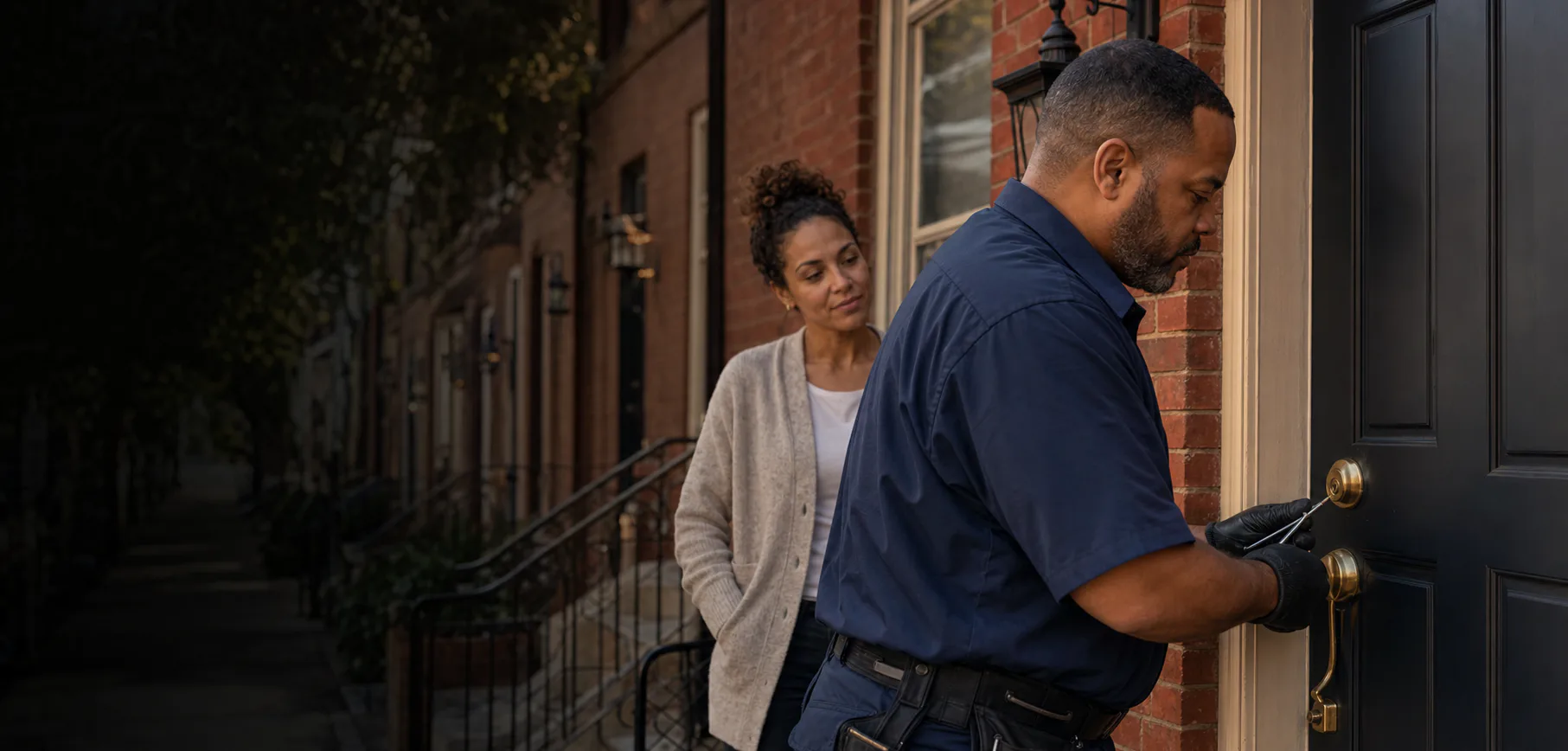
I already mentioned the strike plate, but it deserves its own section because it is the most common weak point I see. A standard strike plate that comes with a deadbolt is usually a thin piece of brass or steel with two small screws that barely bite into the jamb. A determined kick will split the jamb and send the strike plate flying. I replace the strike plate on every secure door installation I do. I use a heavy-duty version, often with a reinforced box that fits into a recess cut into the jamb. The screws I use are at least three inches long and go through the jamb into the door frame studs. For doors that get heavy use, I also install a jamb reinforcement kit. These are metal plates that wrap around the jamb and tie the strike plate, hinge area, and latch area together. They are not pretty, but they work. On a commercial door or a high-traffic residential entry, they make a noticeable difference in how the door feels and how much force it can take.
Installation Mistakes I See Repeatedly
Over the years I have developed a short mental list of installation errors that ruin an otherwise good door. These are worth mentioning because they are so common.
- Short screws in the strike plate and hinges. This is the number one mistake. The screws that come with most locks are meant for interior doors. For an exterior door, you need screws that reach deep into the frame.
- Oversized or misaligned bolt holes. If the deadbolt hole is too large, the bolt can rattle and the lock becomes easier to shim. I use a proper jig to drill clean holes.
- Ignoring the gap between the door and the frame. A gap larger than a quarter inch is a pry-bar invitation. I adjust the hinges or add a weatherstrip to close it up.
- Installing a smart lock on a door that does not have a backup keyway. If the electronics fail and there is no key override, you are locked out of your own house. I always recommend a lock with a mechanical key bypass.
The Value of Professional Installation
I am a locksmith, so I have a bias. But I have also fixed enough DIY installations to know that the average homeowner underestimates how much precision a secure door installation requires. A deadbolt that is a quarter inch off will not engage fully. A strike plate that is mounted slightly crooked will bind the bolt and wear out the lock mechanism. A smart lock with a loose fit will let the door rattle and eventually damage the electronics. These are not hard problems to solve, but they require the right tools and the patience to get every detail right.
When I do a secure door installation in Philadelphia, I treat it like a job that has to last. I take the door off the hinges if I need to adjust the frame. I drill pilot holes for every screw. I test the lock several times before I call the job done. I also talk to the customer about how to maintain the lock. Lubricate it once a year, check the screws after a season of temperature changes, and do not let the door slam because that loosens everything over time.
Security is not a product you buy off a shelf. It is a set of choices you make about your door, your lock, and how they fit together. A secure door installation is the result of those choices being made correctly, with the right materials and the right attention to detail. I have seen too many people spend good money on a high-end lock and then leave the door frame weak. I have also seen people buy a cheap lock and pair it with a reinforced frame and a steel door, and end up with a genuinely secure entry. The hardware matters, but the installation matters more.
If you are thinking about upgrading your front door or replacing an old lock, take the time to look at the whole system. Check the door material. Check the frame. Check the strike plate screws. And if you are not sure what you are looking at, call a locksmith who knows the local building stock. In Philadelphia, that means understanding old row home frames, modern fiberglass doors from brands like Peachtree Door, and everything in between. A good secure door installation respects the building it goes into and the people who live behind it.
