Helicopter Sightseeing Flights in Barcelona: Formats and Selection Criteria
Barcelona helicopter ride selection and flight formats refers to the main ways sightseeing flights in Barcelona are organised, described, and compared. The subject covers route length, aircraft type, boarding point, group size, viewing conditions, and the practical rules that shape a scenic flight over the city and its coast. These flights are generally treated as short passenger sightseeing services rather than transport between cities, with the Barcelona skyline, coastal views, and Flight duration forming the core points of comparison.
The city lends itself to aerial viewing because several distinct landscapes sit close together. The dense street grid of the Eixample, the Gothic quarter, the port, the beaches, and the hills around the city can all be seen within a short flying period. A route may follow the coastline, circle a landmark area, or combine urban and coastal sections. The exact line flown depends on airspace rules, weather, aircraft performance, and the operating base used on the day.
Main flight formats
Scenic helicopter flights in Barcelona are usually grouped by duration and route. Short formats focus on a compact set of landmarks and are often designed around a single departure point near the port or the waterfront. Longer formats may extend along the coast, pass over the city centre, or include a wider loop that gives乘客 more time over open sea and urban districts. Flight duration is one of the clearest ways operators separate products, although the time in the air may differ from the total time spent at the airport or boarding site.
Route design also changes the character of the flight. A coastal route tends to emphasise the shoreline, beaches, marina, and the meeting point between the city and the sea. A city-centre route highlights the Barcelona skyline, including the patterns of blocks, major avenues, and notable buildings. A combined route attempts to include both, often by flying a loop rather than a straight out-and-back line. In Barcelona helicopter ride selection and flight formats, the distinction between these route types is more useful than the name attached to a package, because similar labels can cover different paths.
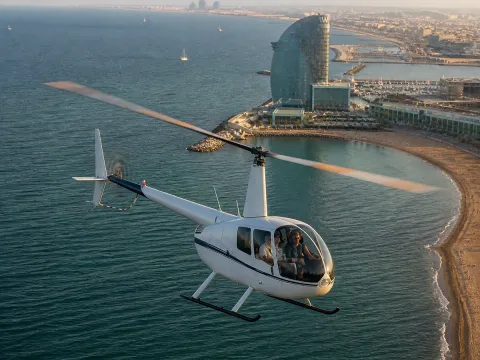
Some services are sold as shared flights, where separate passengers occupy the same aircraft up to its approved capacity. Others are arranged as private flights, where one group books the aircraft and the route follows a set format or a modified plan. Passenger capacity depends on the helicopter model and the operator's configuration. Seating layout can affect views, since some seats face sideways or rearward, while others are positioned closer to the pilot. Weight limits, baggage rules, and age requirements may also apply, and these are set by the operator within aviation rules.
Selection criteria
Selection normally begins with the purpose of the flight. A first-time aerial visit may favour a route that shows the port, the city grid, and the shoreline in a simple sequence. A photography-focused passenger may give more weight to seating, light conditions, and time over a particular district. A group travelling together may compare private pricing, passenger capacity, and the flexibility of departure times. In each case, the useful comparison is between the actual route, the aircraft, and the conditions of the ticket, not between promotional names alone.
Price is shaped by several inputs. Aircraft operating cost, fuel, crew, airport or heliport charges, insurance, and demand all influence the final fare. Short flights can still carry fixed costs that make the price per minute high. Shared flights spread some of those costs across passengers, while private bookings buy exclusivity and scheduling control. Seasonal demand, especially in warm months and around holidays, can change availability and pricing. A lower price may reflect a shorter route, a less central boarding location, or a shared arrangement rather than a different standard of safety.
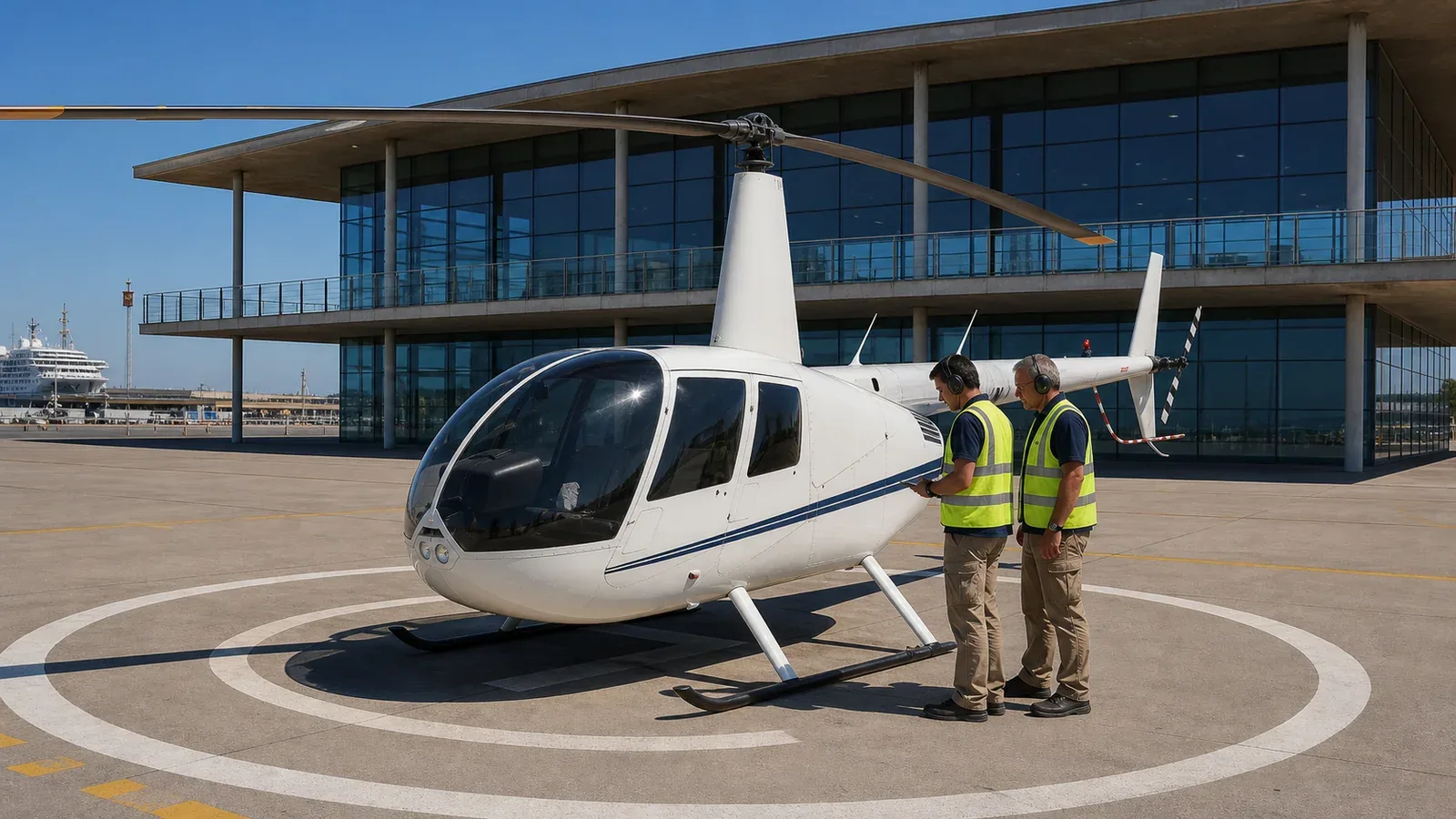
Boarding location is another practical point. Barcelona-area helicopter services may use facilities near the port, the waterfront, or the wider metropolitan transport network. The place where passengers gather is not always the same as the place where the aircraft is based, and some providers include ground transfer as part of the ticket. Travel time to the boarding site can matter as much as the Flight duration, particularly when the flight itself is short. Passengers comparing options often need to check the meeting point, check-in period, and whether the return point is identical to the departure point.
Operational setting
Before boarding, passengers normally receive a Safety briefing covering seat belts, cabin conduct, emergency exits, and restrictions on movement during the flight. Helicopter cabins are compact, and the pilot's instructions govern what can happen on board. Doors and windows may be configured differently by aircraft type, and opening or handling cabin fittings during flight is not part of normal passenger conduct. Photographs are usually taken from the seat, with cameras kept secure so that loose items do not interfere with the crew or controls.
Weather has a direct effect on sightseeing aviation. Low cloud, poor visibility, strong wind, or heavy rain can reduce the value of a route and may prevent a flight from operating. Pilots and operators decide whether conditions meet the required limits. A flight may be delayed, rerouted, or cancelled for aviation reasons, even when conditions on the ground appear acceptable to a visitor. Coastal views can change quickly with sea haze and wind direction, so the same route may look different on separate days.
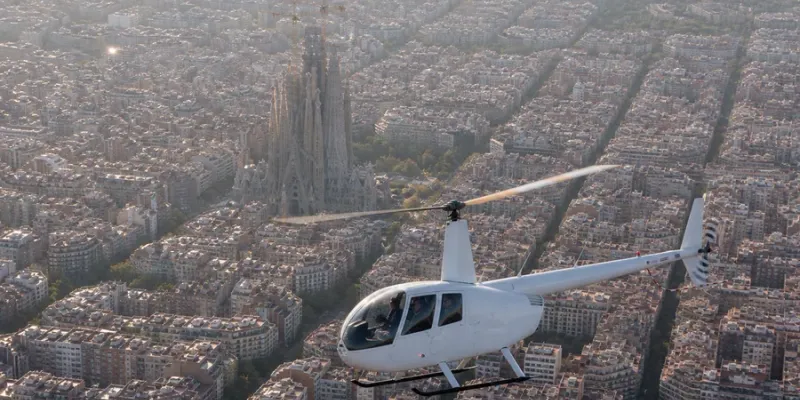
Airspace around Barcelona is busy, with commercial airports, port activity, and controlled routes shaping what a sightseeing helicopter can do. Flight paths may be adjusted to avoid restricted areas or to fit traffic management requirements. This is one reason two aircraft on similar tours may not follow exactly the same line. The pilot's route choices are constrained by regulation and operational clearance, not only by the scenic value of a landmark.
Aircraft and passenger experience
Light helicopters used for sightseeing generally carry a small number of passengers, and the view is closer and less filtered than from a fixed-wing aircraft. The aircraft can hover or move slowly, which helps when viewing a landmark from different angles, though route timing is still planned in advance. Inside the cabin, noise is higher than in many ground vehicles, and headsets may be supplied for communication and hearing protection. The pilot may point out landmarks, but the level of commentary varies by service and by workload in the air.
The experience also differs from other city tours because the aircraft does not stop at each sight. The route is continuous, and recognition of landmarks depends on visibility and orientation. A map or brief route description before departure can make the city layout easier to follow once airborne. The Barcelona skyline is often read in layers: the port and waterfront first, the regular blocks of the city beyond it, and the hills framing the far edge. Coastal views add the breakwater, beaches, and the open sea, which contrast with the dense urban fabric.
Accessibility and comfort deserve attention when comparing services. Boarding may involve steps, narrow doorways, or uneven ground around an airfield or heliport. Passengers with limited mobility, young children, or medical needs may require advance arrangements, and operators may apply rules based on aircraft layout and weight distribution. Cabin heating and cooling can be limited, so clothing suitable for the season and for wind exposure at the boarding site is relevant. These details affect the practical experience without changing the basic nature of the flight.
Common distinctions in listings
Listings for helicopter sightseeing often use compact labels that hide important differences. A route called a city tour might include only a short coastal leg, while a coastal tour might cross over parts of the centre. A premium label may refer to a longer flight, a smaller group, or added ground service, but the term alone does not establish what is included. The most reliable description is usually found in the stated route, duration, aircraft type, meeting point, and inclusions.
- Route shape, such as a coastal line, a city loop, or a combined circuit.
- Time in the air compared with total experience time, including check-in and transfer.
- Shared or private booking, together with passenger capacity and seating limits.
- Boarding location, return point, and any ground transfer included in the ticket.
- Operational conditions, including weather limits, baggage rules, and the Safety briefing.
These distinctions explain why two flights with similar advertised names can produce different experiences. One may prioritise a quick overview of the port and shoreline, while another gives more time to the city centre and surrounding hills. The aircraft may be the same, but the route, group composition, and timing can alter what passengers see and how the flight feels.
Place in local tourism
Helicopter sightseeing occupies a narrow niche within Barcelona tourism. It sits alongside boat trips, bus tours, walking routes, and observation points, offering an aerial view that cannot be gained from street level. Because flights are short and capacity is limited, the activity is usually treated as a specialised addition to a broader visit rather than a complete tour of the city. Its value lies in the compressed view of geography: the port, the urban grid, the coast, and the hills can be understood in a single continuous sequence.
The category also reflects how tourism products are structured in a major Mediterranean city. Operators adapt routes to airspace, season, aircraft availability, and customer demand. Descriptions often combine scenic language with operational details, and careful comparison depends on separating the two. Barcelona helicopter ride selection and flight formats provides a way to organise those details by route, duration, boarding arrangements, and passenger conditions rather than by advertising terms. Read in that way, the subject is less about a single flight and more about the range of formats through which aerial sightseeing is delivered in and around Barcelona.
