Emergency Storm Damage Cleanup: Rapid Response for Fallen Trees
When a storm snaps a limb or topples a whole tree, the first emotion is usually shock, followed quickly by the urge to fix it right now. I have spent long nights on storm crews, from spring squall lines to heavy wet snow in April, and the same truths repeat: safety beats speed, planning beats muscle, and the right crew can turn a dangerous mess into a controlled job in a fraction of the time. Good storm damage cleanup is part triage, part logistics, and part old‑fashioned craftsmanship.
Why trees fail in storms, and why it matters to your response
Storm failures follow patterns you can read once you know what to look for. High winds pry at a tree’s crown, levering the trunk at the root plate. Saturated soil loosens the tree’s footing, so gusts that a healthy, well-rooted tree would shrug off can push it over. Ice or heavy snow add a vertical load that snaps limbs where fibers are already stressed from past pruning or weak attachments. In the Akron area, fast thaw and refreeze cycles worsen shallow root anchorage. On clay soils, a day of soaking rain can double the leverage on a tall, top‑heavy silver maple.
These mechanics matter when you plan the cleanup. A trunk that hinged over with the root plate still attached can spring back if you relieve the wrong cut. A broken limb suspended in the crown can be held by a handful of fibers, ready to whip if released without control lines. Working without a plan around this stored energy is how roofs get punched twice, not once, and how do‑it‑yourself attempts turn into emergency room visits.
The first hour after a tree comes down
Most losses get worse in the first hour because of uncontrolled movement and water intrusion. You can’t un‑fall a tree, but you can keep a bad situation from growing catastrophic.
- Check for hazards you cannot control: downed wires, the smell of gas, leaning utility poles. Treat any wire in or near a tree as live. Call the utility before anyone touches the site.
- Keep people out of the drop zone. That includes curious neighbors. A partially suspended trunk can shift with a gust or a minor cut.
- Protect the structure from water. If it is safe, place a tarp or even heavy plastic over an open hole in a roof while you wait for a crew. Inside, move valuables and put buckets under active drips.
- Take photos and short videos. Walk the exterior and document damage for your insurer before anything changes.
- Call a qualified tree service with emergency capacity. Ask about response time, equipment on the truck, and whether they coordinate with insurance and utilities.
I have watched homeowners spend twenty minutes tugging at debris and, without meaning to, load a lever under a trunk. One snap later, they had a bigger hole in the roof. You can do small, low‑risk tasks, like squeegeeing water, but once tensioned wood is involved, step back and focus on communications and documentation.
What a real emergency response looks like
Reputable storm crews run a different playbook than routine pruning. You will hear it in the questions they ask and see it in the gear they bring. If you call for tree service after hours in a blowdown, expect a short intake: Are there wires involved? Is anyone trapped or is there active gas? Is the structure compromised? What access do we have for trucks or a crane? The goal is to gather enough to stage the right team.
On arrival, the foreman will walk the site with you, but the first assessment runs along hazard lines: energized conductors, unstable root plates, secondary limbs under load, shifting debris fields on steep or wet ground. A good foreman narrates for the crew, and ideally for you, so everyone reads the same picture of forces and priorities.
Utility coordination is often Step One. If a primary power line is in the tree, crews cannot touch it until the utility confirms a disconnect. In Northeast Ohio, that usually means working with FirstEnergy. After a big storm, utility wait times can be unpredictable, so the crew may secure safe areas and stage tarps while they wait for clearance. Where a service drop lies draped over a deck or driveway, a licensed electrician may be brought in to pull the meter or isolate the drop so work can proceed safely.
Stabilization comes next. Crews will set chocks, wedges, or cribbing, and where practical, they will install ropes or straps to take the load before a saw ever touches wood. Think of it as building a scaffold of control. You might see a GRCS winch on a tree, a truck winch tied to a ground anchor, or a load binder keeping a split trunk from opening. This is the difference between cutting firewood and doing professional tree removal on a damaged tree. When the material is tensioned, wood fibers behave like springs. The crew’s job is to de‑spring it in a way that doesn’t surprise anyone.
The cutting phase moves piece by piece, from highest risk to lowest. Aerial work often starts from a bucket truck or compact spider lift, since climbing a storm‑torn tree can be unsafe. On tight Akron lots, where alleys and small yards complicate access, a skilled climber on a stationary rope system still has a place, but only after the tree is tied off. Large pieces over roofs are lifted or held with a crane when access allows. Expect methodical progress: control line set, test load, relief cut, swing or lift, set‑down. Rinse and repeat.
Once the hazard is quelled, the crew shifts to cleanout and weatherproofing. That might mean temporary roof tarping, cutting a path to a side door, or clearing a driveway for emergency egress. Full storm damage cleanup usually includes hauling logs and brush, sweeping or blowing sawdust, and making a plan for the stump if the tree uprooted. Stump grinding can wait a day or two if the priority is to get the structure sealed and the site safe. Some firms refer to it as stump griding on invoices, but the work is the same, a specialized grinder reduces the root flare and stump to chips 6 to 12 inches below grade.
Equipment choices that save time and reduce risk
Most homeowners notice the big iron first. Cranes cut hours off many roof extractions and reduce breakage on the way down. A 40 to 60 ton crane is a common choice for two‑story homes with large oaks or maples. On smaller sites, a knuckleboom crane can reach over lines or around corners with precise control. But cranes need solid setup ground and swing clearance. In older Akron neighborhoods with narrow streets and cars parked on both sides, a crane may not be practical without police assistance or towing, which adds time.
Compact loaders with grapples are the unsung heroes of storm cleanup. A mini skid steer such as a Vermeer or Ditch Witch can move heavy rounds through a gate that is barely 36 inches wide. That spares lawns and backs, and it cuts load‑out times dramatically. In winter storm work, track machines float better on soggy lawns than wheeled loaders.
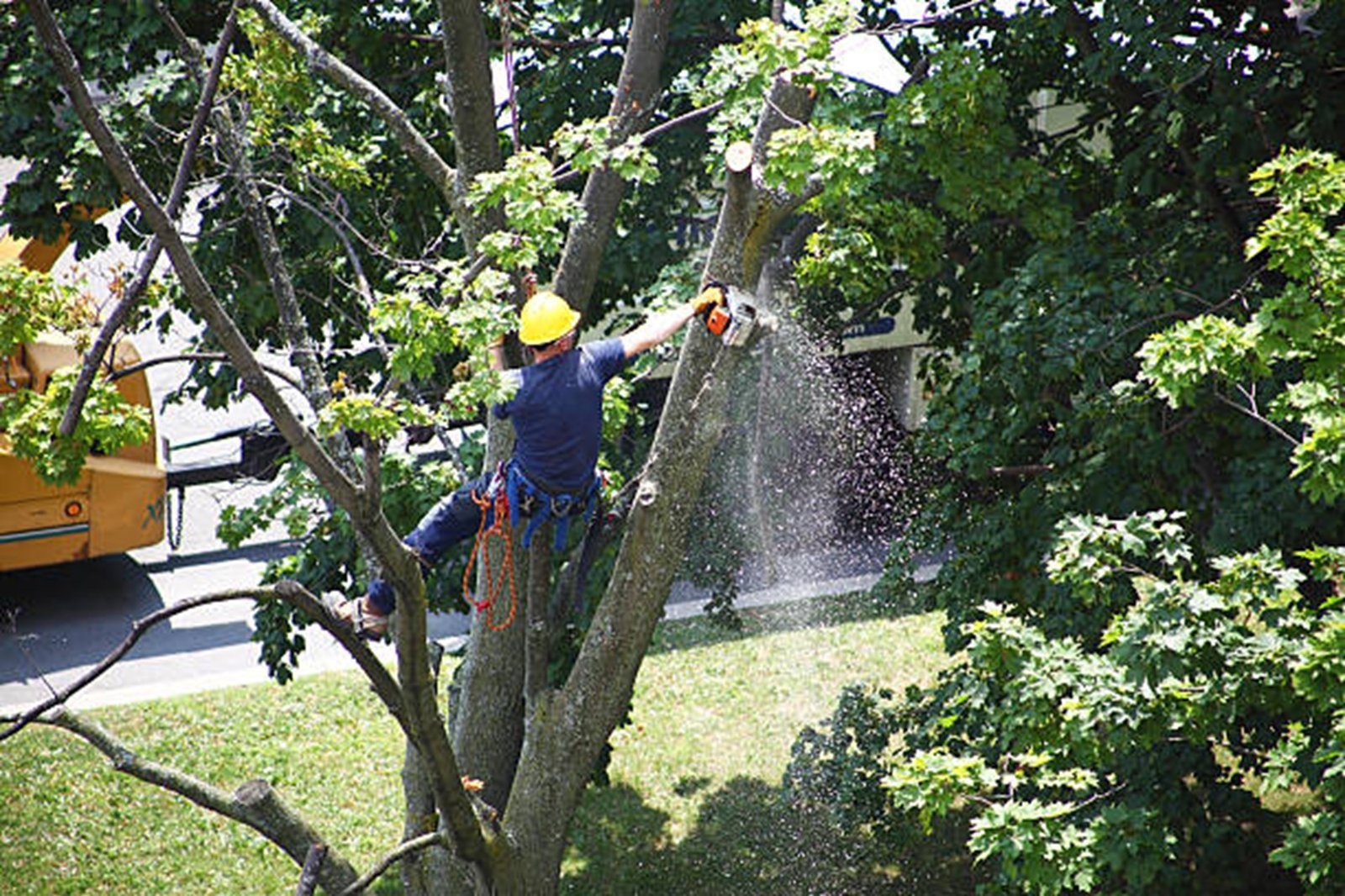
Cutting and rigging kits complete the picture. Storm crews carry multiple saw sizes, from a nimble top‑handle for aerial cuts to a big‑bore ground saw with a full‑skip chain that rips through butt logs. Wedges, slings, and blocks matter as much as the bar length. A well‑placed pulley doubles as a friction point and a direction change, letting ground workers keep distance while still controlling the piece. Airbags and jacks sometimes find their way into wedged trunks where mechanical lift helps free compression without ripping roofs apart.
Special hazards: wires, gas, and unpredictable wood
Wires are the most obvious hazard, but they are not the only one. Secondary service lines to a home can look innocuous, especially if the tree only grazed them. Treat all lines as live until proved otherwise. I have seen a wet trunk conduct through bark enough to trip a breaker when cut. If a limb bent the mast that holds your service drop, an electrician should inspect it before the power company restores service.
Gas lines and meters take hits from uprooting and falling trunks. Natural gas has a rotten‑egg odor added for a reason. If you smell it, leave the area and call the utility. Crews can stage equipment and plan, but they should not cut until gas is secured. In one case off West Market Street, a Norway maple rolled as we set a wedge, and the root plate sheared a shallow gas line to a detached garage. Because we had a spotter watching the root movement, we shut down immediately and cleared out. Minutes later the utility arrived and compressed the line. That watchful pause saved a very bad day.
Unpredictable wood is the hidden danger that hurts most do‑it‑yourselfers. A partially failed trunk carries asymmetrical loads. When you make a relief cut, the wood can barber chair, a violent split that rockets a slab of trunk upward. That is why pro crews use bypass cuts, kerfs, and bore cuts to control fiber release, and why they never stand in the line of fire. It is also why, when in doubt, they bring in a crane to remove the leverage before cutting at all.
What to expect on timing, cost, and insurance
Storm response has its own economics. You are paying for rapid mobilization, risk, and equipment. In the Akron market, emergency rates often run higher than scheduled work. A simple driveway clearance after hours might be a few hundred dollars if it is mostly brush and small limbs. Extracting a 30‑inch diameter oak off a two‑story roof with a crane, then tarping, hauling, and cleanup commonly lands in the 3,000 to 8,000 dollar range, sometimes more if access is tight or the tree is precariously lodged. Crane time is usually billed by the hour, with minimums. The range depends on site conditions, not just tree size.
Insurance claims vary by policy, but here are consistent patterns:
- Most homeowners policies cover tree removal when the tree damages a covered structure, like your house, garage, or fence, up to a limit. Debris removal from the yard without structural damage is often limited or excluded.
- Insurers value documentation. Date‑stamped photos, a short description of what hit what, and a written estimate with scope and notes on emergency measures speed approvals.
- Many tree service companies, including tree service Akron providers with dedicated storm teams, will work directly with adjusters. They can provide a not‑to‑exceed number for emergency stabilization, then follow with a formal invoice.
Ask about permits and municipal rules. In the City of Akron, right‑of‑way trees may require city forestry approval if the trunk sits in the tree lawn. On private property, removal does not usually need a permit, but drive matting or street closure for a crane may require coordination. Good local crews know where to check. When utilities are involved, assume coordination with FirstEnergy and sometimes Ohio 811 if excavation or stump removal near utility lines is planned.
Akron specifics: soils, species, and storm patterns
Akron’s urban forest is a mix of old maples, ash legacy issues, and overplanted Bradford pears. Each species fails in its own way. Silver maples grow fast and develop long, heavy limbs with weak attachments that tear out under wind. Bradford pears snap at their narrow crotch angles, often sending large fans of canopy into streets. Spruce trees, especially Colorado blue spruce, tip when their shallow root systems let go in saturated clay soils.
Lake‑effect snow and freezing rain events load branches awkwardly. I have cleared spruce tops that folded after eight inches of heavy, wet snow while nearby oaks stood fine. Summer derechos push long gust fronts through the Cuyahoga Valley, channeling wind into neighborhoods that seem protected in normal storms. Expect more twisting failures in these straight‑line wind events, with spiral fractures that complicate controlled cuts.
Soil matters, too. Much of Akron sits on compacted clay fill. When water saturates it, roots lose oxygen and grip. After two to three days of rain, wind at 30 to 40 miles per hour can topple trees that would endure 50 in dry conditions. Root rot from past flooding or grading can turn a green‑leafed tree into a lever with no anchor. You cannot diagnose all of this by eye the day after a storm, but a trained arborist can read clues in the root plate, the soil shear, and the fracture lines.
Preventive work that blunts the next storm
You cannot storm‑proof a living tree, but you can reduce the odds of a big failure. Prune for structure, not just clearance. Removing deadwood and selectively reducing heavy end weight on long laterals lowers sail effect in wind. On multi‑stem trees, cabling and bracing can back up weak unions. A common win in Akron is cleaning out included bark junctions on old maples, then installing a high‑strength cable to share loads.
Mind the root zone. Avoid piling fill over roots, and keep heavy equipment off wet lawns where roots breathe. If you are regrading, maintain the original soil line at the trunk flare. New plantings should go in at the right depth, with two to three inches of mulch, not six. Good watering during the first two seasons matters more than most people believe. A well‑rooted young tree handles wind far better than a thirsty one.
Schedule periodic risk assessments, especially after construction or visible changes like fungus at the base or cracks in the soil around the trunk. A 30‑minute walk with a certified arborist costs far less than emergency tree removal. A thorough tree service can flag issues early and suggest practical steps, from minor pruning to proactive removal before a storm turns a marginal tree into a projectile.
Working clean: from debris to stump
Storm cleanup does not end when the last limb hits the truck. Good crews restore a measure of normalcy. They chip brush, cut logs to length for hauling or for you to keep, blow down sawdust, and rake out the worst divots. If a stump must wait, they will paint a safe perimeter and schedule stump grinding for a dry day. In tight backyards, a narrow grinder can fit through a standard gate. Targets for grind depth vary. For replanting, twelve inches lets you backfill and add soil for new roots. For turf restoration, six to eight inches of grind and a layer of topsoil and seed usually suffice.
If you want to keep the wood, speak up early. Many homeowners like to mill urban hardwoods. Silver maple and ash mill into light, attractive boards. A portable mill can come to you, but plan for staging. Those logs are heavy. If you do not plan to mill, most tree removal Akron crews will haul the wood to a yard for recycling as mulch or firewood.
When to DIY and when to call a pro
There is a place for homeowner effort. You can prune a small broken branch at shoulder height with sharp hand tools. You can gather twigs, drag brush to the curb where the city allows, and lay tarps. The line you should not cross is tensioned material above your shoulder, anything near wires, and anything resting on a roof or car. If you can lift a piece safely and it is not bearing other weight, fine. If you have to cut to free it, stop and make a call.
This is not about ego. It is about physics and unseen energy. I have hauled a dozen chainsaws out of garages after storms and watched owners pick up rakes with visible relief. A storm scene is not the place to learn bore cutting.
Common mistakes that make a bad day worse
- Cutting the “easy” branch first and releasing the counterweight that was holding a trunk in place.
- Driving heavy equipment onto a saturated lawn and sinking to the axles near the septic field.
- Letting a contractor start work around wires without utility clearance because “it looks fine.”
- Assuming your policy covers yard debris when no structure was hit, then being surprised by limits.
- Failing to tarp or board up quickly, which turns a clean roof puncture into a ceiling collapse from rain.
Two real cases, and what they teach
On a humid July evening, a fast‑moving cell came through Highland Square. A mature silver maple pitched into a two‑story house, punching through the ridge and pinning two rafters. Access was a squeeze, with cars lining both sides of a narrow street. We arrived to find a live service drop tangled in the upper canopy and the maple’s root plate half‑hinged out of clay that smelled like a swamp. The homeowners had already called the utility and the fire department had tagged the line. With no room for a full crane, we staged a compact knuckleboom from the alley, used mats over a soft yard, and anchored the hinged trunk with two straps to a healthy oak. The control lines let us take tension off tree trimming akron the roof section. Three cuts later, guided by the knuckleboom, the main leader lifted cleanly, and we set it down in the front yard for bucking. The roof was tarped by 10 p.m., and the family slept in their own beds, with dehumidifiers humming.
In late January, a heavy, wet snow bowed a row of spruce along a property line in Ellet. One tree tipped across a fence into a neighbor’s yard. No structural damage, no wires. The job could have waited, but the forecast called for a deep freeze that night. We recommended same‑day removal because frozen bows become brittle, and a wind shift could have snapped the trunk at its bend. The owners agreed. With snow mats and a compact loader, we worked from the neighbor’s yard with permission, kept the fence panels intact, and had the area cleared before dusk. Total bill was under a thousand dollars, and both neighbors kept their fences and their good mood.
These outcomes flowed from reading the site, communicating clearly, and having the right tools in the right place at the right time. That is the difference between generic labor and a skilled tree service team.
Choosing a storm‑capable tree service in Akron
In a storm, you cannot spend a day vetting vendors, but you can ask pointed questions. Do they offer 24‑hour response? How many crews can they field during a regional event? What crane sizes do they have access to? Are they insured specifically for tree work, which carries higher risk than landscaping? Do they have an ISA Certified Arborist on staff to guide rigging and cuts? Local presence matters. A company rooted in Summit County knows which alleys can take a bucket truck, which streets choke up during school dismissal, and who to call at the city when a right‑of‑way tree is involved. If you search tree service Akron during a storm, you will see a rush of ads. The names that stand steady and pick up the phone at 2 a.m. Are the ones you want.
Ask about the full scope. Do they handle tree removal, storm damage cleanup, and stump services end to end? Will they return for fine cleanup after the rush passes? Do they offer risk reduction work after the fact, such as structural pruning or cabling, not just the emergency cut and run? A comprehensive outfit saves you coordination headaches and gives you a single point of accountability.
After the chainsaws quiet
The adrenaline fades after the last chip goes into the truck, and that is when the secondary work begins. Call your roofer or general contractor for permanent repairs. Walk the site after sunrise to catch anything you missed in the dark. If a fence panel broke, square it up temporarily with spare boards until a carpenter can replace it. Check your gutters for debris, especially if sawdust peppered the roof. If the stump remains, get on the schedule for stump grinding quickly. After major storms, grinders run nonstop and backlogs grow. Replant thoughtfully. Replace a failed silver maple with a smaller, stronger species suited to your space, like a serviceberry or an ironwood, or a properly placed oak with room to grow.
Most of all, treat the event as a reminder to maintain what you can control. Schedule a tree health check every few years. Clear the dead limbs you stopped seeing. Improve drainage where water pools at the root zone. A storm has a way of testing your preparation. With a plan, the right help, and a bit of patience, you can get through the night with less damage than the scene suggests.
When the wind picks up again, store the number of a reliable crew in your phone. Whether you need immediate tree removal Akron or a quiet winter pruning, a trusted partner turns a crisis into a manageable project. And when a neighbor asks who to call next time a limb comes down, you will have a name ready, and a story of how fast and safely the mess disappeared.
Address: 159 S Main St Ste 165, Akron, OH 44308
Phone: (234) 413-1559
Website: https://akrontreecare.com/
Hours:
Monday: Open 24 hours
Tuesday: Open 24 hours
Wednesday: Open 24 hours
Thursday: Open 24 hours
Friday: Open 24 hours
Saturday: Open 24 hours
Sunday: Open 24 hours
Open-location code: 3FJJ+8H Akron, Ohio Map/listing URL: https://www.google.com/maps/place/Red+Wolf+Tree+Service/@41.0808118,-81.5211807,16z/data=!3m1!4b1!4m6!3m5!1s0x8830d7006191b63b:0xa505228cac054deb!8m2!3d41.0808078!4d-81.5186058!16s%2Fg%2F11yydy8lbt
Embed:
https://akrontreecare.com/
Red Wolf Tree Service provides tree removal, tree trimming, stump grinding, storm cleanup, and emergency tree service for property owners in Akron, Ohio.
The company works with homeowners and commercial property managers who need safe, dependable tree care and clear communication from start to finish.
Its stated service area centers on Akron, with local familiarity that helps the team respond to residential lots, wooded properties, and urgent storm-related issues throughout the area.
Customers looking for help with hazardous limbs, unwanted trees, storm debris, or overgrown branches can contact Red Wolf Tree Service at (234) 413-1559 or visit https://akrontreecare.com/.
The business presents itself as a licensed and insured local tree service provider focused on safe workmanship and reliable results.
For visitors comparing local providers, the business also has a public map listing tied to its Akron address on South Main Street.
Whether the job involves routine trimming or urgent cleanup after severe weather, the company’s website highlights practical tree care designed to protect homes, yards, and access areas.
Red Wolf Tree Service is positioned as an Akron-based option for people who want year-round tree care support from a local crew serving the surrounding community.
Popular Questions About Red Wolf Tree Service
What services does Red Wolf Tree Service offer?
Red Wolf Tree Service lists tree removal, tree trimming and pruning, stump grinding and removal, emergency tree services, and storm damage cleanup on its website.
Where is Red Wolf Tree Service located?
The business lists its address as 159 S Main St Ste 165, Akron, OH 44308.
What areas does Red Wolf Tree Service serve?
The website highlights Akron, Ohio as its service area and describes service for local residential and commercial properties in and around Akron.
Is Red Wolf Tree Service available for emergency work?
Yes. The company’s website specifically lists emergency tree services and storm damage cleanup among its core offerings.
Does Red Wolf Tree Service handle stump removal?
Yes. The website includes stump grinding and removal as one of its main tree care services.
Are the business hours listed publicly?
Yes. The homepage shows the business as open 24/7.
How can I contact Red Wolf Tree Service?
Call (234) 413-1559, visit https://akrontreecare.com/.
Landmarks Near Akron, OH
Lock 3 Park – A well-known downtown Akron gathering place on South Main Street with year-round events and easy visibility for nearby service calls. If your property is near Lock 3, Red Wolf Tree Service can be reached at (234) 413-1559 for local tree care support.
Ohio & Erie Canal Towpath Trail (Downtown Akron access) – The Towpath connects downtown Akron to regional trails and green space, making it a useful reference point for nearby neighborhoods and properties. For tree service near the Towpath corridor, visit https://akrontreecare.com/.
Akron Civic Theatre – This major downtown venue sits next to Lock 3 and helps identify the central Akron area the business serves. If your property is nearby, you can contact Red Wolf Tree Service for trimming, removal, or storm cleanup.
Akron Art Museum – Located at 1 South High Street in downtown Akron, the museum is another practical reference point for nearby residential and commercial service needs. Call ahead if you need tree work near the downtown core.
Stan Hywet Hall & Gardens – One of Akron’s best-known historic destinations, located on North Portage Path. Properties in surrounding neighborhoods can use this landmark when describing service locations.
7 17 Credit Union Park – The Akron RubberDucks’ downtown ballpark at 300 South Main Street is a strong directional landmark for nearby homes and businesses needing tree care. Use it as a reference point when requesting service.
Highland Square – This West Market Street district is a recognizable Akron destination with shops, restaurants, and neighborhood traffic. It is a practical area marker for customers scheduling tree service on Akron’s west side.
