Dental Bonding for Worn Teeth and Small Surface Damage
Teeth rarely wear down all at once. More often, it happens gradually and quietly. A patient notices that the edge of a front tooth looks flatter in photos. Someone else runs a fingernail across a tooth and feels a rough patch that was not there a year ago. Another person starts seeing tiny chips near the corners of the smile line, especially after years of grinding, clenching, acidic drinks, or simply normal use over time.
For this kind of mild to moderate damage, dental bonding can be a very practical treatment. It is not the answer for every worn tooth, and it should not be presented that way. Still, in the right case, it can restore shape, soften roughness, close down minor defects, and improve appearance without the cost, drilling, or time commitment of more extensive treatment.
That balance is exactly why bonding remains such a valuable tool in everyday dentistry. It is conservative. It is versatile. And when it is planned well and maintained properly, it can make a tooth look noticeably healthier and more complete without making the patient feel like they have committed to a major reconstruction.
What bonding actually does for worn teeth
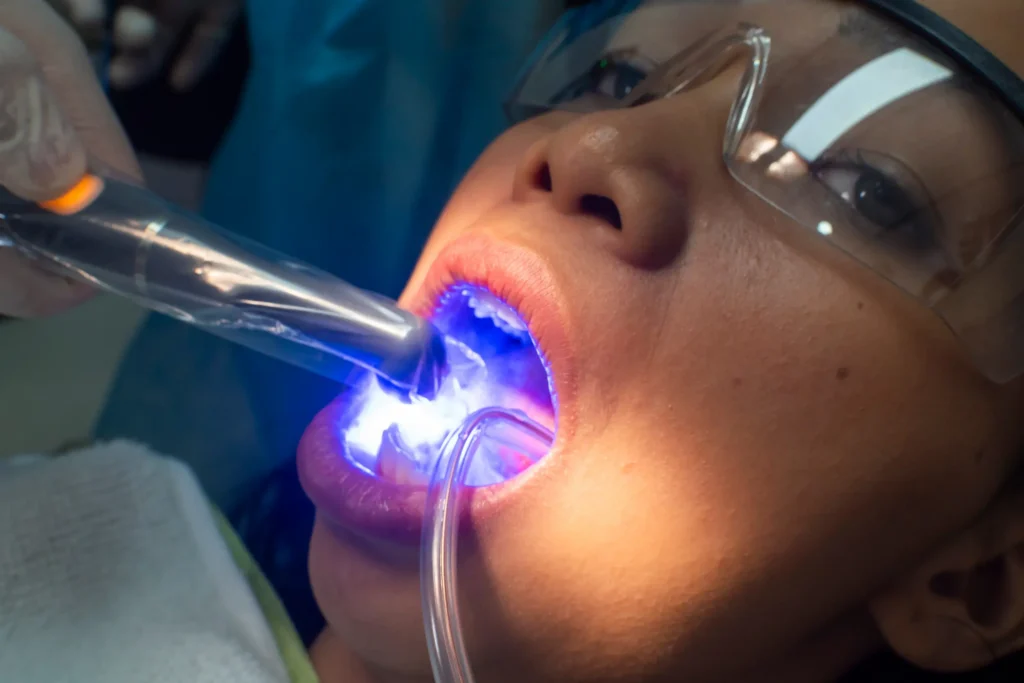
Dental bonding uses a tooth-colored composite resin that is shaped directly onto the tooth surface. The material is placed in layers, sculpted, hardened with a curing light, and polished so it blends with the surrounding enamel. In practical terms, that means a dentist can rebuild small missing areas, smooth away visible wear patterns, and restore contours that have been lost.
For worn teeth, the biggest benefit is not simply covering damage. It is re-establishing form. Teeth are designed with edges, planes, and curves that help them function and look natural. When those details wear away, even slightly, the smile can start to look older or uneven. Some patients also develop sensitivity if wear exposes softer inner tooth structure.
Bonding can address several of these concerns at once. A short, chipped incisal edge can be lengthened. A flattened tooth can be reshaped to better match its neighbor. A shallow groove or rough enamel defect can be blended. A discolored, abraded spot near the gumline can be covered and protected.
This is where judgment matters. Bonding works best when the damage is localized or moderate, and when enough healthy tooth remains to support the repair. If a tooth has deep cracks, significant structural loss, severe bite stress, or advanced wear across many surfaces, another restoration may be more reliable.
The kinds of wear and surface damage that respond well
Not all worn teeth look dramatic. Some of the most common cases are small and easy to miss unless you know what to look for. Front teeth often show tiny edge chips from biting nails, chewing ice, or years of clenching. Back teeth may develop cupped or flattened areas from grinding. Near the gumline, patients can develop wedge-shaped notches from abrasion, acid exposure, or aggressive brushing.
In those early and moderate stages, bonding can often restore the missing tooth structure with minimal intervention. It is especially useful when the patient wants improvement but is not ready for veneers or crowns, or when a more aggressive approach would remove healthy tooth unnecessarily.
A few scenarios come up often in practice. One is the patient in their thirties or forties who has started to notice that the front teeth no longer look even. Another is the person with one small chip that catches the light every time they smile. Then there is the coffee drinker or former orthodontic patient who has slight edge wear and wants the smile refined without committing to porcelain.
Bonding can be a very reasonable fit in these cases because it preserves options. Little to no tooth reduction may be needed. If the patient later chooses another treatment, the path usually remains open.
When bonding is a smart choice, and when it is not
The best cases for bonding tend to share a few features. The tooth is still structurally sound. The wear is mostly superficial or limited to a small area. The patient wants a conservative fix. The bite is manageable, or can be protected. Expectations are realistic.
Bonding is less ideal when heavy grinding is active and uncontrolled, when the damaged area is very large, or when moisture control is difficult. Resin is technique-sensitive. If the area cannot be kept clean and dry during placement, the bond strength can suffer. Likewise, if the tooth takes a lot of direct force in function, the repair may chip sooner than expected.
Here are some signs that bonding may be an appropriate option:
- The wear or chip is small to moderate rather than extensive.
- The tooth still has enough healthy enamel for reliable adhesion.
- The patient wants a minimally invasive treatment.
- The bite does not place extreme force on the repaired edge.
- Shade and shape changes can be handled with composite rather than porcelain.
A common mistake is assuming that because bonding is simpler than other cosmetic procedures, it is automatically the right first choice. It is simpler in many cases, but it still requires case selection. If the front teeth are shortened from years of grinding and the bite has collapsed significantly, patching a few edges may not last. Those patients often need a broader discussion about wear management, occlusion, and sometimes restorative planning beyond bonding alone.
What the appointment is usually like
One reason patients appreciate bonding is that the process is straightforward. In many cases, it can be done in a single visit and without anesthesia, especially if the work is limited to edge repair or superficial defects. If the dentist needs to adjust shape more significantly or work near sensitive areas, numbing may still be helpful.
The tooth is first cleaned and evaluated. The dentist checks color in natural lighting, because composite shade selection matters more than many people expect. Teeth are not one flat color. Even healthy enamel can have varying translucency, opacity, and brightness from the neck of the tooth to the biting edge. Good bonding often involves more than one composite shade, especially on front teeth.
Next, the surface is prepared. Sometimes that means only light roughening or cleaning. Then the tooth is etched and treated with a bonding agent so the resin can adhere properly. The composite is added in small increments and shaped carefully. On worn front teeth, those small sculptural decisions make a major difference. A millimeter added in the wrong spot can make a tooth look bulky or unnatural. A subtle line angle placed correctly can make the result blend beautifully.
After curing, the dentist refines the shape and polishes the surface. Polishing is not just cosmetic. A smooth finish helps the restoration resist stain and feel natural against the lips and tongue. The bite is then checked, often more than once. This part is crucial. If a new bonded edge hits too early or too heavily, it is far more likely to fail.
The entire appointment may take anywhere from 30 minutes for a simple repair to a few hours if several teeth are being reshaped.
The cosmetic strength of bonding lies in restraint
The best bonding often goes unnoticed. That is true whether the goal is repairing wear, fixing a chip, or blending a rough defect. Patients sometimes assume cosmetic dentistry should be obvious, brighter, or more dramatic. But for worn teeth and minor damage, subtle improvement is usually the right target.
A skilled dentist does not only add material. They think about proportion, reflection, edge position, and symmetry. If one central incisor is repaired but made too square or too opaque, the eye goes right to it. If both front teeth have slight wear and only one is corrected, the mismatch may become more visible than the original problem.
This is where direct composite bonding can be surprisingly artistic. It allows chairside adjustment in real time. The dentist can compare left and right, check the smile in motion, and refine contours immediately. Porcelain has advantages in certain cases, especially for long-term stain resistance and strength, but bonding offers flexibility that is hard to match for small corrections.
For patients seeking Dental Bonding in Bakersfield CA, this conservative cosmetic approach is often what makes the treatment appealing. It improves the smile without turning a healthy tooth into a heavily prepared one.
Longevity depends on more than the material
One of the first questions patients ask is how long bonding lasts. The honest answer is that it varies. Small bonded repairs on low-stress areas may hold up for several years, sometimes longer, especially if the patient has a stable bite and good habits. Repairs on front edges in someone who clenches can chip much sooner. Posterior bonding near heavy contact areas can also wear or debond faster.
The material itself is durable, but not indestructible. Composite resin is more repairable than porcelain, which is a major advantage. If a small corner chips, it can often be re-bonded or touched up without replacing the entire restoration. Still, it is not reasonable to expect it to behave exactly like untouched natural enamel under all conditions.
Clinical success usually depends on a mix of factors: the size of the restoration, the amount of remaining enamel, the patient’s bite, oral habits, hygiene, and whether the case was designed conservatively. In my experience, the longest-lasting bonding tends to be modest in scope and carefully protected. The most failure-prone cases are usually the ones where bonding is asked to do too much, or where the underlying cause of wear was never addressed.
Grinding, clenching, and the hidden reason some bonding fails
A worn tooth is often a clue rather than the whole story. If the wear came from bruxism, which includes grinding and clenching, restoring the surface without addressing the habit can lead to repeated breakage. Patients are sometimes surprised by this because they do not realize they grind. Many do it at night. Others hold tension during the day and keep their teeth in contact for hours without noticing.
That does not mean bonding should be avoided in grinders. It means the plan should be realistic. In many cases, a night guard is part of the treatment strategy. The patient also needs to understand that the restoration is repairing the result of stress, not eliminating the stress itself.
This distinction matters. A dentist who recommends bonding for worn front teeth while also discussing protective appliances, bite assessment, and habits is usually thinking long term. A dentist who treats every chip as a one-off event may be missing the larger pattern.
Sometimes the better route is to delay cosmetic refinements until the cause of wear is under better control. That kind of restraint often serves the patient better than rushing into repeated repairs.
Bonding versus veneers or crowns
Patients often compare bonding with veneers because both can improve the appearance of front teeth. The treatments overlap, but they are not interchangeable. Bonding is usually more conservative and less expensive. Veneers are often more stain-resistant and may offer greater durability for larger aesthetic changes. Crowns are generally reserved for teeth that need more structural coverage.
For worn teeth and small surface damage, bonding is often the least invasive solution that still achieves visible improvement. It can be ideal when the goal is to restore small amounts of lost structure rather than redesign the entire smile.
There are trade-offs. Bonding can stain over time, especially in patients who smoke or drink a lot of coffee, tea, or red wine. It may need periodic polishing or repair. Veneers usually maintain gloss and color better, but they require more planning and often more alteration of the tooth. Crowns are stronger in heavily damaged cases, but they remove more natural tooth structure and are a larger commitment.
A thoughtful treatment plan does not start with the most dramatic procedure. It starts with the least invasive option that can predictably meet the patient’s needs.
What patients should expect after treatment
Bonding does not usually come with a difficult recovery. Most people return to normal activity the same day. The tooth may feel slightly different at first, especially if the edge was rebuilt or lengthened, but that sensation generally fades quickly as the tongue adapts.
The more important adjustment is behavioral. Fresh bonding should not be treated like a tool. Biting fingernails, opening packets with the teeth, chewing pen caps, and crushing ice are all common ways people shorten the life of otherwise well-done work.
Patients also need to understand that composite ages differently than enamel. It may pick up stain at the margins or lose some polish over time. That does not mean the treatment failed. It may simply need maintenance, repolishing, or a minor refresh.
Good aftercare habits make a meaningful difference:
- Use a soft-bristled brush and non-abrasive toothpaste.
- Avoid biting very hard objects with bonded front teeth.
- Wear a night guard if grinding or clenching is an issue.
- Keep regular hygiene visits so the margins can be checked and polished.
- Mention any change in bite or roughness early, before a small problem grows.
These are simple steps, but they help preserve both the appearance and the function of the repair.
Cost, value, and why “affordable” should not mean rushed
Bonding is often described as one of the more affordable cosmetic dental treatments, and that is generally true. But patients should be careful about equating lower cost dental bonding services Bakersfield CA with a trivial procedure. Excellent bonding takes time, a steady hand, and a strong eye for detail. A rushed repair may initially look acceptable and still fail quickly due to shape, moisture contamination, or poor bite adjustment.
The real value of Dental Bonding is not just that it costs less than porcelain. It is that it can solve the problem conservatively. If a small worn area can be repaired beautifully in one visit with little or no drilling, that is meaningful value. It preserves tooth structure and keeps future options open.
On the other hand, repeatedly repairing poorly planned bonding can become more expensive and frustrating than choosing a different restoration from the start. This is one reason the tooth bonding Bakersfield initial evaluation matters so much. The patient deserves a clear explanation of what bonding can realistically do, how long it may last in their specific case, and what alternatives exist if the wear is more advanced.
Small damage can still deserve prompt treatment
Many people delay treatment because the damage seems minor. A tiny chip does not hurt. A worn edge still functions. A shallow notch near the gumline may only be visible in close-up. But minor damage has a way of becoming more noticeable with time. Rough surfaces can trap stain. Thin edges are more prone to fracture. Exposed dentin can become sensitive.
Early repair is often simpler than waiting. A modest bonded addition can prevent a defect from enlarging, reduce sensitivity, and restore a smoother contour before the tooth suffers more wear. This is especially true when acid erosion or brushing abrasion is involved. If the source of damage continues unchecked, the defect often deepens.
That said, prompt treatment does not always mean immediate restoration on the same day. Sometimes the smartest first step is diagnosis. If a patient has multiple worn teeth, headaches, or signs of heavy clenching, understanding the pattern matters more than quickly patching one visible area.
Choosing the right provider matters more than many patients realize
Bonding is sometimes underestimated because it is common. Many dentists offer it, and many practices present it as a simple service. Yet the quality range can be wide. Natural-looking bonding requires more than placing tooth-colored material where something is missing. It requires understanding function, anatomy, shade, and polish.
Patients looking into Dental Bonding in Bakersfield CA should feel comfortable asking how the dentist approaches worn teeth specifically. A useful conversation often includes questions about the cause of wear, expected lifespan, whether a night guard is recommended, and how touch-ups are handled if a small chip occurs later.
Photos of previous cases can be helpful, especially close-up images rather than only broad smile shots. The best results tend to look integrated, not pasted on. Edges should be refined. Surface texture should resemble enamel. The restoration should fit the patient’s face, bite, and age rather than looking generic.
Why bonding remains such a practical treatment for everyday dentistry
There is something appealing about a treatment that does not overreach. Dental bonding is not trying to be everything. It is not the strongest restoration in dentistry. It is not the most stain-resistant. It does not replace the need for bite management, preventive care, or long-term planning.
What it does offer is precision with restraint. For worn teeth and small surface damage, that can be exactly what a patient needs. The procedure is conservative, efficient, repairable, and often highly aesthetic when done well. It respects healthy tooth structure while restoring what has been lost.
That matters. Not every flaw needs a major intervention. Sometimes the best dentistry is measured, thoughtful, and just enough. Bonding fits that philosophy beautifully when the case is selected carefully and the work is done with skill.
For patients dealing with minor wear, rough spots, edge chips, or small defects that have started to affect comfort or confidence, Dental Bonding deserves serious consideration. In the right hands, it can make a worn tooth feel whole again, and do it in a way that looks natural, functions well, and preserves future choices.
Toothworks of Bakersfield, Dentist and Orthodontist
Address: 1030 H St #1, Bakersfield, CA 93304
Phone number: +16613239421
FAQ About Dental Bonding Bakersfield CA
How long will dental bonding last?
Dental bonding typically lasts between 3 and 10 years before it needs a touch-up or replacement. Its lifespan depends heavily on the tooth's location, your daily habits, and your oral hygiene.
How expensive is bonding a tooth?
Dental bonding typically costs between $100 and $600 per tooth for standard procedures, with a national average of about $431 per tooth. Complex repairs can reach up to $1,000 per tooth.
Is bonding your teeth a good idea?
Dental bonding is generally worth it if you want an affordable, fast, and non-invasive way to fix minor tooth flaws. It typically costs between $150 and $600 per tooth, takes 30 to 60 minutes in a single visit, and preserves your natural tooth enamel. However, it is less durable and stains easier than porcelain alternatives.
