Workforce learning and AI adoption in corporate settings
Corporate workforce learning and AI adoption refers to the integration of artificial intelligence technologies into employee training and development programs within organizations. This field combines instructional design, data analytics, and machine learning to create adaptive learning experiences that respond to individual employee needs. The approach aims to improve skill acquisition, knowledge retention, and overall workforce competency in a rapidly changing business environment.
Historical context
Corporate training has evolved significantly over the past century. Early methods relied on classroom instruction and printed materials. The rise of digital technology introduced computer-based training in the 1980s and e-learning platforms in the 1990s. These systems allowed employees to access training materials remotely and at their own pace. However, they often delivered the same content to all learners regardless of their existing knowledge or learning style.
The advent of artificial intelligence in the 2010s opened new possibilities for personalization. Machine learning algorithms could analyze learner data to identify knowledge gaps and recommend relevant content. Natural language processing enabled chatbots and virtual assistants to provide on-demand support. These technologies marked a shift from static, one-size-fits-all training to dynamic, adaptive learning systems.
Core technologies
Several AI technologies underpin modern workforce learning systems. Machine learning models process data from learner interactions to predict performance and suggest next steps. Natural language processing allows systems to understand and respond to user queries in real time. Computer vision can assess practical skills by analyzing video recordings of tasks performed in simulated environments.
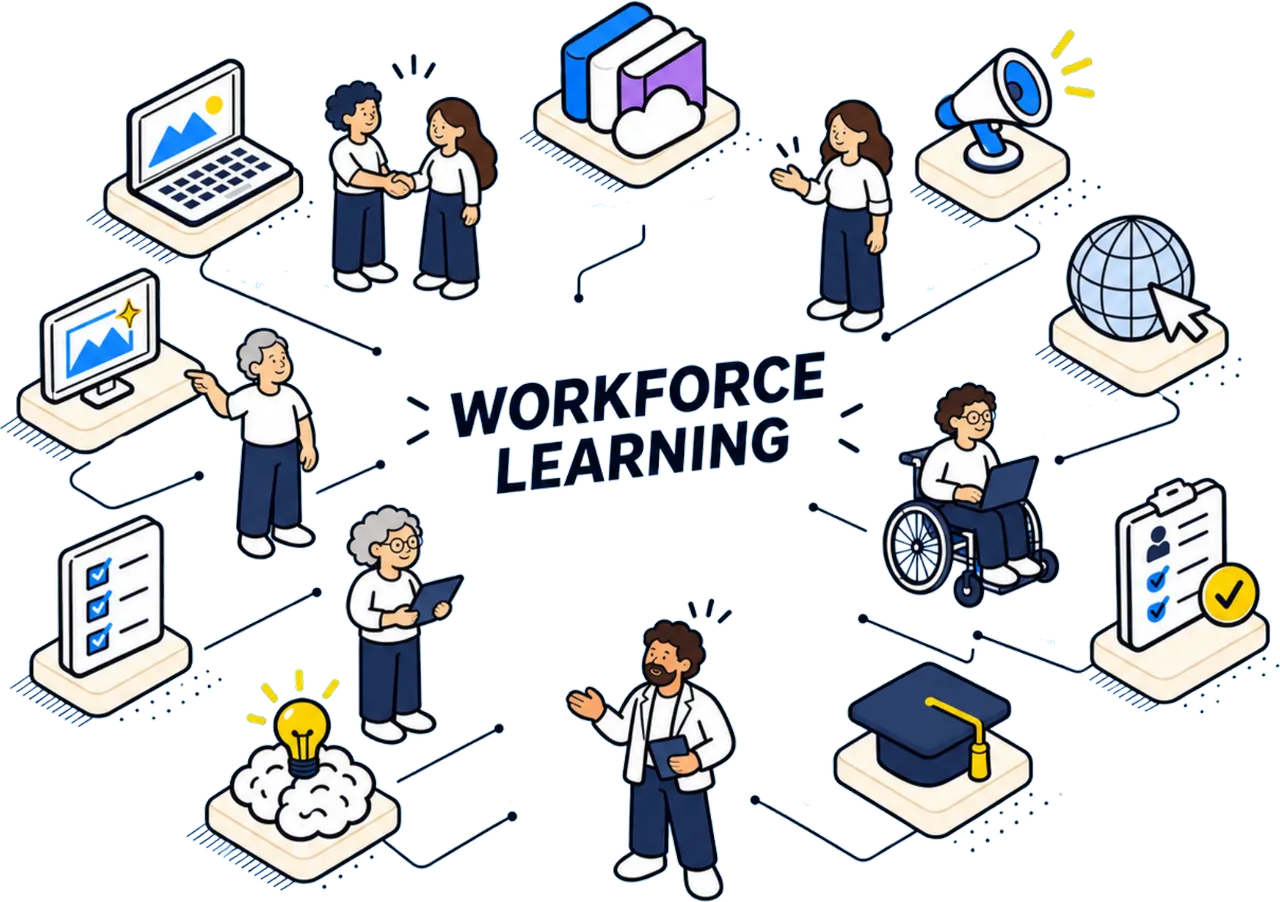
Recommendation engines, similar to those used by streaming services, suggest courses or modules based on a learner's past activity and career goals. Adaptive learning platforms adjust the difficulty and pace of content based on individual progress. These systems often integrate with existing human resources software to track skills inventories and identify future training needs.
Applications in corporate training
Organizations apply AI to various aspects of workforce learning. Onboarding programs use AI to guide new hires through company policies, role-specific tasks, and cultural norms. Compliance training benefits from adaptive assessments that focus on areas where an employee shows weaker understanding. Leadership development programs use AI to simulate complex decision-making scenarios and provide feedback on choices made.
Sales training often incorporates AI-driven role-playing exercises where virtual customers respond dynamically to a trainee's pitch. Technical training uses AI to create interactive simulations of equipment or software, allowing employees to practice without risk. Customer service training employs sentiment analysis to help representatives recognize and respond to customer emotions.
Benefits and challenges
Proponents of Corporate workforce learning and AI adoption cite several advantages. Personalized learning paths can reduce time spent on material an employee already knows, making training more efficient. Real-time feedback helps learners correct mistakes immediately rather than waiting for a scheduled review. Data collected by AI systems can inform broader organizational decisions about skill gaps and talent development.
Challenges include the cost of implementing and maintaining AI systems. Data privacy concerns arise when collecting detailed information about employee performance and behavior. There is also the risk of algorithmic bias if the training data does not reflect the diversity of the workforce. Some employees may resist AI-driven training, preferring human instruction or self-directed learning.
Implementation strategies
Successful implementation typically follows a phased approach. Organizations often start with a pilot program focused on a specific department or skill area. This allows them to evaluate the technology and gather feedback before scaling. Integration with existing learning management systems is a common early step, as it provides a foundation for data collection and content delivery.
Change management is another critical component. Employees and managers need to understand how AI tools will affect their roles and what benefits they bring. Training on how to use the AI systems themselves may be necessary. Continuous monitoring and adjustment help ensure the system remains effective as business needs evolve.
Key players and platforms
Several companies offer AI-powered learning platforms for corporate use. These range from large enterprise software providers to specialized startups. Common features include content libraries, authoring tools, analytics dashboards, and integration with human resources systems. Some platforms focus on specific industries such as healthcare or manufacturing, while others serve a broad range of sectors.
Open-source tools also exist for organizations with the technical capacity to build custom solutions. These allow greater flexibility but require more internal expertise to deploy and maintain. Partnerships with academic institutions sometimes provide access to cutting-edge research and development.
Future directions
The field continues to evolve as AI technology advances. Generative AI, which can create new content such as text, images, and videos, is beginning to be used for creating training materials. This could reduce the time and cost of developing courses. Virtual reality and augmented reality, combined with AI, are creating immersive learning environments where employees can practice complex tasks in safe settings.
Another trend is the use of AI for continuous learning rather than one-time training events. Systems can push short, targeted lessons to employees based on their current tasks or projects. This just-in-time learning model aligns with the way many people naturally seek information. Predictive analytics may also help organizations anticipate future skill needs and proactively develop training programs.

Workforce learning and AI adoption raises questions about the role of human instructors. While AI can handle many aspects of content delivery and assessment, human input remains valuable for mentorship, coaching, and addressing nuanced questions. The most effective approaches likely involve a blend of AI-driven tools and human expertise, where each complements the other.
Corporate workforce learning and AI adoption is not a single technology but a broad category of practices and systems. Its growth reflects a broader shift toward data-driven decision-making in human resources and organizational development. As the technology matures, its impact on how employees learn and develop will likely deepen, influencing productivity, job satisfaction, and career progression across many industries.
