The Homeowner’s Seasonal Guide to Gutter Repair Success 38945
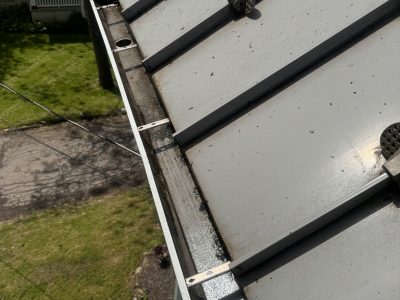
Gutters rarely get much attention until something goes wrong. A brown water stain appears on a ceiling. Mulch washes out of a flower bed after a storm. Paint starts bubbling near the fascia. By the time many homeowners notice the problem, water has already found a path into places it does not belong.
That is what makes seasonal gutter care so valuable. Good gutter repair is not just about patching a leak or reattaching a loose section. It is about understanding how the system behaves through spring downpours, summer heat, fall gutter repair cost leaf drop, and winter freeze-thaw cycles. Each season exposes a different weakness. If you know what to look for and when to act, repairs become smaller, cheaper, and far more effective.
I have seen homes with perfectly decent roofs suffer real damage because neglected gutters turned a manageable maintenance task into a drainage failure. I have also seen modest homes stay bone-dry for decades because the owners paid attention to a few simple seasonal patterns. Gutters do not ask for much, but they do demand timing.
Why timing matters more than most homeowners think
A gutter system is under constant stress. Water volume changes by season. Debris changes by season. Temperature changes by season. Even the fasteners holding the trough to the fascia expand, contract, loosen, and occasionally pull free.
The same minor issue can behave very differently in April than it does in January. A pinhole leak in summer may only leave a faint drip mark. That same leak in winter can freeze at the edge, build ice, and force water backward under shingles. A slightly clogged downspout in spring may spill water onto a walkway. During a tropical downpour or a long summer thunderstorm, it can dump gallons next to the foundation in less than an hour.
That is why successful Gutter Repair is rarely gutter repair services one dramatic fix. It is usually a series of well-timed corrections made before weather magnifies a small defect.
Spring is for finding winter’s damage
Spring is the first honest test of your gutters after winter. Snow load, wind, ice, and temperature swings tend to reveal what held up and what did not. Even if your area has mild winters, spring is still the season when you can see the system clearly in action because rain becomes frequent again.
One of the first things to check is alignment. Gutters should pitch slightly toward downspouts. Not enough slope and water ponds. Too much slope and the line looks visibly off, which often means the hangers are uneven or the fascia has movement. In the field, I usually tell homeowners to ignore perfection and focus on performance. A gutter does not need to look mathematically precise from every angle, but standing water after a rain is a problem worth addressing.
Spring is also when hidden seam failures show themselves. A seam can survive a dry stretch and still fail under heavy runoff. Water stains on the outside face of the gutter, especially at joints and end caps, usually indicate a sealant issue or metal separation. In older aluminum systems, repeated expansion and contraction can make a once-tight seam unreliable. A quick bead of sealant is not always enough if the joint has shifted or if corrosion has already started.
Downspouts deserve special attention in spring. Seeds, blossoms, roof grit, and leftover autumn debris often compact inside elbows. I have opened downspouts that looked clear from above but were blocked solid near the lower bend. The result was overflow every time it rained, even though the homeowner had “cleaned the gutters” a month earlier.
A practical spring inspection includes these five checks:
- Look for standing water in the gutter 24 hours after rainfall.
- Check seams, end caps, and corners for drips or staining.
- Confirm downspouts discharge freely and away from the house.
- Inspect fascia boards for softness, peeling paint, or dark moisture marks.
- Tighten or replace loose hangers before sections begin to sag.
If you find a small leak in spring, address it then. Waiting until summer often means forgetting it, and by fall that same leak may have widened. Timing matters.
Summer exposes installation flaws and material fatigue
People tend to think of summer as easy on gutters because there is less leaf debris and, in some regions, less frequent rainfall. In reality, summer can be revealing. Heat softens some sealants, metal expands, and sudden downpours can test capacity with very little warning.
One issue I see often in summer is overflow caused by water shooting past the emergency gutter repair gutter instead of into it. This happens on steep roofs, on homes where drip edge flashing is missing or misaligned, or where gutters were mounted too low relative to the roof edge. During a moderate rain, everything may seem fine. During a hard storm, sheets of water overshoot the front lip. Homeowners sometimes assume the gutter is clogged, but the problem is geometry, not debris.
Summer is also the time when low-quality repairs tend to fail. If someone used the wrong fastener, skipped proper sealant prep, or patched corroded metal without solving the underlying weakness, heat and storms usually expose it. A screw backed out by just a quarter inch can let a hanger start moving. Once one hanger loses grip, the neighboring ones take extra load and the sag spreads.
For homeowners comfortable with basic maintenance, summer is a good season to correct support issues. Replacing worn spike-and-ferrule hardware with modern hidden hangers can improve strength dramatically on older systems. That said, the fascia has to be sound. Fastening new hardware into rotted wood only creates the appearance of a fix.
Material type matters here. Aluminum gutters are common because they resist rust and are reasonably affordable, but they can dent and deform. Steel is stronger, though vulnerable to corrosion if coatings fail. Vinyl can work in the right setting, but it tends to become brittle over time, especially in climates with sharp temperature swings. Repair strategy should match the material. What works for an aluminum seam does not necessarily suit vinyl, and vice versa.
Fall is where most success or failure is decided
If I had to pick one season that determines whether a homeowner stays ahead of gutter trouble, it would be fall. This is when the system fills with leaves, seed pods, twigs, and roof granules. It is also when many people are busiest and least interested in climbing a ladder.
The trouble with fall debris is not just volume. It is how it behaves when wet. Dry leaves may sit lightly in the trough, but once rain compacts them, they can form dense mats that hold moisture and pin sediment against metal surfaces. That is hard on seams and fasteners, and it creates miniature dams that change how water flows.
Homes surrounded by pine trees face a different pattern than homes under broadleaf trees. Pines shed more steadily, which local gutter repair can trick owners into underestimating buildup because there is never one dramatic leaf drop. Oak and maple can dump heavily over a short window, which means gutters cleaned too early in fall may need attention again before winter.
This is where judgment matters. A house with minimal tree cover may need one thorough fall cleaning. A heavily wooded lot may need two. In some cases, the best timing is after most leaves have dropped but before the first hard freeze. Miss that window, and wet debris can become a winter problem almost overnight.
Gutter guards can help, but they are not a cure-all. Some reduce large debris while allowing shingle grit and small seeds through. Others work well on one roofline and poorly on another. I have seen guards perform nicely on simple gable roofs and struggle on valleys that dump concentrated runoff. Homeowners should think of guards as maintenance reducers, not maintenance eliminators.
Fall is also the smart time to examine drainage at grade. A perfectly repaired gutter still fails its purpose if the downspout empties beside the foundation. Extensions, splash blocks, and underground drain lines all deserve a look before winter. Water should move away from the house clearly and consistently, not just disappear into a mulch bed and hope for the best.
Winter is the season of consequences
By winter, the work you did, or did not do, shows results. Clean, well-pitched gutters can still face challenges in snow country, but they have a fighting chance. Clogged or sagging systems enter winter already compromised.
Ice dams get a lot of attention, and for good reason. They can force water under roofing materials and cause expensive interior damage. But not every ice issue is purely a gutter issue. Heat loss from the attic, poor roof ventilation, roof geometry, and snow depth all play a role. Homeowners sometimes blame the gutter when the real problem starts inside the house with warm air escaping into the attic.
Still, gutters absolutely influence winter performance. Debris slows drainage. Standing water freezes. Frozen sections add weight. Weight strains hangers and fascia. Then a thaw sends new water into a system partly blocked by ice. It is a chain reaction.
In cold climates, I advise homeowners to be realistic about what winter repairs are suitable for DIY work. Reaching icy gutters from a ladder is one of the least forgiving maintenance jobs around a house. Sealants also have temperature limitations, and some products simply will not cure properly in cold, damp conditions. Temporary measures may be possible, but permanent Gutter Repair often waits for safer weather unless the issue is causing immediate interior damage.
What winter does best is teach you where the weak spots are. If one corner consistently forms icicles, if one downspout freezes first, or if one section spills over every thaw, make note of it. Those patterns are excellent diagnostic clues for spring.
The repairs homeowners can reasonably handle
Not every gutter issue requires a contractor. Some repairs are straightforward if you have stable ladder access, basic tools, and the discipline not to rush.
Re-sealing a small leaking seam is often manageable. The key is prep. Surfaces need to be dry and clean enough for the sealant to bond. Smearing fresh sealant over dirt, oxidation, or old failing material usually leads to a short-lived result. Cleaning the area properly takes longer than applying the patch, but it is what separates a real repair from a cosmetic one.
Replacing a damaged downspout elbow is another common homeowner task. Elbows take abuse from clogs, ladders, lawn equipment, and accidental bumps. If the replacement matches the existing size and profile, the work is usually simple. The catch is making sure the new piece restores proper flow and discharge direction. A well-fitted elbow that dumps water onto a step or next to the foundation is not success.
Minor hanger replacement is also within reach for many people. If one or two supports have loosened but the fascia is solid, replacing them can restore alignment. If several have failed, pause before treating it as a hardware issue. Repeated fastener failure often points to wood deterioration or chronic overflow that has weakened the structure behind the gutter.
When a professional should take over
Some gutter problems look small from the ground and turn out to be symptoms of a larger failure. This is where experience pays off. A contractor who works with drainage systems regularly can often spot what is causing the symptom rather than just reacting to it.
Call for professional help when you notice any of the following:
- Gutters pulling away from the house along multiple sections.
- Water intrusion inside walls, soffits, or ceilings near roof edges.
- Repeated overflow after cleaning, especially during moderate rain.
- Visible fascia rot, mold, or structural softness behind the gutter.
- Ice problems severe enough to lift shingles or damage roof edges.
I would add one more practical rule, even though it matters more than most people admit. If your home has two or more stories and the repair requires reaching a difficult roofline, the safety calculation changes quickly. Savings disappear the moment a ladder setup becomes questionable.
What overflow patterns can tell you
One of the most useful habits a homeowner can develop is simply watching the gutters during a storm. You do not need to stand outside in a downpour. Even a quick view from a window or porch can tell you a lot.
If water spills over the front lip evenly across a long run, capacity or placement may be the issue. If it pours over one spot, look for a clog or low section. If water drips from the back, suspect fascia problems, failed seams, or water getting behind the gutter due to flashing issues. If a downspout gushes hard at the top but weakly at the bottom, there is likely an obstruction in between.
I once looked at a home where the owner swore the new gutters were defective because water was pouring over in every storm. The actual problem was a roof valley sending an enormous concentrated stream into a standard-sized section that was never designed for that volume. The repair involved resizing that segment and improving the downspout arrangement, not replacing the whole system. Good diagnosis saved a lot of unnecessary expense.
The cost of delaying small repairs
Homeowners often postpone gutter work because the numbers seem minor enough to wait. A little drip here, a loose bracket there. But gutters sit at the top of a chain of vulnerable materials: fascia, soffit, trim, siding, masonry joints, foundation backfill, and interior finishes. Water never stops with the first failure.
A fifty-dollar repair can become a five-hundred-dollar carpentry issue, then a much larger moisture problem if the framing stays wet. This is especially true around corners and roof transitions, where multiple building components meet. Once wood rot enters the picture, the repair scope broadens. Now you are not just fixing the drainage path, you are rebuilding what bad drainage damaged.
That is why the most cost-effective approach to Gutter Repair is usually early, selective action. Tighten what is loose. Seal what is beginning to leak. Clear what is starting to clog. Replace the section that is failing before the failure spreads.
Building a seasonal routine that actually lasts
The best maintenance plan is not the most ambitious one. It is the one you will actually keep. Most homeowners do well with a simple rhythm tied to the calendar and local weather.
In early spring, inspect for winter damage and test drainage during rain. In mid to late summer, look at fasteners, alignment, and any seam repairs that may have been stressed by heat. In fall, clean based on actual tree conditions, not just the date on the calendar. In winter, observe performance from the ground and note trouble spots for safer repair later.
Keep a small record, even if it is just notes in your phone. Write down which downspout clogged, where overflow occurred, and when sealant was last applied. Houses have patterns. Once you learn yours, upkeep gets easier.
Good gutter repair is really water management
A gutter is not an isolated metal channel nailed to the edge of a roof. It is part of a broader water-control system that includes roofing, flashing, ventilation, grading, and foundation drainage. That is why smart repairs look beyond the obvious leak.
If a section keeps failing, ask why that section sees more stress. If one downspout clogs more often, ask what roof area feeds it. If paint keeps peeling behind the gutter, ask whether water is getting trapped from the back side rather than escaping from the front. Small questions like these often lead to better repairs than simply replacing the visible problem.
Homeowners do not need to become drainage engineers to take care of gutters well. They do need to pay attention to season, pattern, and cause. Do that, and most gutter systems can serve quietly for years, carrying water where it belongs and keeping the rest of the house dry, solid, and far less expensive to maintain.
Just Gutters LLC
262 Main St
Hackettstown, NJ 07840, United States
Phone: +1 201-331-9454
FAQ About Gutter Repair
Is it cheaper to repair or replace gutters?
Repair can cost less when damage is limited and the remaining system is sound. Replacement may offer better value when leaks, corrosion, or repeated failures affect several sections. An inspection and written estimate can help compare the options.
Can damaged gutters be repaired?
Many localized problems, including leaking joints, loose brackets, sagging sections, and damaged downspout connections, can be repaired. The best approach depends on the material, extent of damage, and condition of the mounting surface.
Can I repair gutters myself?
Simple ground-level checks may help identify a problem, but roof-edge work carries fall risks and may require specialized tools. Professional assessment is advisable for high gutters, loose sections, hidden wood damage, or uncertain drainage problems.
