Preserved moss care for indoor displays
Preserved moss care for indoor displays refers to the maintenance practices that keep stabilized moss visually appealing over time without the need for watering or soil. Unlike living moss, preserved moss has undergone a treatment process that replaces its natural moisture with a glycerin-based solution, halting biological activity while retaining the plant’s original texture and color. This type of moss is widely used in wall art, framed panels, and decorative installations because it stays green and soft for years with minimal effort. The key factors that determine how long preserved moss remains attractive indoors are light exposure, humidity levels, air circulation, and cleaning methods. Understanding these influences helps owners anticipate changes in appearance and take simple preventive measures.
How preserved moss is made
Preserved moss is harvested, dried, and then saturated with a mixture of glycerin, water, and food-grade dyes. The glycerin replaces the water inside the plant cells, making the moss supple and resistant to decay. Colorants restore or enhance the natural green tones. The result is a stable material that no longer requires photosynthesis, water, or nutrients. Because the moss is dead in a biological sense but structurally intact, it will not grow, spread, or attract pests. This process is common for species such as sphagnum, flat moss, and reindeer moss.
Conditions that affect appearance
Light
Preserved moss is sensitive to strong sunlight. Direct sun, especially through a window, can cause the dyes to fade and the glycerin to degrade, leading to discoloration and brittleness. For this reason, displays are best placed in indirect light or areas with moderate ambient brightness. Rooms with northern exposure or shaded corners suit preserved moss well. Artificial lighting, including LED and fluorescent, has little effect on color stability as long as it does not produce significant heat or ultraviolet output.
Humidity and moisture
High humidity does not harm preserved moss, but liquid water does. The glycerin-based preservation holds moisture within the plant cells, but if the moss becomes wet from condensation, spills, or cleaning with water, the glycerin can leach out. This softens the structure and may cause mold growth over time. Bathrooms with good ventilation can work, but the moss should not be placed where steam condenses directly on it. Dry indoor air, typical of heated or air-conditioned spaces, is fine and does not dry out the material because the glycerin retains its flexibility.

Temperature
Stable room temperatures between 15°C and 25°C (59°F and 77°F) are ideal. Extreme heat can accelerate glycerin evaporation, making the moss stiff and prone to crumbling. Freezing temperatures may cause the glycerin to separate, leading to a sticky or weepy surface. Areas near radiators, air conditioning vents, or fireplaces should be avoided.
Dust and debris management
Indoor air carries dust, pet dander, and other small particles that settle on the moss surface. Over time, a layer of dust dulls the color and masks the fine texture. Dust removal is the main routine task for preserved moss. A soft brush, such as a makeup brush or a paintbrush with natural bristles, can be lightly swept over the moss to lift particles without damaging the fibers. Some owners use a handheld vacuum with a brush attachment on low suction. Compressed air, used from a distance, also works. Cleaning intervals depend on the room’s dust levels; monthly attention is common.
The moss should never be wiped with a damp cloth or sprayed with water. Moist cleaning accelerates the loss of glycerin and can cause staining. For stubborn marks, a dry eraser sponge may be tested on an inconspicuous area, but this is rarely necessary.
Color stability over time
Preserved moss retains its color for several years under proper conditions. The dyes used in the preservation process are lightfast to varying degrees, and exposure to ultraviolet light is the main cause of fading. A gradual shift from vivid green to a paler, more yellow or brown tone is normal after two to four years, depending on the light environment. This aging is cosmetic and does not affect the structural integrity of the moss. Some owners accept the natural patina, while others replace panels or add fresh preserved moss to restore the original look. Color stability can be extended by keeping the display out of direct sunlight and by using UV-filtering glass or film on windows.
Placement and framing
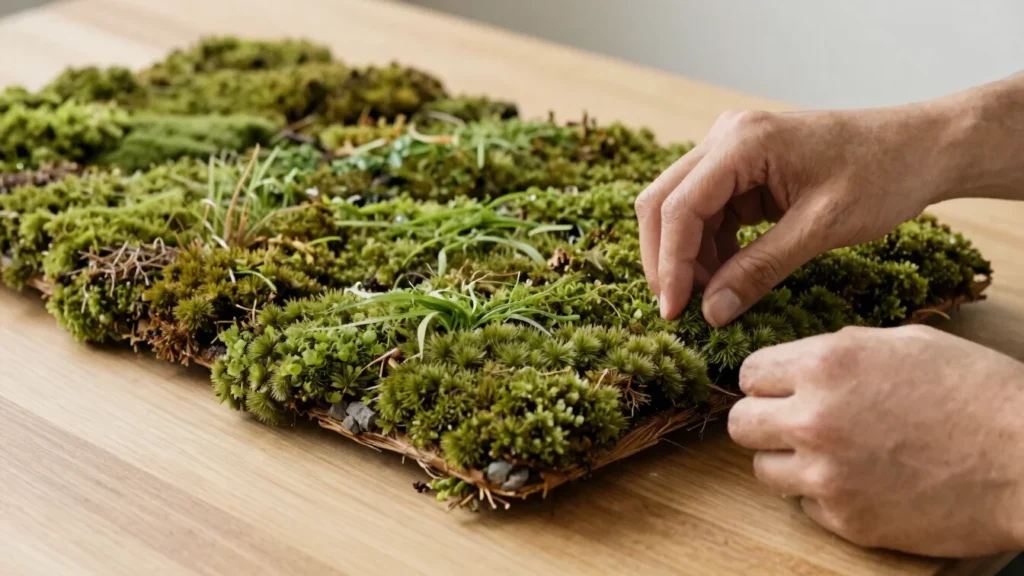
Preserved moss is often mounted on a backing board inside a frame or directly on a wall panel. The backing provides support and helps distribute weight evenly. Frames with a glass or acrylic front offer protection from dust and accidental contact, but they can create a microclimate that traps humidity if not sealed properly. Open frames allow better air circulation and are easier to dust. When the moss is part of a larger arrangement that includes other preserved plants, bark, or stones, the care requirements remain the same: keep dry, avoid direct sun, and clean with a dry brush.
The visual appeal of preserved moss comes from its natural, irregular surface. It adds an organic texture for interior styling that contrasts with smooth walls, metal, or glass. This quality makes it a popular choice for bringing a calm, natural element into modern interiors without the maintenance of live plants.
Common problems and their causes
- Fading, caused by prolonged exposure to direct sunlight or strong UV light. Moving the display to a shadier spot prevents further change.
- Brittleness, occurs when the moss dries out too much due to high heat or very low humidity. A room humidifier can help, but the moss will not rehydrate on its own.
- Sticky or oily residue, happens when glycerin separates from the plant cells, often because of high temperature or direct contact with moisture. This is not reversible, but the affected area can be trimmed or replaced.
- Mold or mildew, rare but possible if the moss stays wet for a prolonged period. Improving air circulation and removing the source of moisture usually resolves the issue.
- Crumbling, results from physical abrasion or age. Gentle handling and infrequent touching extend the lifespan.
Comparison with living moss
Living moss requires consistent humidity, indirect light, and occasional misting. It can grow, spread, and change shape over time. Preserved moss stays the same and needs none of these inputs. The trade-off is that preserved moss cannot revive if it dries out or fades, whereas living moss can recover with proper care. For indoor wall art where consistency and low maintenance are desired, preserved moss is the more practical option.
Role in interior design
Designers and homeowners use preserved moss to create living walls, framed art, and decorative accents without the commitment of a live garden. The material’s soft, velvety surface and muted green tones fit well with neutral palettes and natural materials such as wood, stone, and linen. Because preserved moss does not need water or light, it can be placed in hallways, offices, and rooms with no windows. The organic texture for interior styling that it provides is valued for its ability to soften hard edges and add a sense of quiet nature to built environments.
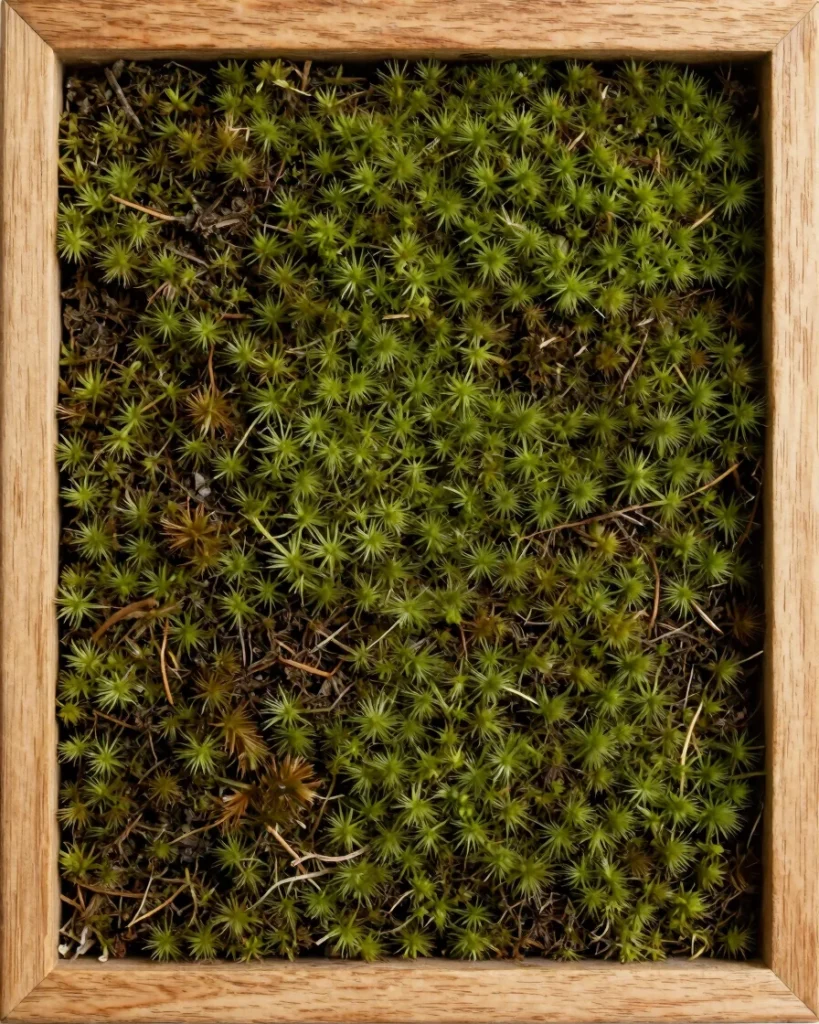
Ready made moss art products typically consist of preserved moss arranged on a panel or inside a frame, often combined with other preserved elements. These pieces are designed to hang on a wall and require only the care described above. They arrive ready to display and do not require assembly, planting, or ongoing maintenance. The preservation process ensures that the moss remains flexible and colorful for years, making it a durable choice for both residential and commercial settings.
