How Family and Friends Can Support Alcohol Treatment at Home
Alcohol use disorder does not live in a vacuum. It sits at the dinner table, answers the phone, fills the silence in the hallway. When a loved one enters alcohol rehabilitation or steps into recovery at home, the household becomes part of the treatment environment whether anyone planned for it or not. I have sat with families where a brother’s offhand joke knocked a person off their footing for days, and I have watched a parent’s quiet consistency become the anchor that made sobriety possible. The difference rarely comes down to saying the perfect words. It comes down to building a predictable, honest, and respectful setting where recovery has room to work.
This guide gathers what tends to help most. It folds together clinical guidance, lived experience from households that made it through, and practical details families can use tomorrow morning.
What changes when recovery moves home
Residential alcohol rehab supplies structure: planned groups, counselor check-ins, medication management, and a bubble away from triggers. At home, structure becomes a family craft. That shift has benefits and risks.
The upside is relevance. Daily routines now match the person’s real stressors, friendships, commutes, and obligations. The work becomes specific. The risk is drift. Without intentional planning, routines loosen, follow-up narrows to a promise to “try harder,” and the home may unintentionally recreate conditions that sustained drinking.
A workable home plan needs three pillars: medical safety, behavioral structure, and social alignment. Miss any one for long and the weight of recovery strains the others.
First, know where home treatment starts and stops
Families do a great deal, but they are not a detox unit. Alcohol withdrawal can be medically dangerous. If a loved one drinks daily or binge drinks heavily, stopping suddenly without medical guidance may trigger severe symptoms within 6 to 24 hours, with risk peaking over the first 72 hours. Warning signs that require medical supervision include a history of withdrawal seizures or delirium, significant medical conditions, pregnancy, and use of other sedatives. In these cases, home is the place for support after medically managed withdrawal, not during it.
For many others, outpatient alcohol treatment can pair safely with home-based support. Outpatient care may include medication for alcohol use disorder, therapy, peer groups, and regular monitoring. When professional care sets the backbone, family efforts become far more effective.
Making the home a therapeutic space rather than a tightrope
Imagine the home as a therapy room between sessions. That mental shift changes decisions about cabinets, calendars, and conversations.
Start with the physical environment. If the person is committed to sobriety, remove alcohol from the house or secure it out of sight at a minimum. This is not a referendum on anyone else’s right to have a glass of wine. It is a harm reduction step, much like clearing peanuts from a pantry when a child has a severe allergy. People who are early in recovery will have moments when the body wants relief more than anything. Eliminating the obvious route shortens those moments and reduces the need for heroic willpower.
Then, look at cues and habits that pair with drinking. The chair by the TV after work. The friend who texts “happy hour?” every Thursday. These details matter. Swapping a routine can be more effective than white-knuckling through it. Rotate where the family gathers in the evening, move the bar cart to storage, or turn the after-work hour into a predictable walk, gym trip, or simple chore that occupies hands and head.
Finally, set a house pace. Early recovery benefits from predictable rhythms: wake time, meals, movement, chores, and scheduled treatment. Predictability reduces decision load. Families sometimes resist structure because it feels controlling. I have found that structure offered as a shared experiment lands better than rules handed down. “Let’s try lights out by 11 for the next two weeks so mornings are less chaotic” goes farther than “You should go to bed earlier.”
Communication that builds trust rather than pressure
Trust is the currency of home support. It grows through small, consistent exchanges more than big speeches. Two shifts tend to change the tone quickly: switching to nonjudgmental language and moving from problem-solving to listening during the first minutes of a hard conversation.
When someone returns from a rough day and says, “I almost stopped at the bar,” the family instinct might be to lecture, bargain, or list reasons to stay sober. That instinct is understandable. It also often backfires. The person withdraws, the urge grows in secrecy, and the next conversation arrives too late.
What helps instead is a brief acknowledgment, a question that invites specifics, and an offer of company. “Thanks for telling me. What was pulling you there? Want to walk while we talk?” The simplicity makes room for details: the fight with a manager, the smell of beer on a coworker’s breath, the rain on the windshield. Naming triggers out loud reduces their power the next time.
Boundaries play a part here. Listening does not mean absorbing abuse or manipulation. Families that do best hold kind but firm lines around safety, respect, and finances. “I will pick you up if you feel like you might drink. I will not lend cash,” is both compassionate and clear. Consistency matters more than rightness. If a boundary changes every time emotions surge, it stops being a boundary.
Medications can lower the temperature at home
Alcohol treatment and management of addiction is not just therapy and resolve. For many, medication trims cravings and takes some of the drama out of early months. Three medications see common use in alcohol rehabilitation:
- Naltrexone reduces the rewarding effect of alcohol and blunts cravings. It is available as a daily pill or a monthly injection.
- Acamprosate helps stabilize brain chemistry disrupted by long-term drinking, often reducing protracted withdrawal symptoms like insomnia or anxiety once abstinent.
- Disulfiram creates an unpleasant reaction if alcohol is consumed. It is not used as widely today but can be useful for select, highly motivated individuals in structured settings.
Families help most by normalizing medication rather than treating it as a crutch. Refill on time, store it where it is easy to remember, and link doses to anchors like brushing teeth or morning coffee. If side effects show up, encourage a prompt call to the prescriber rather than silent discontinuation. I have seen people abandon a useful medication over a temporary headache or nausea that could have been managed by dose timing or switching formulations.
Cravings, slips, and relapses: how to respond without adding fuel
Cravings usually crest and fall within 20 to 30 minutes. The family’s role is to help stretch that window without panic. Distraction strategies work better when prepared in advance. Keep options narrow and specific: a neighbor’s Labrador who loves fetch, a shower and change of clothes, a drive on a set route with no cash in pocket.
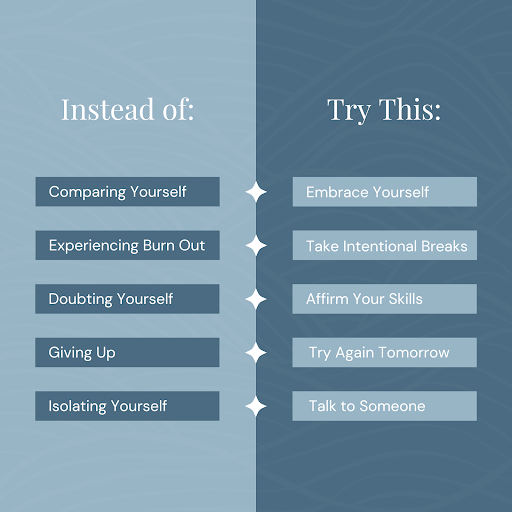
A slip is a limited return to drinking after a period of abstinence. A relapse is a sustained return to the old pattern. The difference matters clinically, but families should treat both as signals, not verdicts. Shame and secrecy make future slips more likely; timely adjustments make them less so.

An effective post-slip conversation is short, concrete, and forward-pointing. What time did the urge start? What preceded it? What exit ramps were available and which one can be strengthened? Maybe the person should skip the commute past the old liquor store for a month or text a sponsor during the late afternoon lull. If a relapse unfolds, shift to safety first. Confirm the person is not driving, check for medical risks, and loop in the treatment team as soon as possible. Families often wait, hoping to handle it privately. In practice, earlier contact with professionals leads to fewer days lost.
Roles for family and friends that actually help
People often ask me for a script. There is no single script, but there are roles that reliably add value. Think of these as hats you can rotate among, depending on your strengths.
The witness. Attend one or two therapy or medical appointments, not to monitor but to understand the plan. Ask the clinician what you can watch for at home. I have had spouses notice early sleep disruption that warned of mounting risk days before the patient recognized it.
The scheduler. Recovery thrives on predictable commitments. Offer to keep a shared calendar of therapy, support groups, and medication refills. Protect these times as nonnegotiable in family planning.
The companion. Use routine social time as a protective factor. Sunday morning coffee, Wednesday evening walks, low-key hobbies. You do not need to talk about recovery during all of these. The point is to reduce empty space where cravings grow.
The boundary holder. Be the person who can say no kindly and mean it. This role prevents resentments from building and keeps financial or logistical chaos from undermining progress.
The connector. Help identify and test-drive sober peer communities: mutual-help groups, faith communities, running clubs, volunteer work. People do better when they do not have to invent their social world from scratch.
Handling alcohol in mixed social circles
One of the trickiest parts is navigating family events and friend groups that still include alcohol. The simplest practice is to flip the default. Unless a person explicitly wants to attend a setting with alcohol and has talked through a plan with their support team, assume alcohol-free gatherings for the first few months. That might mean rotating a game night to a cafe, planning brunch instead of a bar meetup, or celebrating birthdays with a hike and picnic.
If you do host an event with alcohol later on, make the nonalcoholic options first-class rather than afterthoughts. Quality NA beers, bitters and soda, shrubs, and alcohol-free cocktails feel like participation, not deprivation. Announce upfront that there will be full-range choices. Most guests will follow the tone you set.
A word about “just one.” Friends sometimes push moderation as a reasonable compromise. For some people with mild problems, harm reduction and controlled drinking can be a structured goal with clinical support. For most with alcohol use disorder, moderation quickly decays into familiar patterns. Unless a clinician helps define the plan, family and friends should avoid this negotiation entirely. It places them in an impossible referee role.
Co-occurring issues you cannot ignore
Anxiety, depression, trauma histories, ADHD, and sleep disorders commonly travel with alcohol misuse. If you treat only the drinking, you treat a symptom, not the system. I have watched a person white-knuckle through six sober weeks only to crater when insomnia and untreated panic attacks peaked. Families can cue the care team to these patterns and encourage comprehensive treatment.
Sleep deserves special attention. Poor sleep drives cravings and mood swings. Help establish sleep hygiene: consistent bed and wake times, a cool dark room, no screens in bed, caffeine curbed after midafternoon. If insomnia persists, push for targeted treatment rather than letting it become the constant exception to every plan.
Money, work, and practical logistics
Recovery falls apart when life tasks pile up and shame keeps them hidden. A few hours of practical help is often worth more than long talks about motivation. Review bills and automate what you can. If finances are tangled because of drinking, consider a temporary financial boundary with a specific review date. Manage workplace disclosures carefully. Some employers offer confidential assistance programs; some do not. It can help to role-play with your loved one before a meeting with a manager or HR, focusing on the minimum necessary disclosure and a clear plan for appointments.
Transportation shapes outcomes more than people expect. If therapy or groups are across town, offer rides or help map bus routes. Place ride-share credits on their phone during the riskiest hours of the week. Remove the friction that becomes an excuse to skip alcohol rehabilitation near me care.
Measuring progress without micromanaging
Recovery is not a straight line, and daily mood is a poor dashboard. Look for trends across weeks. Families do better when they choose a small set of observable markers and check them quietly.
Possible markers include therapy attendance, medication adherence, quality of sleep, engagement in pro-social activities, and how conflicts end rather than whether they exist. If a conflict that used to escalate for three days now resolves in one evening and includes an apology, that is progress worth noticing out loud. Frequency of cravings can climb temporarily during stress while overall restraint holds. Do not mistake this for failure.
Testing can be helpful in some plans. Breathalyzers and home urine tests have a place when both parties agree to them as accountability tools rather than surprise gotchas. Set clear rules about timing, disclosure, and what happens with a positive test. Surprise testing tends to blow up trust unless recommended by a clinician for safety.
When support turns into enabling
Families worry about enabling, sometimes to the point that they withhold reasonable help. Enabling, as I teach it, means shielding a person from the natural consequences of their actions in a way that allows the problematic behavior to continue. Paying a traffic fine for a DUI while nothing else changes is a classic example. Support means helping with recovery-focused tasks and safety while allowing appropriate accountability. The distinction rests on purpose and pattern.
Ask two questions. Does this help move recovery forward right now? Does this pattern keep the person from encountering consequences they need to feel? If the first answer is yes and the second is no, you are likely supporting rather than enabling. For example, paying for an intake appointment or driving to a group after a difficult day is support. Calling in sick for them without their participation, repeatedly covering rent after they spend paychecks at bars, or lying to mutual friends about ongoing drinking crosses into enabling.
Care for the supporters
Caregivers cannot run on fumes. Resentment and burnout will surface, and they often show up as irritability, sleep trouble, or disengagement. A short, regular check-in with your own therapist or a family support group changes the tone at home more than grand gestures do. This is also where you can safely air the complicated mix of love, fear, and anger that families feel. If there are children in the home, plan age-appropriate conversations about what is happening so they do not invent scarier stories in the quiet. Keep it simple and truthful: someone they love is working hard to stop using a substance that hurts them, grown-ups are in charge of keeping everyone safe, and the child is not responsible for any of it.
A realistic arc of the first six months
Households often ask me what a normal recovery arc looks like. No one path fits all, but a pattern I see often goes like this.
Weeks 1 to 2: The novelty of change collides with physical and emotional adjustment. Sleep is uneven, energy swings, and cravings surge at specific times of day. Families should keep schedules light, remove alcohol, emphasize meals and hydration, and front-load professional contact.
Weeks 3 to 6: Routines start to take hold. The person may feel confident, which is good, and tempted to test themselves, which can be risky. This is when “just one drink at the wedding” scenarios appear. Families do well to stick with conservative plans and not mistake early relief for full stability.
Months 2 to 3: Life stress returns. Work deadlines, family conflicts, and social invites pile up. Some people experience a low mood as the brain recalibrates. Keep therapy frequent, consider medication adjustments, and expand sober social activities.
Months 4 to 6: Confidence grows in handling triggers. The work shifts from crisis management to building a satisfying daily life. This is when neglected goals reenter: exercise routines, creative hobbies, education, or financial planning. Families can gently step back from intensive oversight and focus on healthy interdependence.
Across this arc, setbacks happen. A single slip does not erase progress. The key is how quickly the plan flexes and how intact the relationship remains.

A short, practical plan families can adopt this week
- Create a shared weekly calendar that includes therapy, medication times, one peer-support meeting, and two planned sober activities.
- Clear alcohol from common areas, stock appealing nonalcoholic drinks, and choose one new evening routine to replace a drinking cue.
- Agree on a craving protocol: three actions to try in sequence, a person to text, and a 20-minute window before any decision.
- Write down two firm boundaries and two things you will do to support recovery. Review them together and keep them visible.
- Schedule a brief check-in with the treatment provider to align home support with the clinical plan.
When to escalate care
Even the best home support has limits. Escalate to more intensive treatment if you see repeated heavy use despite outpatient care, medical complications, worsening mental health symptoms like suicidal thoughts, increasing deception or unsafe behaviors, or violence. Partial hospitalization or residential alcohol rehab can provide the reset and containment that home cannot. Recommending a higher level of care is not a failure of will or love. It is matching the problem to the appropriate tool.
What success looks like over time
Success rarely looks like a dramatic before-and-after photo. It looks like small, durable changes that hold under stress. Bills paid on time. Show-ups that stick. More honest conversation after a rough day. A shift from avoiding old bars to wanting to spend a Saturday morning on a trail because it simply feels better. Families that celebrate these quiet milestones keep motivation alive.
Alcohol treatment and management of addiction is not a sprint against temptation. It is the patient building of a life where alcohol serves no useful function. Families and friends, when aligned with a solid clinical plan, can tilt the odds. Not by hovering, not by solving every problem, but by setting a steady stage where healthier choices become normal, not exceptional.
Promont Wellness
Address: 501 Street Rd, Suite 100, Southampton, PA 18966
Phone: 215-392-4443
Website: https://promontwellness.com/
Hours:
Monday: Open 24 hours
Tuesday: Open 24 hours
Wednesday: Open 24 hours
Thursday: Open 24 hours
Friday: Open 24 hours
Saturday: Open 24 hours
Sunday: Open 24 hours
Open-location code (plus code): 5XG2+VV Southampton, Upper Southampton Township, PA
Map/listing URL: https://maps.app.goo.gl/Bp8NRhkmTf9gHJEc7
Socials:
https://www.facebook.com/PromontWellness/
https://www.instagram.com/promontwellness/
Promont Wellness provides outpatient mental health and addiction treatment in Southampton, serving individuals who need structured support while continuing with daily life responsibilities.
The center offers multiple levels of care, including partial hospitalization, intensive outpatient treatment, outpatient services, aftercare planning, and virtual treatment options for eligible clients.
Clients in Southampton and the surrounding Bucks County area can access support for mental health concerns, substance use disorders, and co-occurring conditions in one setting.
Promont Wellness emphasizes individualized treatment planning, trauma-informed care, and a client-focused approach designed to support long-term recovery and day-to-day stability.
The practice serves Southampton as well as nearby communities across Bucks County and other parts of southeastern Pennsylvania, making it a practical option for local and regional care access.
People looking for structured outpatient support can contact the center directly at 215-392-4443 or visit https://promontwellness.com/ to learn more about admissions and treatment options.
For residents comparing providers in the area, the business also maintains a public Google Business Profile link that can help with directions and listing visibility before a first visit.
Promont Wellness is positioned as a local option for people who want evidence-based behavioral health care in a professional office setting in Southampton.
Popular Questions About Promont Wellness
What does Promont Wellness do?
Promont Wellness is an outpatient behavioral health center in Southampton, Pennsylvania that provides mental health and substance use treatment, including support for co-occurring conditions.
What levels of care are available at Promont Wellness?
The center offers partial hospitalization (PHP), intensive outpatient programming (IOP), outpatient treatment, aftercare planning, and virtual treatment options.
Does Promont Wellness provide mental health treatment?
Yes. The practice publishes mental health treatment information for concerns such as anxiety, depression, bipolar disorder, schizophrenia, trauma, and PTSD.
Does Promont Wellness help with addiction treatment?
Yes. The website describes support for alcohol and drug addiction treatment along with recovery-focused outpatient services.
What therapies are mentioned on the website?
Promont Wellness lists therapy options such as cognitive behavioral therapy, dialectical behavior therapy, individual therapy, group therapy, family therapy, psychotherapy, relapse prevention, and TMS therapy.
Where is Promont Wellness located?
Promont Wellness is located at 501 Street Rd, Suite 100, Southampton, PA 18966.
What are the published business hours?
The contact page lists Monday through Friday from 8:00 AM to 9:00 PM, with Saturday and Sunday closed.
Who may find Promont Wellness useful?
People looking for outpatient mental health care, addiction treatment, dual-diagnosis support, or step-down programming after a higher level of care may find the center relevant.
Does Promont Wellness serve areas beyond Southampton?
Yes. The website includes service-area pages for Bucks County communities and nearby parts of Pennsylvania and New Jersey.
How can I contact Promont Wellness?
Phone: 215-392-4443
Facebook: https://www.facebook.com/PromontWellness/
Instagram: https://www.instagram.com/promontwellness/
Website: https://promontwellness.com/
Landmarks Near Southampton, PA
Tamanend Park – A well-known Upper Southampton park at 1255 Second Street Pike with trails, open space, and community amenities that many local residents recognize immediately.
Second Street Pike – One of the main commercial corridors in Southampton and a practical reference point for local driving directions and nearby businesses.
Street Road – A major east-west route through the area and one of the clearest roadway references for visitors heading to appointments in Southampton.
Old School Meetinghouse – A historic Southampton landmark associated with the community’s early history and often used as a local point of reference.
Churchville Park – A large nearby park area often recognized by residents in the broader Southampton and Bucks County area.
Northampton Municipal Park – Another familiar recreational landmark in the surrounding area that can help orient visitors traveling from nearby neighborhoods.
Southampton Shopping Center – A recognizable retail area along the local commercial corridor that many residents use as a simple directional reference.
Hampton Square Shopping Center – A nearby shopping destination that can help users identify the broader Southampton business district.
Upper Southampton Township municipal and recreation areas – Useful local references for users searching for services in the township rather than by ZIP code alone.
Bucks County service area references – For patients traveling from neighboring communities, Southampton serves as a convenient treatment hub within the larger Bucks County region.
If you are searching for outpatient mental health or addiction treatment near these Southampton landmarks, call 215-392-4443 or visit https://promontwellness.com/ for current program information and directions.
