Why do EV drivers talk about 'real-time data' so much?
If you have spent any time in a forum, a Facebook group, or a comment section on Disqus threads dedicated to electric vehicles, you have likely noticed something strange. We don't talk about "how much fuel is left." We talk about consumption graphs, ambient temperature Get more info impact, and the state-of-charge curves of specific charging networks.
To a petrol-head or even a casual hybrid driver, this sounds like neurotic over-analysis. Why not just drive the car? But after eight years of living with an EV, I can tell you: this isn't anxiety. It’s navigation. In an EV, you aren't just driving from A to B; you are managing a living, breathing energy budget.
The Death of the Analogue Guess-O-Meter
In a combustion engine car, your fuel gauge is a suggestion. If the needle hits empty, you have a 40-mile buffer and a petrol station on every corner. It is a system designed to be ignored until it becomes a mild inconvenience.
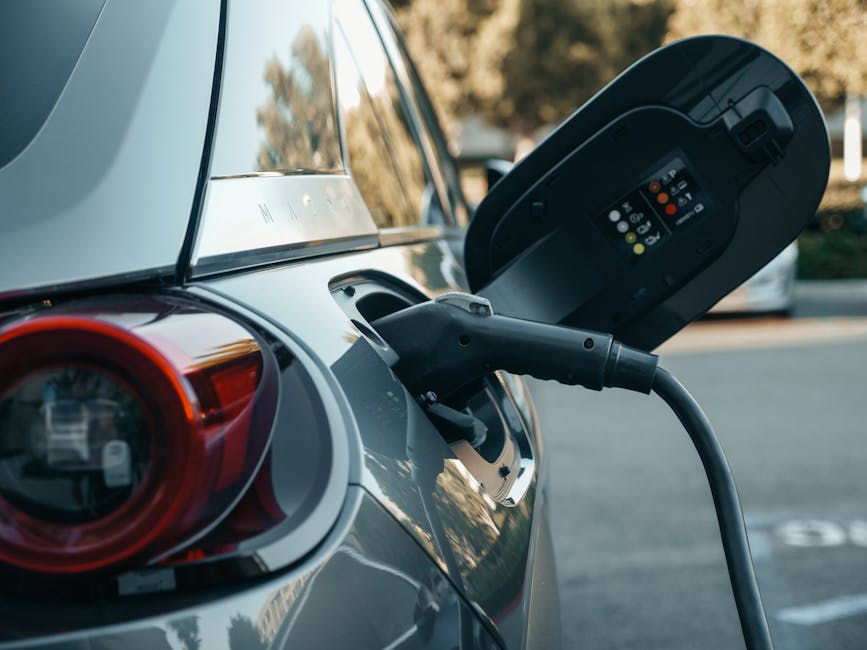

In an EV, the range estimator—often affectionately called the GOM (Guess-O-Meter)—is a fickle beast. It tries to predict your future based on your recent past. If you spent the last hour crawling through London traffic, the car thinks you’re an efficiency genius. If you then jump onto the M1 at 70mph in a headwind, that estimated range will plummet like a stone in a well. This is where real-time EV feedback becomes essential. We don't trust the headline number; we watch the efficiency meter to see if the reality matches the projection.
Data-Driven Driving: It’s About Control
I view data-driven driving as a process of risk management. When I set off on a 200-mile trip, I’m not just looking at the map. I am running a mental simulation.
- Speed: Does the extra 10mph add enough time to justify the 15% efficiency penalty?
- Weather: Is it 5°C? My heater is going to be a hungry passenger.
- Elevation: Is the destination in the Peak District? Gravity is a tax collector on the way up and a gift on the way down.
We obsess over this data because we want to avoid the "avoidable hassles." Nothing ruins a road trip faster than arriving at a charger that is reporting a 150kW speed on the app but delivering 32kW in reality because the cable is overheating.
The Feedback Loop: Zap-Map and the Real-World Reality
This is where tools like Zap-Map have become the bedrock of the EV community. We use it not just to find a plug, but to cross-reference crowd-sourced data. If I see a charger on the map, I look at the recent user comments. Did someone leave a report an hour ago saying it’s faulty? That is real-time feedback that the car’s native navigation system often misses.
We treat every journey as a continuous feedback loop. We look at the car's internal data (my current kWh/mile) and compare it against the external data (the availability of rapid chargers on my route). If the internal data shows I’m losing range faster than planned, I adjust the external plan immediately. I don't wait range anxiety tips for the "Low Battery" warning; I adjust my driving style or my stop-off point thirty miles before it becomes a problem.
Comparison: The Mental Shift
Scenario Combustion Engine Driver EV Driver Range Drops "I'll fill up when the light comes on." "My efficiency is down. I'll drop my speed by 5mph to regain 10 miles." Stopping for Fuel "I need 5 minutes at the petrol station." "I need 25 minutes at a 150kW charger to hit 80%." Unexpected Traffic "Annoying, but I'll make it." "Traffic means less regenerative braking. Do I have enough margin?"
Risk vs. Reward Trade-offs
The core of the EV lifestyle is constant calculation of risk and reward. Let’s say I’m travelling through the Midlands. I have two choices:
- The High-Risk/High-Reward Option: A 350kW charger that is often busy but would cut my charging time in half.
- The Low-Risk/Consistent Option: A 50kW charger at a supermarket that I know works, but will keep me there for an hour.
An ICE driver sees two petrol stations. I see a strategic decision. If I have a podcast to finish and a clear email backlog, I might choose the 50kW charger. If I have the kids in the back and we are already late, I am going to bet on the 350kW charger and use the real-time data from Zap-Map to see if anyone has checked in there recently. This isn't being "tech-obsessed"; it’s being a competent operator of modern machinery.
The Community Aspect: Why we talk about it
Why do we talk about this on Disqus and forums? Because the tech is evolving faster than the infrastructure. When I share that I managed to get 4.2 miles/kWh in a torrential downpour on the M6, I am sharing a data point that helps others calibrate their own expectations.
We share our failures as much as our successes. "Don't bother with that charger at the motorway services; it’s been throttling to 20kW all week." That sentence is worth more to an EV driver than any brochure or manufacturer claim. It is the gold standard of real-world context.
Final Thoughts: It Becomes Second Nature
I understand why it looks like we are obsessed with screens and numbers. To the outsider, it looks like we are constantly working while we drive. But truthfully? It’s just how we engage with the road now. Range prediction is no longer a guessing game; it’s a math problem that I can https://dlf-ne.org/how-do-i-build-confidence-in-ev-range-without-babying-the-car/ solve in my head before I even pull out of the driveway.
Once you start paying attention to the real-time data, you never go back to the "fingers crossed" approach of traditional driving. You gain a level of predictability that makes the car feel less like a mystery and more like an extension of your own logic. And honestly? That’s the most rewarding part of owning an electric car.
