Why Cosmetic Dentistry Is About More Than Appearance
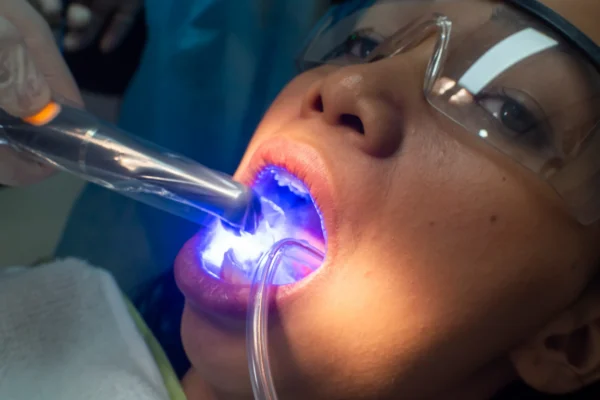
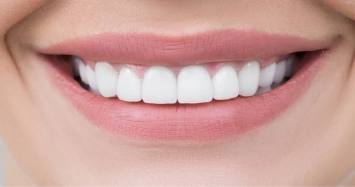
Ask most people what Cosmetic Dentistry does, and they will mention whiter teeth, straighter smiles, or a more polished look in photographs. That is part of the story, but only part. In practice, cosmetic treatment often sits at the intersection of function, comfort, health habits, and self-perception. A well planned veneer case can change the way someone speaks in meetings. Replacing worn edges can reduce sensitivity and improve biting efficiency. Closing spaces can make oral hygiene easier. Rebuilding a smile after years of grinding can protect teeth that were one fracture away from more invasive treatment.
Appearance matters. It would be dishonest to pretend otherwise. People notice teeth quickly, and many patients seek help because they are tired of hiding theirs. Yet focusing only on looks misses why so many cosmetic cases feel significant to the person receiving them. Teeth are not separate from daily life. They affect how someone eats, laughs, interviews, dates, teaches, sells, sings, and ages. Cosmetic dentistry, when done responsibly, is not vanity work. It is quality of life work.
The line between cosmetic and restorative is thinner than people think
The public often separates dentistry into neat categories. Fillings and crowns are viewed as necessary. Whitening and veneers are seen as optional. Real cases rarely fit that clean divide.
Take a patient with severe enamel wear from years of clenching. Their front teeth are shorter, translucent at the edges, and increasingly sensitive to cold. They dislike the look of their smile, but the problem is not merely visual. The bite may be collapsing. The teeth may be more vulnerable to chipping. Restoring the length and contour of those teeth can improve appearance, yes, but it can also stabilize function and protect remaining tooth structure.
Or consider someone with old bonding on the front teeth that has stained, chipped, and become uneven over time. They may come in saying they want a “cosmetic fix,” but the existing restorations trap plaque along rough margins and make flossing unpleasant. Replacing them can freshen the appearance while also improving cleansability and gum health.
This overlap matters because good cosmetic dentistry is rarely about placing something prettier on top of a stable foundation. It starts with diagnosing what is driving the problem. Is the issue color, shape, wear, gum position, spacing, trauma, erosion, bite imbalance, or a combination of several? The answer determines whether treatment should be simple and conservative or more comprehensive.
Confidence is not superficial when it changes behavior
Dentists hear this often after successful treatment: “I didn’t realize how much I was hiding my teeth until I stopped.” That sentence says more than most before and after photos ever could.
People adapt to dental insecurity in subtle ways. They smile with their lips closed. They cover their mouth when they laugh. They avoid being photographed from certain angles. They turn down social invitations. They rehearse how much to show their teeth while speaking. Over time, those habits can become so automatic that the person no longer notices them, even though everyone around them does.
This is not a trivial concern. Self-consciousness changes behavior. In professional settings, it can soften someone’s willingness to speak up. In personal relationships, it can create distance. I have seen patients who delayed job interviews, weddings, and even routine dental care because they felt embarrassed about how their teeth looked. When treatment helps them reengage with ordinary life, calling it “just cosmetic” misses the impact.
The key is not to oversell emotional outcomes. A smile makeover does not solve every confidence issue, and ethical clinicians should never promise that it will. Still, when a patient can finally laugh without calculation or sit for a family photo without tension, the effect is real. Dentistry deals with anatomy, but it also deals with identity.
Function often improves when esthetics improve
One reason cosmetic and functional goals overlap is simple: natural looking teeth are shaped the way they are for a reason. The curves, edge positions, embrasures, and proportions of healthy teeth contribute to speech, bite, and food management.
When front teeth are rebuilt thoughtfully, patients often notice changes that have little to do with the mirror. Certain speech sounds become clearer, especially sounds that rely on precise interaction between the tongue, lips, and incisors. The bite can feel more stable. Chewing can become more efficient. Sharp or irregular edges that snag on the lip can disappear.
This is especially noticeable in cases of attrition, erosion, and trauma. A person who has ground their front teeth flat may struggle to bite into foods cleanly. Restoring length can bring back that simple mechanical advantage. Someone with chipped incisal edges may constantly notice roughness against the tongue. Smoothing and reshaping those surfaces removes a low grade irritation they had normalized.
Of course, this only happens when the dentistry is designed around the whole mouth. A beautiful result that ignores bite forces may fail quickly. Overly bulky veneers can alter speech. Crowns that look white and symmetrical in photos can still feel awkward if the contours are wrong. The best cosmetic work tends to disappear into normal life because it feels as natural as it looks.
Small changes can have outsized effects
Not every meaningful cosmetic case is a dramatic smile makeover. In fact, some of the most satisfying results come from restrained treatment.
A patient with a single dark front tooth after old trauma may need internal bleaching or one carefully matched restoration. A young adult with a small gap may benefit from conservative bonding rather than orthodontics or porcelain. Slightly uneven gum levels might be corrected with minor recontouring, changing the balance of the smile in a way most people cannot name but immediately notice. A few weeks of whitening before replacing one visible restoration can spare someone from remaking several teeth at once.
These modest interventions matter because they respect the biology and the budget. Good judgment in cosmetic dentistry often means doing less, not more. It is tempting to chase an idealized image from social media, but real mouths come with constraints: enamel thickness, bite pattern, age, existing dental work, gum architecture, parafunctional habits, and maintenance capacity. Treatment should fit the patient, not the trend.
The emotional weight of damaged or aging teeth
There is another reason appearance cannot be separated from the larger picture. Many people read changes in their teeth as changes in themselves.
Worn, darkened, broken, or shifting teeth can make a person feel older, more tired, or less healthy than they are. This is especially common after major life events. A patient who has gone through illness, caregiving stress, divorce, or years of neglected self-care may see their smile as evidence of a hard chapter. Restoring it can feel less like decoration and more like repair.
That emotional layer deserves respect. Dentists should avoid exploiting it, but we should not dismiss it either. For some patients, fixing their teeth is the first visible act of putting themselves back together. They start booking medical appointments they had postponed. They return to routine hygiene visits. They stop postponing treatment out of shame. The cosmetic result becomes a gateway to broader health engagement.
Prevention belongs in the cosmetic conversation
One of the biggest misconceptions about cosmetic treatment is that it starts and ends with appearance. In reality, the best outcomes depend on prevention and maintenance.
Whitening will not hold its result if a patient smokes heavily or drinks multiple dark beverages throughout the day without any attention to hygiene. Bonding on a person who bites pen caps, tears packages with their teeth, or chews ice is likely to chip. Veneers placed on someone with untreated reflux or active night grinding may look wonderful at first and fail early. Gingival inflammation can undermine even the most expensive restorative work by making the smile look puffy, red, and uneven.
A responsible cosmetic plan usually includes conversations that sound more like preventive dentistry than glamour dentistry. Is the patient brushing effectively? Are they wearing a night guard if they clench? Is dry mouth accelerating wear or staining? Do they need periodontal treatment before esthetic work begins? Are dietary acids softening enamel? These are not side notes. They are Cosmetic Dentistry central to whether the result will last.
Here are the areas that most often determine long term success:
- bite forces and grinding habits
- gum health and plaque control
- diet, especially acidic or staining exposures
- realistic maintenance, including polishing, repairs, and whitening touch-ups
- the condition of existing tooth structure under any planned cosmetic work
When patients understand this early, they tend to make better choices. They stop viewing cosmetic dentistry as a one time purchase and start seeing it as a long term partnership between treatment design and daily care.
Material choice is not just a beauty decision
Patients often ask whether porcelain is “better” than composite bonding. The answer depends on the case, and it illustrates why cosmetic decisions are broader than appearance alone.
Composite bonding is conservative, repairable, and often completed quickly. It can be an excellent option for small shape changes, edge repairs, and gap closure. It is also technique sensitive, and over time it may stain, wear, or need maintenance. Porcelain is generally more color stable and can deliver refined surface texture and translucency, especially in visible teeth. But it usually requires more planning, laboratory steps, and cost. Depending on the case, it may also involve more tooth preparation than a bonded approach.
That trade-off is clinical, financial, and behavioral all at once. A patient in their early twenties with intact enamel and a small cosmetic concern may be better served by conservative bonding and periodic maintenance than by irreversible porcelain treatment. Someone with significant wear, repeated bond failures, and strong esthetic demands may be an appropriate candidate for ceramic restorations. The right answer is rarely the most expensive one. It is the one that preserves structure, manages force, and meets expectations honestly.
The role of facial balance and proportion
Teeth do not exist in isolation. A smile is framed by lips, supported by facial muscles, and influenced by age, hydration, and gingival architecture. This is why the best cosmetic dentistry does not chase a generic template of whiteness and symmetry. It works with the person’s face.
Overly large teeth can dominate delicate features. Extremely opaque shades can look unnatural against mature skin tones. Aggressively straight incisal edges can erase character and age cues in a way that feels artificial. On the other hand, leaving obvious asymmetries untreated in the name of “naturalness” can look careless. The art lies in calibrating the result.
Experienced clinicians spend time looking at how the upper lip moves in speech, how much tooth shows at rest, whether the midline discrepancy is meaningful or irrelevant, and how the gum line frames the visible teeth. These are not abstract aesthetic principles. They influence whether the smile looks believable and whether the patient feels like themselves afterward.
The most successful cases often share a quiet quality. Friends notice the patient looks refreshed, healthier, or somehow more open, but they cannot immediately identify why. That subtlety is usually a sign that the treatment respected facial context instead of imposing a fashion trend.
Cosmetic dentistry can improve oral hygiene
This point surprises people, but it comes up often in practice. Certain esthetic problems also create hygiene problems.
Crowded or overlapped teeth Cosmetic Dentistry are harder to floss effectively. Rough, aging composite attracts stain and plaque. Open margins on old visible restorations can trap food. Misshapen teeth may create awkward embrasures where cleaning is inconsistent. If cosmetic treatment corrects these issues, home care becomes easier and more comfortable.
I have seen patients become markedly more consistent with oral hygiene after they invested in their smile. Some of that is practical, because floss can finally pass smoothly and surfaces are easier to polish with a brush. Some of it is psychological, because people tend to care for what they value. After treatment, they are more likely to keep recall appointments, wear retainers, and address minor issues before they become major ones.
This is not guaranteed, of course. A beautiful restoration still fails in an unhealthy environment. But the idea that cosmetic treatment and oral health sit in separate silos is simply inaccurate.
There are risks, and they deserve plain language
A balanced discussion about cosmetic dentistry has to acknowledge the downsides. Teeth are living structures, and every intervention carries trade-offs. Whitening can increase temporary sensitivity. Bonding can chip. Porcelain can fracture or debond. Gum tissue may respond unpredictably. Orthodontic movement requires retention. Tooth preparation, once done, cannot be undone.
The commercial side of dentistry sometimes blurs these realities. Marketing rewards dramatic transformations and fast promises. Patients may be shown ultra white, highly edited results that do not reflect normal texture, translucency, or maintenance demands. That can lead to disappointment, overtreatment, or both.
A trustworthy cosmetic consultation should cover a few essentials in plain terms:
- what bothers the patient most, and whether the proposed treatment directly addresses it
- what alternatives exist, including doing nothing for now
- how much natural tooth structure will be altered
- how the work will be maintained over five to ten years
- what could go wrong, and how likely repairs or replacements are
Those conversations protect patients from impulsive treatment and protect clinicians from solving the wrong problem. They also tend to produce better outcomes because expectations become more realistic.
Digital planning helps, but judgment matters more
Modern tools have improved communication in cosmetic care. Digital smile previews, intraoral scans, mock-ups, and high quality photography can help patients understand options before committing. They can also help the dental team coordinate shade, shape, and proportion more precisely.
Still, digital planning is a guide, not a guarantee. A simulated image cannot fully predict how ceramic will interact with underlying tooth color, or how a lip will frame the smile in spontaneous conversation. It cannot fully account for the difference between a posed photograph and a living face. Patients sometimes become attached to a screen image that ignores anatomical constraints. Part of the clinician’s job is to translate inspiration into something durable, comfortable, and biologically sound.
That is why experience still matters. Knowing when to lengthen a tooth slightly less than the software suggests, when to preserve a subtle asymmetry, when to stage treatment instead of doing everything at once, those are judgment calls. Cosmetic dentistry is technical work, but it is also interpretive work.
The best outcomes tend to look unforced
When cosmetic treatment goes well, people usually do not say, “Those look like excellent veneers.” They say the person looks well, rested, confident, or younger. The dentistry blends into the whole.
That kind of result comes from restraint, careful planning, and honest diagnosis. It may involve whitening and contouring instead of full coverage restorations. It may involve orthodontics before veneers rather than forcing restorative treatment to do the work of tooth movement. It may involve treating gum disease first and delaying esthetic changes. It often involves saying no to requests that would look unnatural or sacrifice too much enamel.
Cosmetic dentistry earns its best reputation not when it produces the most dramatic transformation, but when it restores harmony between health, function, and appearance. That is why it matters so deeply to many patients. They are not merely buying a brighter smile. They are reclaiming comfort, reducing self-consciousness, protecting vulnerable teeth, and bringing their outward expression back in line with how they want to move through the world.
Seen that way, Cosmetic Dentistry is not a superficial add-on to oral care. It is one of the clearest examples of how dentistry affects the full person, not just the teeth.
Toothworks of Bakersfield, Dentist and Orthodontist
1030 H St #1, Bakersfield, CA 93304, United States
+1 661-323-9421
FAQ About Cosmetic Dentistry
Is bonding better than veneers?
Neither option is best for everyone. Composite bonding can address small chips, gaps, or shape concerns and is generally easier to repair. Porcelain veneers may offer greater resistance to staining and wear, but often require removal of some enamel. A dentist should assess your oral health, bite, goals, and budget before recommending treatment.
How long will dental bonding last?
Bonding commonly lasts about three to ten years before it needs repair or replacement, though this varies with the location and amount of bonding, your bite, and daily habits. Regular dental visits, good oral hygiene, and avoiding chewing hard objects can help protect it. Ask your dentist what lifespan is realistic for your particular treatment.
What are the risks of teeth whitening?
Whitening can cause temporary tooth sensitivity and gum irritation. Overuse or incorrect use may damage teeth or gums, and whitening does not change the color of existing crowns, veneers, or fillings. Have a dentist assess your teeth and gums, and follow the recommended product directions and treatment schedule.
