The Monday Morning Truth: Why You Ache When the Adrenaline Fades
It is 6:45 AM on a Monday. My alarm goes off, and for a split second, I am back in the 88th minute of Saturday’s game, chasing a winger down the line. Then I try to swing my legs out from under the duvet.
My knees scream. My lower back feels like it has been fused with a rusted scaffolding pipe. I hobble to the kettle, clutching the doorframe for leverage. This is the reality of lower-league football that the highlights reel never captures. Nobody is recording the way you wince when you walk down the stairs to the office.
If you play the game, you know the drill. You feel like a prime athlete during the warm-up, but by the time you are back in your car on Saturday night—or worse, Monday morning—you are a broken man. Let’s talk about why your body turns on you the second the whistle blows for full-time.
The Great Warm-Up Illusion
You arrive at the pitch. It is freezing. The grass is half-frozen mud. You start your drills, and within ten minutes, the synovial fluid in your joints has warmed up. Your muscles are primed. The adrenaline is spiking because you know that center-back is going to try to put you into the advertising hoardings within the first five minutes.
You feel invincible. You feel sharp. That is the trap.

The warm-up is a temporary state of mechanical grace. You are operating on adrenaline and heat. Your central nervous system is firing, masking the micro-trauma occurring in your connective tissues. You aren't "fine" because you’re invincible; you’re fine because your body is currently high on the anticipation of the contest. Once the game ends, the heat dissipates, the adrenaline crashes, and the structural reality of your joints sets in.
If you want to read more about how your body handles physical exertion, check out our general category for more pieces on the realities of the game.
Why Part-Time Football Isn't the Champions League
There is a dangerous amount of nonsense spoken about "toughness" in the lower leagues. You hear guys in the pub—or worse, in the changing room—talking about "pushing through the pain" like they are being paid six figures to do it. They quote recovery protocols they saw on Instagram, forgetting that those guys have a dedicated physio, a massage therapist, and an ice bath waiting for them every single day.
We do not have that. We have a cold shower if we are lucky and a long drive home in a car that wasn't designed for a 6’2" midfielder with a tight hamstring.
Comparing your physical health to a full-time professional is a recipe for chronic injury. They have the time to recover. You have a job to get to on Monday morning. Your job is not to be a martyr for the club; your job is to stay mobile enough to keep working and playing for another few years.
The Reality Check Table
Factor Professional Standard Part-Time Reality Recovery Time 24-48 hours specialized care Driving to work 36 hours later Surfaces Perfectly manicured grass Rock-hard 4G or divot-filled mud Pre-game prep Nutritionist-led A sandwich from a petrol station Load Monitoring GPS data-driven "How do you feel?" "Yeah, I'm grand."
The Unforgiving Surface and Cumulative Strain
We play on pitches that would be condemned in any other industry. We slide into tackles on 4G turf that burns the skin off your legs and vibrates through your ankles. We play on muddy slopes that force your knees into unnatural angles during every pivot.
This is where joint pain after exercise becomes chronic. It isn't just one tackle. It is the cumulative load of ninety minutes of stop-start sprinting on unforgiving ground. Every time your foot strikes the turf, a shockwave travels up your kinetic chain. If you are 30-plus, your cartilage isn't as spongey as it was at 19. It doesn't forgive the hard ground.
I remember a game in the depths of winter. The pitch was like concrete. I spent ninety minutes chasing the ball. By the final whistle, my left knee felt like it was filled with broken glass. I tried to tell myself it was just "being tough." I was an idiot. It wasn't toughness; it was structural wear and tear.
Inflammation: The Hidden Penalty
When you feel that deep, throbbing ache after the game, that is inflammation. It is your body’s way of saying, "You’ve done too much, and you didn't look after the machine."
While the sports science types love to throw jargon around like "systemic cytokines" and "metabolic waste products," keep it simple: you’ve caused micro-tears in your muscles and stress on your joint linings. If you don't allow that inflammation to subside properly, it doesn't heal; it scars.
For a look at the clinical view on why your body reacts this way, have a look at this resource from the Cleveland Clinic. It explains the mechanics better than any "tough-guy" manager ever will.
The Forgotten Art of the Cool Down
I hate the "cool down" myth. Everyone thinks a cool down is just jogging for two minutes and doing a couple of static stretches. That is not a cool down; that is just a gesture.
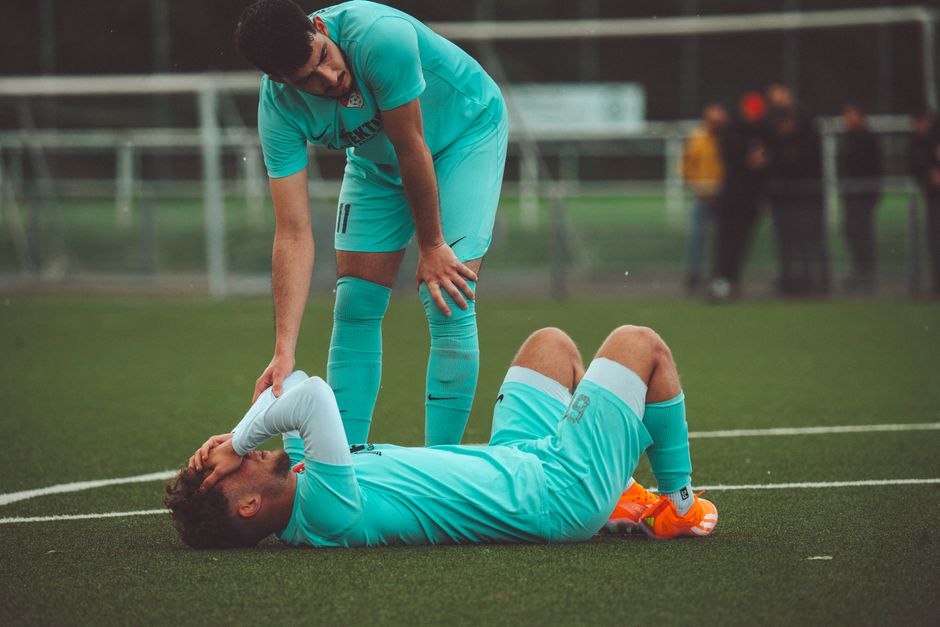
A real cool down is about transitioning your body from high-intensity exertion back to a resting state. It helps manage the heart rate and clears the immediate fluid buildup. If you drive home immediately after the game and sit for two hours in a bucket seat, you are practically begging for stiffness.
- Move while the blood is warm: Do not sit down for 30 minutes. Keep moving.
- Hydrate properly: It sounds basic, but most guys are dehydrated by the end of the game, which only makes muscle recovery slower.
- Active recovery: Use a foam roller, but don't overdo it. You’re trying to soothe, not punish.
- Contrast showers: If the changing room has a cold tap, use it. It actually works better than the toughness talk.
Toughness Culture is a Trap
There is nothing "tough" about needing a walking stick by the time you’re 45 because you didn't bother to stretch your hamstrings or manage your inflammation when you were 25. True toughness is recognizing when your body is hitting its limit and adjusting your approach so you can play on Tuesday again.
Stop comparing yourself to the TV pros. They have physios who rub their legs for an hour after every training session. You have a spreadsheet to fill out on Monday morning. Take care of your joints, hydrate, and for heaven's sake, stop acting like playing through an injury is a badge of honor. It’s just a shortcut to an early retirement.
Now, if overuse injuries football you’ll excuse me, I have to go find a foam roller. Monday morning is never going to be easy, but I’d like it to be slightly less painful.
