How Do I Respond Instead of React When Anxiety Spikes?
Image credit: The Yuri Arcurs Collection on Freepik.
In my eleven years editing personal essays, I’ve read thousands of words on how to "cure" anxiety. Most of them follow a predictable, irritating script: start with a dramatic breakdown, pivot to a morning routine involving expensive supplements, and end with the claim that the author is now "vibrant" and "fully present."
Here is the truth: I am an introvert who has lived with low-grade, humming anxiety for as long as I can remember. I am not "vibrant." I am usually just trying to get through the afternoon without snapping at a colleague or retreating to a dark room for four hours. The goal isn’t to reach a state of perpetual calm; the goal is to stop reacting to every internal spike like it’s a life-or-death crisis.
When you live with background anxiety, your nervous system is essentially a fire alarm with a frayed wire. It goes off if someone sends an unexpected calendar invite, or if the lights are too bright, or if you simply haven't eaten a protein-dense lunch. Learning to respond rather than react is less about "mindfulness" and more about engineering your life to be less chaotic so you have the energy to stop, look, and choose your next move.
The Difference Between Reacting and Responding
Reacting is a physiological bypass. It happens before your prefrontal cortex—the part of the brain responsible for logic—can even log in. When your heart rate hits 100 beats per minute because of a vague email, your body decides you are being hunted by a predator. You snap, you freeze, or you dissociate. That is a reaction.
Responding, by contrast, requires a sliver of space. It is the ability to acknowledge, "Okay, the alarm is ringing, but there is no fire," and then deciding how to handle the situation. It isn't easy, and you won’t get it right every time. But you can build a system that creates that necessary space.
Feature Reactive Mode Responsive Mode Brain State Fight/Flight/Freeze Engaged/Observant Speed Immediate/Impulsive Deliberate/Delayed Body Cues Ignored until collapse Monitored regularly Outcome Exhaustion/Regret Energy conservation
Designing Your Environment to Lower the Hum
We often talk about "managing" anxiety as if it’s a personality flaw we need to fix. Often, it’s just overstimulation. If you are an introvert, your tolerance for environmental noise—literal and metaphorical—is lower. If your space is cluttered, loud, or unpredictable, your baseline anxiety will always be hovering at a seven out of ten. When a spike comes, you have nowhere to go.
I keep a running list of "tiny tweaks" that actually work. They aren't glamorous, but they are sustainable:
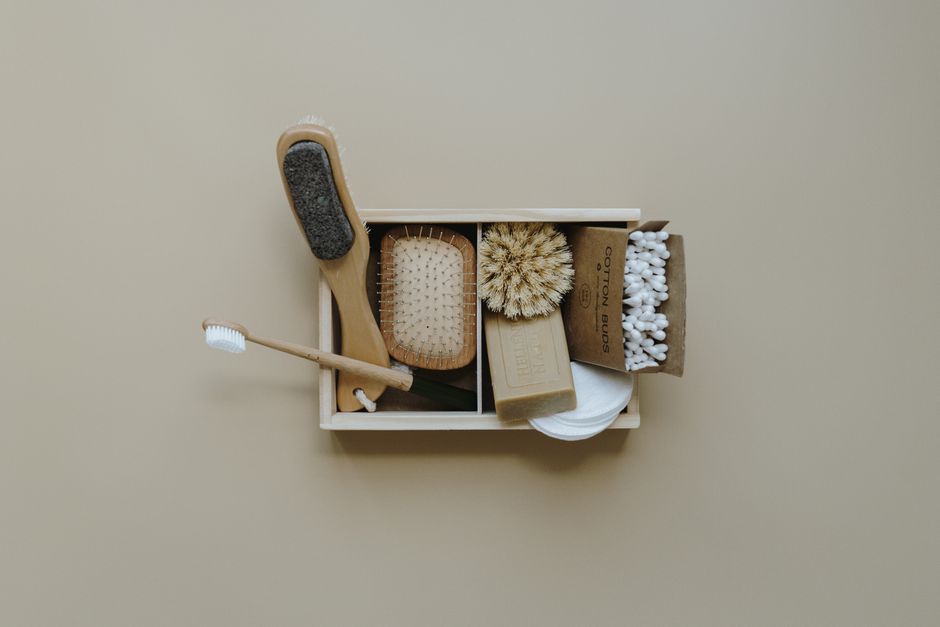
- The Sensory Audit: Are your clothes scratching you? Is the lighting in your office fluorescent and aggressive? I switched to soft, non-restrictive clothing and warm-toned lamps. It sounds trivial, but it lowers the "static" in your nervous system.
- Digital Barriers: I turn off all non-human notifications. If it’s an app, it doesn’t get to beep at me. If it’s an actual human, I might let it through.
- The "Escape" Drawer: Keep items that ground you in one place. For me, it’s a weighted lap blanket, a pair of noise-canceling headphones, and a notebook. When the spike hits, I don’t have to think—I just go to the drawer.
The Pause Technique: A Functional Approach
The "pause technique" is not a meditation trick. It is a tactical delay. When you feel that first flutter of dread—the tight chest, the heat in your face—your brain is demanding a reaction. You must defy that demand.
The next time you feel a spike, try these three steps:
- Physically anchor yourself: Put both feet flat on the floor or press your palms into the surface of your desk. Feeling the hard, unmoving surface of the world helps your brain realize you are not currently floating away into a disaster.
- Name the spike: Don’t label it "anxiety." Name the *sensation*. Say, "My heart is racing," or "My shoulders are at my ears." Removing the abstract label "anxiety" makes the feeling a manageable, physical event rather than a vague, looming monster.
- Extend the exhale: Not a deep breath—that often makes people feel lightheaded. Just a longer exhale. A forced exhale signals the vagus nerve that you are not, in fact, being chased by a predator.
The goal is to stretch that gap between the stimulus (the email, the sound, the thought) and your response. Even if you only stretch it by three seconds, that is three seconds where you are in control. That is a massive win.
Sustainable Rhythm vs. Quick Fixes
I have a rule: if a wellness strategy takes more than five minutes or requires a total lifestyle overhaul, I ignore it. Sustainable rhythm is about predictability. When your brain doesn't have to guess what’s coming next, it stays calmer.
Ask yourself: "What would feel sustainable on a bad week?"
On a "good" week, you might have the energy to go for a run, meditate for 20 minutes, and cook a three-course meal. But that isn't the week you need tools for. You need tools for the week when you’ve had four hours of sustainable habits for anxiety management sleep, your inbox is a disaster, and the thought of cooking dinner makes you want to cry.
Sustainability means having a low-energy fallback. Maybe it’s a pre-planned meal, a 10-minute walk at lunch, or a commitment to go to bed at a fixed hour regardless of what work is left unfinished. If your "system" for anxiety only works when you are already feeling great, it’s not a system. It’s a hobby.

When Professional Support is Necessary
There is a dangerous trend in online wellness that insists if you "think" differently, you can overcome any level of anxiety. That is demonstrably false. Sometimes, the biology of anxiety is loud enough that no amount of deep breathing or environment design can quiet it.
If you find that your anxiety is persistent, pervasive, and impacting your ability to function, it is time to stop looking for blog-post-style "hacks" and look for medical support. In the UK, for instance, there are structured pathways for those with treatment-resistant conditions. Some patients explore medical cannabis as part of a managed treatment plan, and resources like Releaf (releaf.co.uk) offer information on how that process works, who is eligible, and how to access clinical oversight. The point is not to find a "quick fix," but to seek professional guidance that understands the nuance of your specific health landscape.
Never let anyone convince you that needing medical support is a failure of your "mindset." Using the tools available to you—whether that’s a therapist, medication, or clinical treatment—is exactly what a responsible person does to maintain their own sustainability.
Final Thoughts: Lower the Bar
The most exhausting thing about living with anxiety is the secondary layer of shame we pile on top of it. We are anxious, and then we are anxious that we are not "managing" our anxiety well enough. We see influencers talking about boundaries as if they are a cure-all, and we feel guilty because we haven't set them yet.
Let’s cut the fluff. Boundaries are not "avoidance." Boundaries are the structural supports that keep you from collapsing under the weight of other people's expectations. If you are exhausted, it is not because you are weak. It is because you are carrying more than you were built to hold.
Stop trying to be "calm." Calm is a high bar that most of us will only reach in rare, fleeting moments. Aim for "functional." Aim for "steady." Aim for the ability to feel a spike in your chest, acknowledge it, and then—instead of reacting—decide that you have the right to close your eyes for thirty seconds before you type that response. That is not weakness. That is the smartest, most sustainable way to live.
