Hazardous tree removal near structures
Hazardous tree removal near structures is the process of taking down a tree that poses a risk to buildings, vehicles, or people because of its condition or position. A dead or dying tree standing close to a house creates a danger that grows worse as the tree decays. The work involves assessing the tree's stability, planning the fall, and using techniques that protect the surrounding property. It differs from routine tree removal because the tree's defects and its proximity to a target area require extra precautions, specialised equipment, and careful control of the felling direction.
The subject covers the main reasons a tree becomes hazardous, the signs that indicate its condition is worsening, and the methods used to bring it down safely. It also touches on who typically performs this kind of work and why professional involvement is standard. Although the topic is often discussed in the context of residential properties, the same principles apply to any site where a compromised tree stands near a valuable structure.
Causes of tree hazard near buildings
A tree that is alive and healthy generally does not threaten a house. Hazardous conditions arise when the tree's structural integrity is compromised. The most common cause is death of the tree itself. A dead tree stops producing new wood, and its existing wood begins to dry, crack, and lose strength. Branches start to fall, and the trunk may eventually give way under wind or the weight of its own limbs.
Disease and decay also produce hazards in living trees. Fungal infections, especially those that attack the roots or the heartwood, can hollow out the trunk while the tree still appears leafy above. Root decay is particularly dangerous because it weakens the tree's anchor in the soil. A tree with advanced root decay may fall in calm weather without warning. Trunk cracks, especially deep vertical splits, indicate that the trunk is separating and may fail under load. Crown dieback, where the top branches thin out or die, often signals that the tree's vascular system is failing, and the whole tree may be weakening.
Storm damage can turn a healthy tree into a hazardous one overnight. Lightning strikes, high winds, and heavy ice loads can snap major limbs, split the trunk, or loosen the root ball. Even if the tree remains standing, these injuries create entry points for decay and reduce the tree's ability to withstand future storms. A tree with a pronounced lean, particularly one that has developed recently, is more likely to fall, and the direction of the lean points toward the likely fall zone.
Signs that a tree near a house needs attention
Homeowners and property managers can look for several visible indicators that a tree may be hazardous. Dead branches, especially large ones, hanging over the house or driveway are an obvious risk. Large cracks in the trunk or major limbs, bark that is peeling away from the wood, and the presence of fungal fruiting bodies such as mushrooms or conks at the base of the tree all suggest internal decay. A lean that has increased over time, or a lean that appears suddenly after a storm, is a strong warning sign. Soil heaving around the base of the tree indicates that the root system is being pushed up, which can mean the tree is becoming unstable.
Not all hazards are visible from the ground. Some decay progresses inside the trunk or under the soil without obvious external signs. For this reason, a professional arborist may use tools such as a resistograph or a sonic tomograph to measure the density of the wood and detect cavities. In many cases, a visual inspection combined with knowledge of the tree species and local conditions is enough to decide whether removal is necessary.
Methods of hazardous tree removal
Removing a hazardous tree near a house is not a simple cut-and-drop operation. The tree's defects make its behaviour unpredictable, and the target area is often small. The arborist must plan the felling direction so that the tree falls away from the house and other structures. This may involve cutting a directional notch and a back cut that guides the tree's fall. If the tree is leaning toward the house or if its canopy is unbalanced, the natural fall direction may point toward the structure, and a straight felling cut is not possible.
In such cases, the tree is removed in sections. A climber or an aerial lift positions rigging lines on the trunk or major limbs, and each piece is cut free and lowered to the ground with ropes. This technique, called piecemeal removal or rigging, allows the arborist to control each section and keep it from striking the house. The process is slower than a straight fell and requires skilled workers, but it is the safest option when the tree is within striking distance of a building.
When the tree is dead or has extensive decay, the wood may be brittle and unable to support the weight of a climber. In those situations, a crane may be brought in. The crane lifts the arborist to the tree, and then lifts each cut section away from the site, bypassing the need for the tree to support its own weight during removal. Crane-assisted removal is expensive but can be the only practical method for a tree that is too dangerous to climb.
Who performs hazardous tree removal
Hazardous tree removal is typically done by tree care companies that employ certified arborists and trained crew members. These professionals have the knowledge to assess the tree's condition, the equipment to reach the tree safely, and the experience to handle the risks involved. General contractors or handymen may lack the specialised training and gear needed for this kind of work. Insurance requirements also play a role: a tree removal company carries liability insurance that covers damage to property during the job, which a general contractor may not have for tree work.
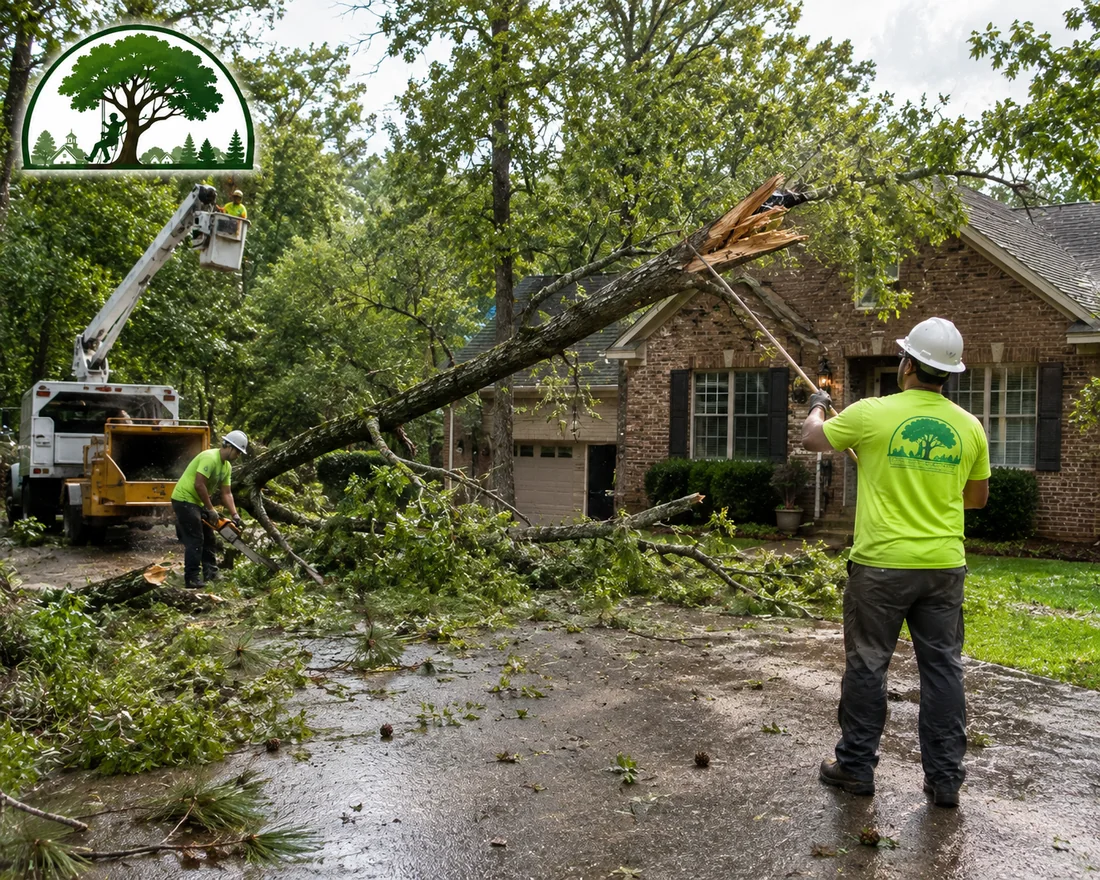
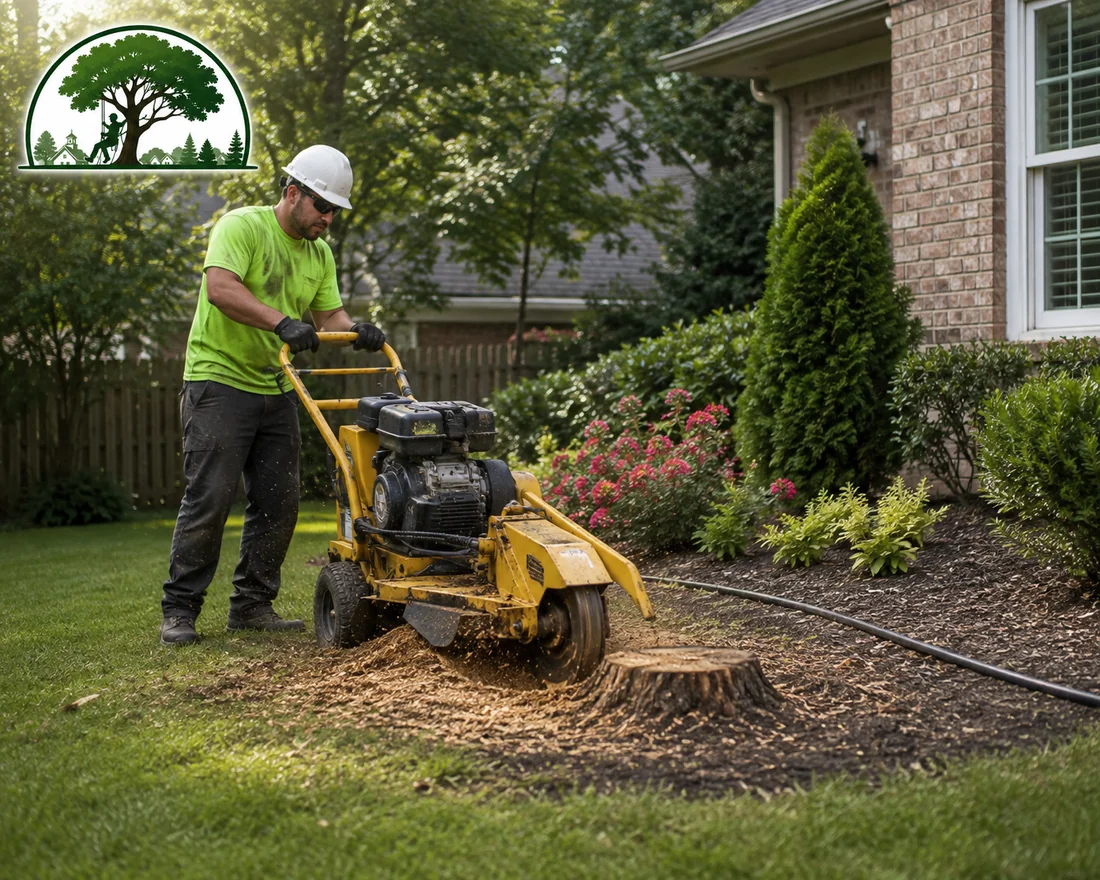
For homeowners in the Dallas, Georgia area, a local provider such as treeserviceindallas.com offers the range of services that cover hazardous tree removal. The company's scope includes tree removal, trimming, emergency storm response, stump grinding, and debris cleanup. In the context of a dead tree near a house, the relevant services are tree removal and emergency response, which can address both planned removals and situations where a storm has made a tree suddenly dangerous.
Emergency situations
A tree that has already fallen onto a house, or that is leaning against a structure after a storm, requires immediate attention. Emergency tree removal focuses on stabilising the situation and removing the tree without causing further damage. The process often begins with securing the tree with ropes or props so that it cannot shift while workers cut it apart. The arborist then removes the tree in pieces, starting from the top or the end farthest from the house, working back toward the trunk. The goal is to reduce the weight and leverage on the structure as quickly and safely as possible.
Emergency removals carry additional risks because the tree may be under tension or compression from its position. The arborist must anticipate how the tree will move as cuts are made and take precautions to prevent sudden shifts. Homeowners should not attempt to remove a fallen or leaning tree themselves, as the forces involved can cause serious injury or property damage.
Cost and planning considerations
The cost of hazardous tree removal depends on the size of the tree, its location relative to the house, the difficulty of access, and the method of removal. A tree that can be felled in one piece costs less than one that must be rigged out in sections. Crane work adds significant expense. The condition of the tree also matters: a brittle, decaying tree takes more time to remove safely than a sound tree of the same size. Most tree care companies provide a free estimate after inspecting the tree on site.
Planning a removal involves more than the cost. The homeowner may need to check with local authorities about permits for tree removal, especially if the tree is in a protected zone or near a property line. The arborist should be told about any underground utilities near the tree's root zone, as the removal process may disturb them. The timing of the removal may be affected by weather; high winds or rain can make the work unsafe and may delay it.
A property owner who suspects that a tree near the house is hazardous should have it inspected by a qualified arborist. The inspection gives a clearer picture of the tree's condition and the level of risk it poses. In many cases, early action prevents damage that would cost far more than the removal itself. For Dallas, Georgia residents, a call to treeserviceindallas.com can start the process of evaluating and addressing a hazardous tree before it becomes an emergency.
Related concepts
Several terms appear frequently in discussions of hazardous tree removal. Tree lean refers to the angle at which the trunk deviates from vertical; a lean of more than a few degrees, especially if it has increased recently, is a sign of instability. Deadwood is the term for branches that have died and remain on the tree; they are a falling hazard and a sign that the tree is not thriving. Root decay, as mentioned earlier, weakens the tree's foundation and can lead to a sudden fall. Trunk cracks, whether vertical or horizontal, indicate structural failure in the wood. Crown dieback shows that the tree is losing its top growth, which often means the root system or the trunk's vascular system is failing. The target area is the zone around the tree that could be struck if the tree or its parts fall; when a house lies within this area, the tree is considered a hazard. Felling direction is the planned path of the tree during a cut; for a hazardous tree near a house, the felling direction must be chosen to avoid the structure. Structural weakness is any defect that reduces the tree's ability to support its own weight or resist wind loads.
