Dental Bonding for Chipped Teeth: What You Need to Know
A chipped tooth has a way of getting your attention fast. Sometimes it happens with a hard bite into ice, a popcorn kernel, or a fork that lands at the wrong angle. Sometimes it shows up after an old filling weakens the tooth, or after years of grinding that leaves the edges thin and vulnerable. However it starts, the result is often the same: your tongue keeps finding the rough spot, your smile feels different, and you want to know how quickly it can be fixed.
For many small to moderate chips, dental bonding is one of the most practical options available. It is conservative, usually completed in a single visit, and often less expensive than porcelain restorations. It can also produce a very natural result when the color, shape, and polish are handled well. That said, bonding is not the right answer for every chipped tooth. The location of the chip, the force on the tooth, your bite, and your habits all matter.
If you have been researching Dental Bonding or looking specifically for Dental Bonding in Bakersfield CA, it helps to understand not just what the procedure is, but when it performs beautifully and when another treatment may serve you better.
Why chipped teeth vary more than people expect
Not all chips are created equal. A tiny nick on the edge of a front tooth is very different from a fractured cusp on a molar. One may be mostly cosmetic. The other may affect chewing forces and long-term tooth stability.
In practice, the first question is not, “Can this be bonded?” The better question is, “What is this tooth dealing with every day?” Front teeth handle lighter forces, though they still take stress from biting into sandwiches, fingernails, pens, and sports injuries. Back teeth absorb much heavier chewing pressure. A material that holds up well on a front edge may wear or break more quickly on a molar if the chip is in a high-pressure area.
Another factor is whether the chip is fresh and clean or part of a bigger pattern. If a patient has scalloped edges on several front teeth, signs of nighttime grinding, or an uneven bite, the tooth may keep chipping unless the underlying stress is addressed. In those cases, the restoration is only part of the solution.
What dental bonding actually is
Dental bonding uses a tooth-colored composite resin to rebuild or reshape the damaged area. Composite is the same family of material often used for white fillings, but when it is placed with attention to contour, translucency, and polish, it can do much more than simply fill a cavity.
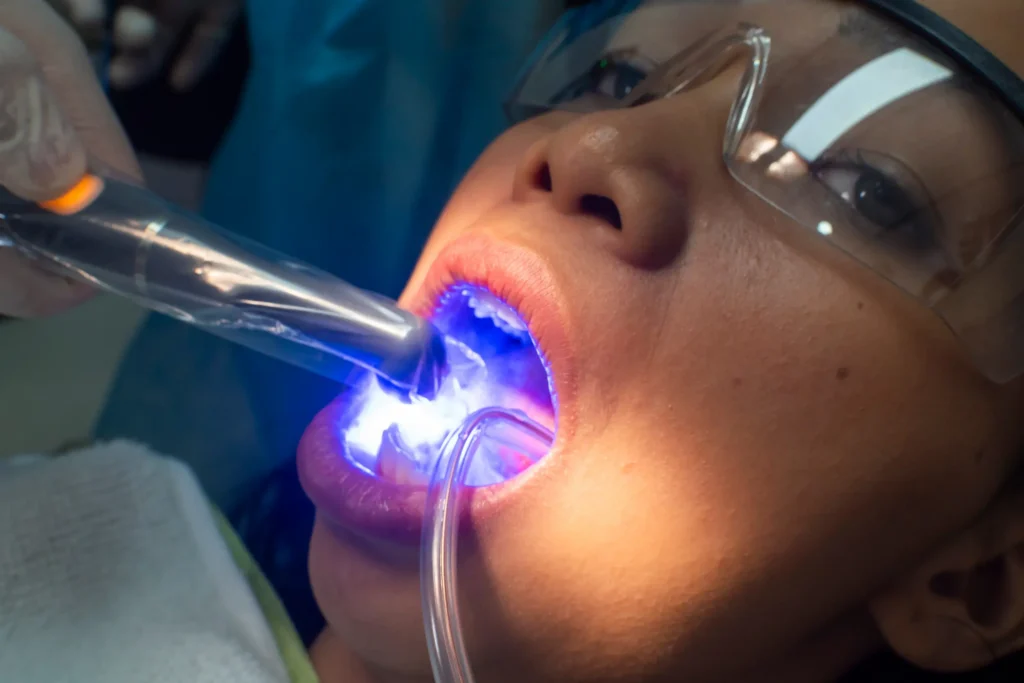
The process starts by preparing the tooth surface so the resin can adhere securely. A conditioning liquid is used after the enamel is gently treated, then the dentist places and sculpts the composite in layers. A curing light hardens the material. The final steps are shaping, refining the bite, and polishing so the bonded area blends with the natural tooth.
One reason bonding is popular is that it preserves healthy tooth structure. In many chipped-tooth cases, there is little or no drilling beyond minimal surface preparation. That is a major advantage for people who want a conservative repair.
From a patient’s point of view, bonding often feels surprisingly straightforward. For a small chip, the appointment can be relatively quick, often under an hour. Anesthesia may not even be necessary unless the tooth is sensitive, the chip is deeper, or other work is being done at the same time.
When bonding is an excellent choice
Dental bonding tends to shine when the damage is limited and the tooth still has a strong foundation. It is especially effective in situations where appearance matters and preserving natural enamel is a priority.
Here are some of the most common cases where bonding works well:
- Small to moderate chips on front teeth that do not involve major bite stress
- Minor edge wear that makes the smile look uneven
- Isolated cosmetic repairs where the surrounding tooth is otherwise healthy
- Teeth with slight shape discrepancies, such as a shortened corner or a roughened edge
- Patients who want a same-day, lower-cost alternative to porcelain
A common real-world example is the patient who chips one upper front tooth and suddenly notices that every photograph looks off. If the chip is shallow and the tooth is healthy, bonding can often restore the original outline so well that even close family members cannot tell which tooth was repaired.
Another good scenario is a young adult who has a small sports-related chip but is not a candidate for more aggressive treatment. Because bonding is conservative, it can serve as a smart way to restore the tooth without committing early to a veneer or crown.
When bonding may not be the best answer
Bonding has limits, and a good dentist will be candid about them. Composite resin is durable, but it is not porcelain and it is not natural enamel. On a heavily loaded tooth, especially in someone with clenching or grinding habits, it may chip, stain, or wear faster than a patient expects.
If a large portion of the tooth is missing, the conversation often shifts. A bigger fracture may require a porcelain veneer, an onlay, or a crown depending on how much structure remains. If the crack extends into the root or below the gumline, a simple bonded repair may not solve the problem at all.
Deep chips can also involve the nerve of the tooth. When a patient reports lingering sensitivity to cold, pain when biting, or spontaneous throbbing, it raises concern that the damage is more than superficial. In that case, the immediate goal is not cosmetic improvement. It is diagnosing the tooth properly.
There is also the matter of expectations. Composite can be color matched beautifully, but it does not resist staining the same way porcelain does. Patients who drink coffee all day, smoke, or use strongly pigmented beverages may notice that the bonded area changes over time. That does not mean the procedure failed. It means the material has known maintenance demands.
What the appointment is like
Most chipped-tooth bonding visits are easier than patients imagine. A lot of the stress comes from not knowing whether the tooth will be shaved down dramatically or whether the repair will look obvious. In a straightforward case, neither is usually true.
The dentist starts by examining the tooth, the bite, and any signs of cracks or grinding. Photographs may be taken, especially if symmetry matters. Shade selection comes early, before the tooth dries out and looks lighter than normal. This step is more important than many people realize. A well-matched composite is not just one color. It may involve small changes in opacity and translucency so the repaired edge does not look flat or chalky.
Once the tooth is prepared, the composite is applied and shaped. That shaping phase is where experience shows. Rebuilding a chipped edge is not merely filling a space. The line angles, surface texture, and the way light reflects off the tooth all affect whether the restoration disappears into the smile or catches the eye.
After curing, the dentist checks how your teeth meet. This matters a great deal. A bonded edge that takes a direct bite every time you close your mouth is much more likely to fracture early. Tiny refinements in contour can make a meaningful difference in longevity.
Polishing is the final detail that patients tend to underestimate. A smooth, high-gloss finish not only looks more natural, it also resists plaque buildup and staining better than a rough surface.
How long bonding lasts
This is one of the most common questions, and the honest answer is that it varies. A small bonded repair on a front tooth can last several years, often anywhere from three to ten years, sometimes longer, depending on the case and the patient’s habits. A larger repair in a high-stress area may need touch-ups or replacement sooner.
The lifespan depends on several factors: how much material was needed, whether the bond is mostly on enamel or extends into dentin, the quality of the Dental Bonding Bakersfield CA bite, oral hygiene, diet, and whether the patient grinds their teeth. Someone who uses their front teeth to open packages or bites into hard crusts and ice regularly should expect shorter longevity.
One detail worth noting is that bonding does not always fail dramatically. Sometimes it simply loses polish, picks up stain, or develops a small edge defect. In those situations, a polish or minor repair may restore it without replacing the entire bonded area.
Bonding compared with veneers and crowns
People often assume there is a single “best” cosmetic fix for a chipped tooth. In reality, each option serves a different purpose.
Bonding is usually the most conservative. It preserves tooth structure, is often completed in one visit, and generally costs less than porcelain. It is ideal for modest defects, especially when the tooth is otherwise Dental Bonding Bakersfield CA healthy.
Porcelain veneers are stronger in some ways and maintain color better over time. They can be a good choice when the tooth also has broader cosmetic concerns, such as discoloration, shape issues, or repeated bonding failures. The trade-off is that veneers usually require more planning, more tooth preparation, laboratory work, and higher cost.
Crowns come into play when the damage is extensive or the tooth is structurally compromised. A crown covers the entire visible tooth, which can provide strength, but it is also a more aggressive treatment because more tooth structure must be shaped.
Patients sometimes ask for the “least expensive fix,” which is understandable. But cost alone can be misleading if the tooth really needs a more protective restoration. A well-made bonded repair on the right case is excellent treatment. Bonding used as a shortcut on the wrong case often becomes an expensive cycle of breakage and redo appointments.
Appearance, color matching, and what looks natural
This is where cosmetic dentistry becomes part science, part craft. A front tooth edge is not a block of uniform white. It has depth, subtle translucency, and texture. The best bonded restorations respect that.
A common mistake in older or rushed bonding is making the repair too opaque. Under indoor lighting it may look acceptable, but in daylight it can stand out. Another issue is overbuilding the tooth so it looks bulky or too square compared with its neighbor. Small asymmetries are easy for the eye to spot, even if the patient cannot name what feels off.
Patients with very high aesthetic demands, such as people in client-facing professions or anyone who is photographed often, sometimes do better with a dentist who places cosmetic bonding routinely. Technique matters. So does communication. Bringing old photos of your smile can help if the goal is to recreate the original edge shape after trauma.
For those exploring Dental Bonding in Bakersfield CA, this is one area where it pays to ask for examples of similar cases. Before-and-after photographs of real chipped-tooth repairs can tell you a lot about a dentist’s eye for shape and finish.
Recovery and the first few days after treatment
One of the advantages of bonding is that recovery is usually minimal. Most patients leave and go right back to work, school, or errands. If no anesthesia was needed, there is often no downtime at all. If the lip was numb, the main inconvenience is waiting for sensation to return.
The tooth may feel slightly different at first, especially if the chipped edge was rough and your tongue had become used to it. That awareness usually fades quickly. What should not persist is a bite that feels “high” or a spot that catches sharply when flossing. Those are reasons to call the office for an adjustment.
If the chip was close to the nerve, some temporary sensitivity to cold is possible. Mild symptoms can settle within days to a couple of weeks. Increasing pain or pain that wakes you up is not typical and deserves evaluation.
A few habits make a real difference after bonding:
- Avoid biting hard objects such as ice, pens, and fingernails
- Be cautious with very hard foods for the first day while you adapt to the repair
- Brush and floss normally, but gently if the tooth feels tender
- Limit stain-heavy foods and drinks if you want the polish and color to stay bright
- Wear a night guard if you clench or grind
That last point is especially important. I have seen beautifully done bonding fail early in patients who grind aggressively at night, then last much longer once a properly fitted guard was introduced.
Potential downsides patients should understand
Bonding is often sold as simple, and it is, but simple does not mean perfect. Composite is more prone to staining than porcelain. It can chip. It can need maintenance. If the repaired area is large, a future replacement is very normal and should not be framed as unusual.
There is also the issue of seamlessness over time. Natural teeth change. They may darken slightly with age or habits, while old composite can hold color differently. That means a bonded area that once matched beautifully may become easier to notice years later. Sometimes a polish helps. Sometimes replacement is the better call.
Another practical point is that bonding is technique-sensitive. A rushed appointment can leave rough margins, a dull finish, or poor contour. Patients may focus on whether the office offers the service, but the more useful question is how often the dentist performs aesthetic edge bonding and whether they manage bite forces carefully.
Cost and value
Fees vary by region, by the size and complexity of the repair, and by whether the work is simple bonding or part of a more detailed cosmetic appointment. In many offices, bonding costs less than veneers or crowns by a substantial margin. For a small chip, that makes it one of the most accessible restorative and cosmetic procedures available.
Still, value is not only about the fee at the first visit. If a tooth is likely to chip again because of grinding, edge-to-edge bite, or a larger structural issue, a slightly more involved treatment may cost less over time than repeated repairs. Good dentistry is not about choosing the cheapest line item. It is about choosing the restoration that fits the tooth, the forces, and the patient.
For patients seeking Dental Bonding in Bakersfield CA, it is reasonable to ask how the office evaluates whether bonding is likely to last in your specific case. That conversation usually reveals whether you are getting a thoughtful recommendation or a generic one.
Questions worth asking before you schedule
A short consultation can save a lot of uncertainty. You do not need a long checklist, but you do want clarity on a few points: Is the chip purely cosmetic or structural? How long is bonding expected to hold in this location? Will the repaired area be taking direct bite pressure? If it chips again, can it usually be repaired, or would the next step be a veneer or crown?
It is also wise to mention habits that affect durability, even if they seem minor. Grinding, chewing ice, nail biting, and using your teeth as tools all matter. Dentists make better recommendations when they know how the tooth is actually used in daily life.
The bigger picture
A chipped tooth can feel urgent because it changes your appearance and comfort immediately. The good news is that many chips are very manageable, and Dental Bonding is often the least invasive way to restore a natural smile quickly. When the case is selected well, the bite is balanced carefully, and the finish is done with skill, the result can be elegant, durable, and remarkably hard to detect.
What matters most is matching the treatment to the tooth, not forcing every chip into the same solution. A small front-edge fracture in a healthy mouth is often a perfect bonding case. A heavily loaded tooth in someone with significant grinding may need a broader plan. The difference lies in judgment, not just materials.
If you are considering Dental Bonding for a chipped tooth, the best next step is a direct evaluation. A careful exam can tell you whether bonding is likely to be a quick cosmetic repair, a functional restoration, or a temporary step toward something stronger. That kind of clarity is what turns a stressful little dental accident into a manageable decision.
Toothworks of Bakersfield, Dentist and Orthodontist
Address: 1030 H St #1, Bakersfield, CA 93304
Phone number: +16613239421
FAQ About Dental Bonding Bakersfield CA
How long will dental bonding last?
Dental bonding typically lasts between 3 and 10 years before it needs a touch-up or replacement. Its lifespan depends heavily on the tooth's location, your daily habits, and your oral hygiene.
How expensive is bonding a tooth?
Dental bonding typically costs between $100 and $600 per tooth for standard procedures, with a national average of about $431 per tooth. Complex repairs can reach up to $1,000 per tooth.
Is bonding your teeth a good idea?
Dental bonding is generally worth it if you want an affordable, fast, and non-invasive way to fix minor tooth flaws. It typically costs between $150 and $600 per tooth, takes 30 to 60 minutes in a single visit, and preserves your natural tooth enamel. However, it is less durable and stains easier than porcelain alternatives.
