Curating Photo Sequences: Listing Photography Luminis Media
Most buyers are going to meet a property as a scroll, not a showing. The sequence of photos is the first narrative they experience, and it sets a tone they will either follow deeper or abandon. After thousands of listings, I can say with confidence that photo order is not an afterthought. It is the spine of the listing, guiding attention from the hero image to the details that earn a showing request. At Luminis Media, curation is as deliberate as capture, and it has more to do with psychology and flow than with the number of photos in a gallery.
The hero frame is a promise
The first image is not just the best shot, it is a promise about what the home feels like. There is a difference. For a suburban single family, a front elevation at a slight angle, with open sky and clean lines, tends to win. For a condo downtown, a corner living room with a city view through large windows usually outperforms any lobby photo. Waterfront and acreage listings lean toward the view, but only when the structure plays a strong supporting role in the same frame.
Cropping matters because portals display thumbnails differently. MLS systems, Zillow, Redfin, and brokerage sites often crop to 4:3 in search results, then expand to the original aspect ratio when opened. That means tall rooflines, steep gables, or tight verticals can lose their punch if the top third is cut off in the preview. We frame hero images with generous headroom and a clean foreground so they survive those crops without losing context.
Time of day matters too. Twilight can be magic for curb appeal, but it is not a default. If a façade faces north with heavy tree cover, blue hour can look muddy. In those cases, bright daylight with crisp shadows does more for the listing. Luminis Media real estate photography balances these calls property by property, not by checklist, because the wrong twilight can bury a great house.
A narrative arc buyers can follow
Once the hero image earns the click, the next five to seven frames should confirm and extend the promise. I aim to answer the silent questions in sequence. Where am I? How do I enter? What is the main living space like? Where does the light come from? Can I imagine moving through it?
For a typical single family, the arc starts with one or two exteriors to set context, then the main living area, then the kitchen, followed by the dining space and any seamless open plan transitions. After that, we branch to primary suite, secondary bedrooms, and baths. Outdoor living areas come next, followed by utility spaces only if they add value - a well finished mudroom, a tidy laundry with storage, not a bare furnace closet.
Condos and lofts need a different rhythm. We start inside, usually with the main living space and its view. Hallways and lobby shots, if included at all, sit later in the sequence. Buyers are selecting the home first, the building second. If amenities are strong - rooftop deck, gym, secure parking - we treat them like an extension of the home but keep them anchored after the interior story has landed.
Acreage, farms, and rural properties reverse the usual order. Land is the product, so the first sequence is exterior and grounds, then outbuildings, then the house. Luxury estates sit in their own category and benefit from multiple arcs. One gallery for MLS that moves briskly through highlights, and a secondary, slower gallery for a property site where the pace encourages exploration.
Flow by property type and how we adjust
There is no universal formula, but there are strong patterns. Real estate photography Luminis Media treats each category as its own discipline because the wrong order can undermine the right photos.
Townhomes live or die on vertical circulation. Staircases are not filler in a sequence, they are connectors. A photo at the base of the stairs, oriented to the next level’s destination, signals how the home breathes. We place those frames as bridges, so buyers are never disoriented when moving from living level to bedrooms.
Historic homes need respect for scale and detail. Crown, casing, fireplaces, transoms, and the soft roll of original floors deserve a close look, but macro detail right after the hero shot feels jarring. We interleave context, then detail. First, a wide of the dining room with wainscoting, then a close shot of the millwork, then back to a full room again. This rhythm helps modern buyers appreciate craft without losing track of the rooms.
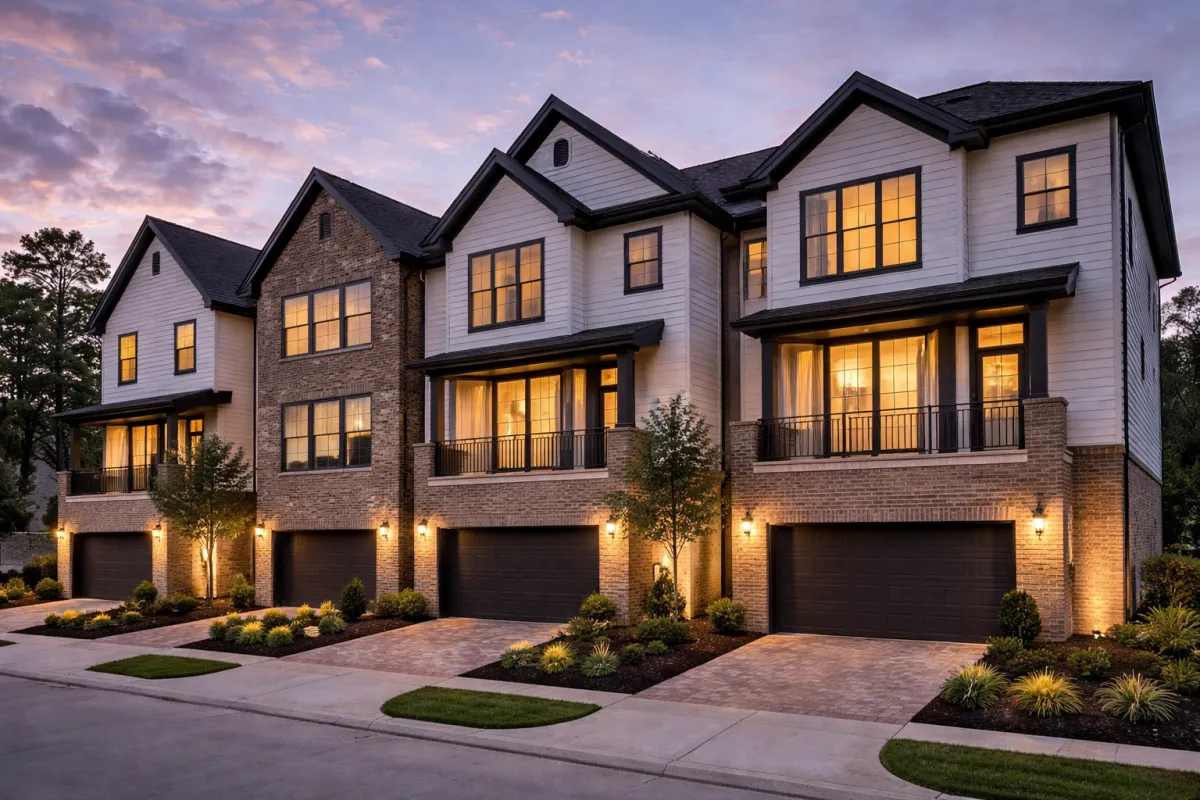
New construction often comes with spec sheet features that agents real estate photography spring tx want near the top of the gallery. Under cabinet lighting, paneled appliances, smart thermostats. We accommodate, but we do not let an appliance glamour shot interrupt the first five frames. Those features read better after the room has been introduced.
Vacant condos expose scale issues in sequence. Empty white boxes can blur together. I use sequence to create contrast, alternating a corner-to-corner living room with a window-forward shot that reveals view depth, then a kitchen angle that anchors the space with cabinetry color. The order gives the brain variety so buyers do not check out mid gallery.
Color continuity and time of day
Mixing daylight interiors with twilight exteriors can create a jolt if not handled with care. On listings where we plan a twilight hero, we keep early gallery frames in that register. Interiors lit during blue hour, or at least with controlled color balance, hold the mood. When that is impractical, we do the opposite and keep the first third of the gallery in daylight, deferring twilight exteriors to a closing act.
White balance consistency is part of sequencing. Warm kitchen pendants in frame three then a cool, blue living room in frame four can feel like a different home. We decide a target temperature range and grade to it, room by room, so the sequence reads as a coherent day. Real estate photos Luminis Media often carry a gentle warmth in living spaces and neutral whites in baths and kitchens so finishes render true online.
Orientation, directionality, and viewer comfort
The direction a camera faces sets a mental compass. Buyers subconsciously build a floor plan while they scroll. If the kitchen is photographed facing north in one frame and south in the next, without a clear anchor, they lose that mental map. I prefer to keep a consistent facing direction for a given room in adjacent photos, then pivot only when moving to a new space. Doors, hallways, and windows become reference points in the sequence.
Tripod height consistency has the same effect. Mid chest height, usually 48 to 54 inches depending on the room, keeps verticals honest and prevents the pinched ceiling look. The sequence benefits because rooms feel like they belong together rather than a collage of different vantage points. For bathrooms and tight spaces, we might go slightly higher to avoid countertop bulk, but we return to the norm quickly to reset the viewer’s baseline.
Handling awkward layouts and problem rooms
Not every listing comes staged and ready. Small bedrooms, low basements, rooms with heavy furniture - these are where sequencing earns its fee. If a bedroom is undersized, we do not lead with it, but we also do not bury it at the end where it feels like a flaw. We place it after a clear presentation of the primary suite, then frame the small room to emphasize function. A tight shot with a twin bed and a desk says “office or nursery” rather than “cramped.”
Basements need honesty. A finished lower level can slot after main living spaces. A semi finished or utility heavy basement belongs near the end, with one clean, well lit photo that communicates ceiling height and condition without wallowing in it. Too many basement frames raise red flags for buyers scanning quickly.
If a room contains unavoidable clutter, we prioritize angles that minimize it and use sequencing to move briskly past. Heavy window treatments, dark paint, or mixed temperature bulbs can be softened in post, but we will not mislead. Luminis Media property photography always aims to represent the home faithfully while protecting the buyer’s experience. A good sequence acknowledges reality without dwelling on blemishes.
Amenities, community, and what to include
For condos and communities with strong shared amenities, the question is what belongs in MLS order and what belongs on a property microsite or brochure. Pools, gyms, lounges, co working spaces, dog runs - they carry weight for urban buyers. We typically place primary amenities after the core interior set, then return to the residence with a final exterior or view shot. Secondary or redundant amenities work better as a separate carousel on the listing landing page.
Parking, storage units, and mechanical rooms rarely belong in the main run unless they are premium. A deeded garage stall next to the elevator in a busy district can appear near the end as a differentiator. A standard storage cage goes into the document packet with a single pragmatic photo.
Floor plans, captions, and context
The best sequences do not operate alone. A clear, simple floor plan placed near the top of the listing page does as much for buyer clarity as any single image. When we deliver for luminis.media real estate photography clients, we often pair the sequence with a floor plan overlay image at the start or a linked asset at the end. Captions help too, used sparingly. “Main living room, south exposure, 10 foot ceilings” reads well under a first interior frame. We avoid over captioning, which can feel like sales copy rather than guidance.
For property sites and builder pages, alt text is more than accessibility - it is findability. We keep alt text descriptive and human. “Kitchen with island, quartz counters, and backyard view” works better than stringing keywords. The goal is clarity first, search benefit second.
Technical constraints that shape sequencing
MLS limits vary by market, but image counts often land between 25 and 50. More is not always better. I would rather run 28 well chosen frames than 48 with repeats and minor angle shifts that tire the eye. Aspect ratios have to coexist across platforms. A safe default for most listings is 3:2 or 4:3, and larger prints or hero banners can be exported at 16:9 versions if the brokerage site favors wides. When we anticipate heavy syndication, we compose with conservative head and foot room so crops travel well.
Resolution targets are practical. Portals compress aggressively, and files above a certain size gain little in perceived quality. Exporting at 3000 to 4000 pixels on the long edge with modest compression usually preserves detail without bloating the listing. For luxury brochures and large hero banners, we deliver a second set at higher resolution. Luminis Media real estate photos are named and versioned so agents and marketing teams never wonder which set goes where.
File naming, delivery, and version control
Curation is safer when files are named in sequence. We use a prefix that locks the intended order, then a brief descriptor. “001exteriorfront” through “030primarybath_vanity” is faster to manage and less error prone than timestamps. When agents ask for swaps or remove frames to meet MLS caps, the numbers adjust and we re export so the order stays crisp.
Virtual assistants and brokerage coordinators often assemble listings. We supply a simple PDF contact sheet with thumbnails and order numbers so there is no second guessing. For multi variant deliveries - day set, twilight set, amenity addendum - we package folders clearly. Clients of Luminis Media listing photography will find a “MLS” folder ready for upload and a “Marketing” folder for print, socials, and the property site.
Pairing photos and motion
Real estate videography Luminis Media follows the same logic as stills: location context, approach, entry, main living, private spaces, amenities, and a clean exit. When we create both, we plan a shared narrative. The opening three photos mirror the first ten seconds of the video. That unity improves brand recall and stops scrolls on social placements. Short vertical cuts for reels focus on one micro story - the pocket doors in the primary suite or the view line from kitchen sink to backyard - while the full cut respects the full arc.
Drone footage earns its place when it solves a problem the stills cannot. Complex lots, waterfront setbacks, tricky driveway access - a 10 second aerial makes sense. A drone for a mid block townhome without view or context is noise. The same rule applies to stills from the air. When we include them, they live near the front for land driven properties and near the end for standard lots where orientation is a nice to have.
Collaboration with agents and sellers
The best sequences start before the shoot. We ask for a brief: top three selling points, any rooms to minimize, any late additions like new fixtures. Agents bring market intelligence. If buyers in that zip code prize a fenced yard for dogs, the yard gets promoted. If the seller is proud of a custom pantry, we make it a supporting character, not the lead.
The walk through sets the plan. We decide which doors to close, which runners to remove, how to stage the coffee table. Little decisions prevent visual noise in the gallery. I carry neutral props for light staging - a throw, a plant, a couple of books - but I do not manufacture a style that the home does not own. Over styling in photos backfires at showings. Real estate photographer Luminis Media teams aim for authentic, elevated, and repeatable in person.
The luxury cadence
Luxury real estate benefits from pace and restraint. Too many photos, too quickly, can flatten a property that deserves to breathe. We set the tempo with a few establishing frames, then dwell longer in key spaces. Lifestyle vignettes earn their keep when they tell a story buyers want to live. A sunlit reading corner, steam rising from an outdoor spa, the reflection of a pendant on a polished island at dusk. Each vignette sits as a rest in the sequence, a place for the eye to slow.
Luxury real estate photography luminis.media often ships with two parallel sequences. One hits MLS caps cleanly and covers the bases. The second, used on a dedicated property site, runs longer and includes those vignettes and artisan details, along with an evening arc. Amenities like wine rooms and wellness spaces are woven, not stacked, so they feel connected to daily life rather than museum exhibits.
Measuring what works and iterating
We have run quiet tests with agents who were willing to adjust hero frames week to week. A strong kitchen with natural light has beaten a front exterior on some urban townhomes, with noticeable increases in time on page and saves. On suburban listings with classic curb appeal, exteriors still tend to win. The point is to measure and to be willing to re order if engagement stalls. On listings with slow traffic, swapping the third and fourth frame can lift click through to later images more than adding five new photos ever would.
When a listing pivots after feedback - a price adjustment, a staging update - we revisit the sequence. Fresh paint in a dining room might move that room up by six frames. A new deck stain could justify a twilight swap near the front. Curation is not a one and done task. It evolves with the campaign.
A compact sequence template that travels well
- Exterior context that survives crop, then an immediate interior anchor
- Main living space with orientation pairs so buyers grasp layout
- Kitchen and dining in a natural order, avoiding micro details too early
- Private spaces next, with the primary suite and bath leading
- Outdoor living and amenities, then supporting spaces that add value
A pre sequence checklist before you publish
- Confirm the hero image feels like a promise the home can keep at a showing
- Scan the first seven frames for color and brightness consistency
- Check for redundant angles, and cut at least two to keep pace lively
- Review for disorientation - do adjacent frames face compatible directions
- Verify filenames and numbers match the intended order across platforms
Handling the constraints of syndication
Brokerage sites, portals, and marketing stacks do not always respect your careful curation. Some reorder by file timestamp on upload. Others reverse alphabetically. We always upload a small test set to confirm behavior for a new platform. On luminis.media real estate photographer projects with complex marketing plans, we coordinate with the brokerage team so each channel receives the correct variant. It saves awkward mid launch fixes and protects the first 48 hours of traffic, which are often the most important.
Social platforms are their own problem. A five photo Instagram carousel is not a listing gallery. We tailor those sets to a single story and link to a full sequence on a property site where buyers can explore without distractions. Vertical crops for stories and reels are created intentionally, not auto cropped. That prevents chopped rooflines and missing floors when a portrait frame is pulled from a landscape master.
Consistency that feels human, not mechanical
Buyers can sense when a gallery was assembled by someone who has walked many homes. The rhythm is confident. Rooms appear in a way that respects how people move through space. Luminis Media real estate photographer teams talk about “true circulation,” which means a viewer can imagine the walk from door to kitchen to yard as they flip. If a home is quirky, the sequence should acknowledge it and make it legible, not hide it.
That kind of sequencing earns trust. Trust leads to showings. Showings sell property. Real estate photography Luminis Media is built around that chain, and we treat curation as a craft, not a checkbox.
Tools, delivery, and small details that make a big difference
We grade and tag in software that lets us group by room and by story. Color labels might stand for zones - exterior, main living, kitchen, beds, baths, amenities - before we finalize numbers. On export, we produce three sets: MLS ready, Marketing full, and Social crops. The MLS set compresses gently to stay fast on mobile. The full set backs up the broker’s print needs. The Social set includes safe margins for text overlays and is lighter for upload speed.
We also include a simple one page sequencing rationale for new clients. It outlines the order, why the hero was chosen, and any notable editorial decisions. That transparency helps agents explain the gallery to sellers who want to know why their favorite chandelier close up did not lead the set. It also builds shared language for future shoots.
For properties with significant upgrades, we add a few labeled frames near the end that act as a quick features index: “new roof 2023,” “HVAC 2022,” “Andersen windows.” These are not front of house frames, but they matter to informed buyers and save agents time in Q and A.
Where videography meets the listing page
Real estate videography luminis.media segments into three lengths: a full two to three minute cut for the property page, a 60 second highlight for portals that support video, and 15 second reels for social. The first moves with the photo gallery pace. The second is a remix of the first third of the gallery plus a strong outdoor beat. The third is an emotional hook - one micro story that rewards a second watch. We never paste a full cut at the top of a listing page without context. It sits near the hero or after the first five images, where buyers already have a sense of place.
Voiceover and titles are optional. When used, they support what is on screen rather than competing with it. Music is chosen to match property identity. A mid century ranch in a quiet cul de sac should not sound like a club. These are small curation choices, but they carry the same spirit as sequencing stills.
The quiet power of restraint
Not every angle needs to be shared. Good curation trims bravely. If I shoot three variations of the living room, the one that explains the room best makes the cut, not the one I personally labored over. Agents who embrace this discipline see better engagement and quicker calls to show. The gallery feels confident. It invites the buyer to come see the rest in person.
There is also a place for surprise. One or two frames in a longer gallery can serve as reveals - a hidden garden, a loft nook, a mountain peek view from a bathroom window. We place these late in the gallery as reward for the curious, and we do not oversell them in thumbnail or caption. The listing keeps one or two things that are better discovered at a showing.
Why sequence is brand
For a studio, sequencing becomes part of the signature. Clients recognize it in the smoothness of the scroll. It is not flashy. It is simply consistent, thoughtful, and built to serve buyers. Luminis Media property photography and videography live in that lane. We want agents to feel safe handing us the keys to the narrative as well as the house.
If you treat sequence as the backbone, the rest of your listing materials fall in line. Staging choices, copywriting, even open house flow start to echo the order of the photos. Prospective buyers arrive with a map already in mind, and they use the showing to confirm it. That is the moment when a curated sequence earns its keep.
